Words: Amazosan
Pictures: Nicholas Mee cars
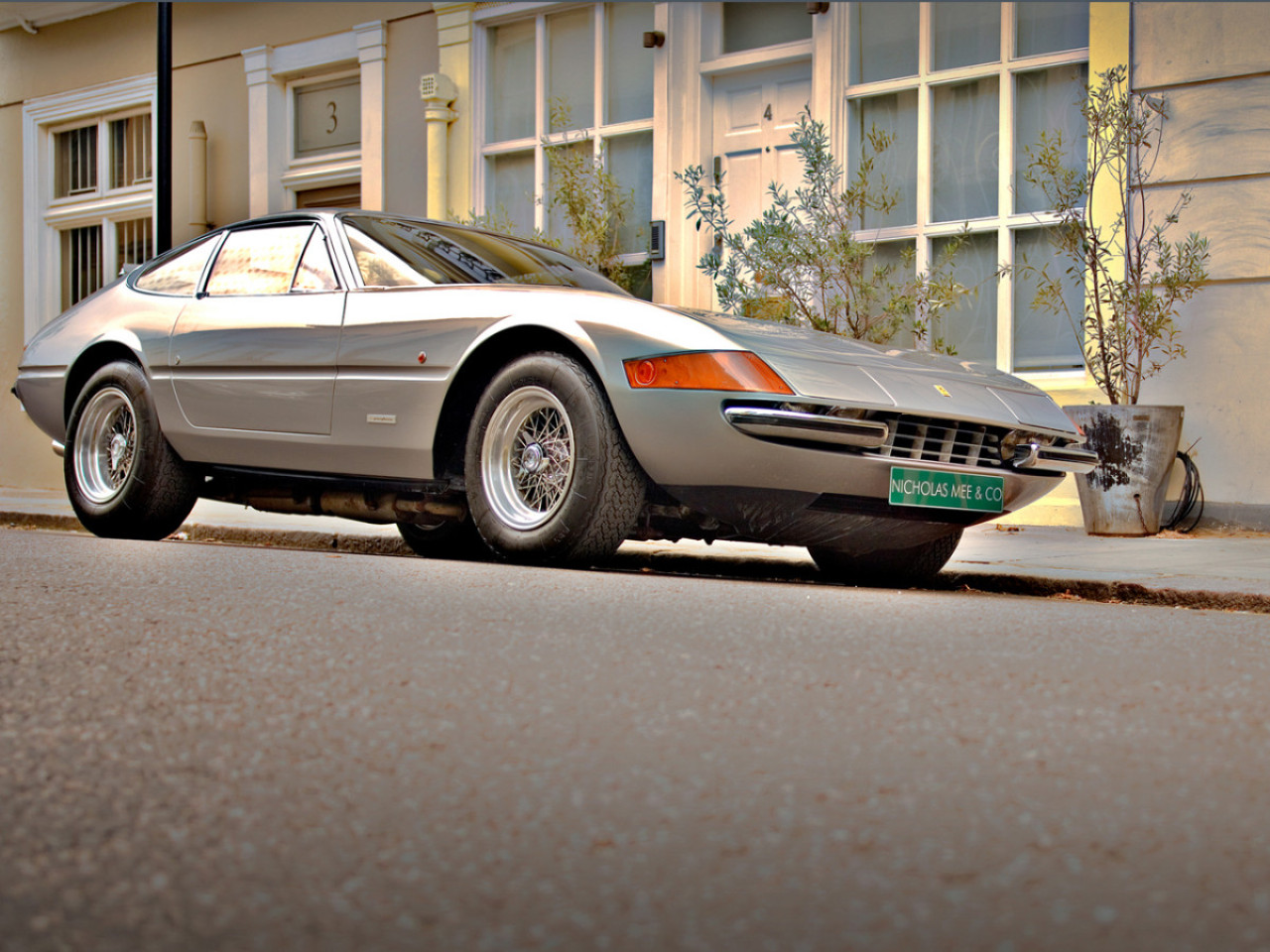
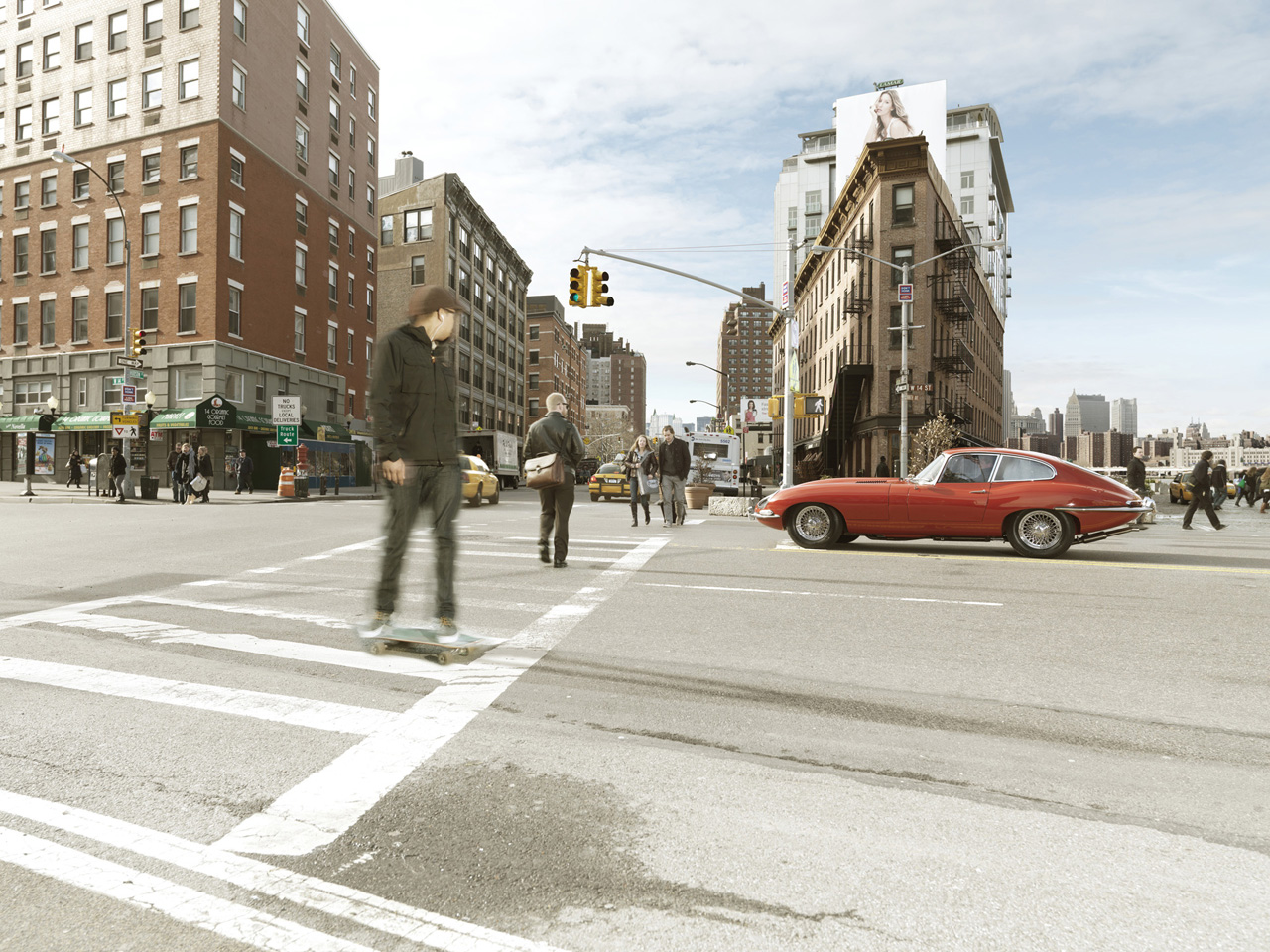
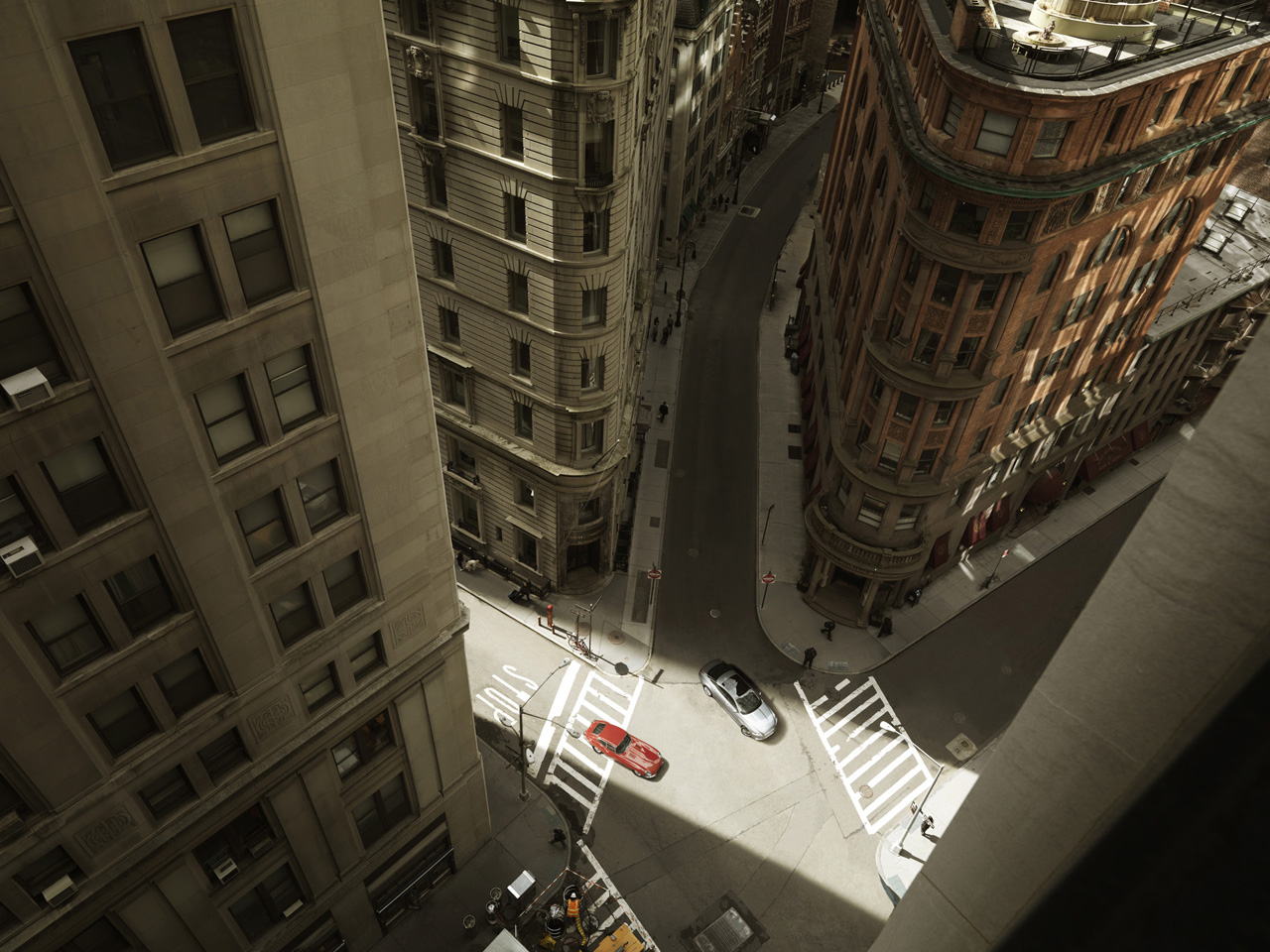
The Jaguar E-type is not the most beautiful car of all time. The Ferrari 365 GTB4/GTS4 is.
Now before you put hands to keyboard or storm the bastille of Amazo Tower voicing your disagreement, let me tell you why I think this is the case. For all of its beauty, the E-type does have some details that jar, to my eyes; the wheels are just a touch too inboard, the way the top of the door is built up to meet the straight window line look almost like an afterthought. And speaking of afterthoughts, the windscreen not only looks way too upright for the rest of the profile, but looks completely surplus to requirements, not surprising when you consider that the E-Type's lineage is effectively the C and D-Type Le Mans racers. Now, I'm not saying it's ugly (it's still a beautiful car) but when you're running the slide rule of absolute beauty over it, it just seems to fall down at the last few millimetres.
The irony of comparing a period Ferrari to the E-Type is more complex than you may think. Considering that on its release, Enzo called it "The most beautiful car ever made", it probably motivated him to top it, as cars such as the 250 GT Lusso, 275 GTB/4 and Dino 246 are signs that Il Commendatore probably had one eye on the Coventry cat. But rather than paying homage to it, Pininfarina's Leonardo Fioravanti took a completely different approach and designed a car with no stylistic connections to the past; the Daytona was born.
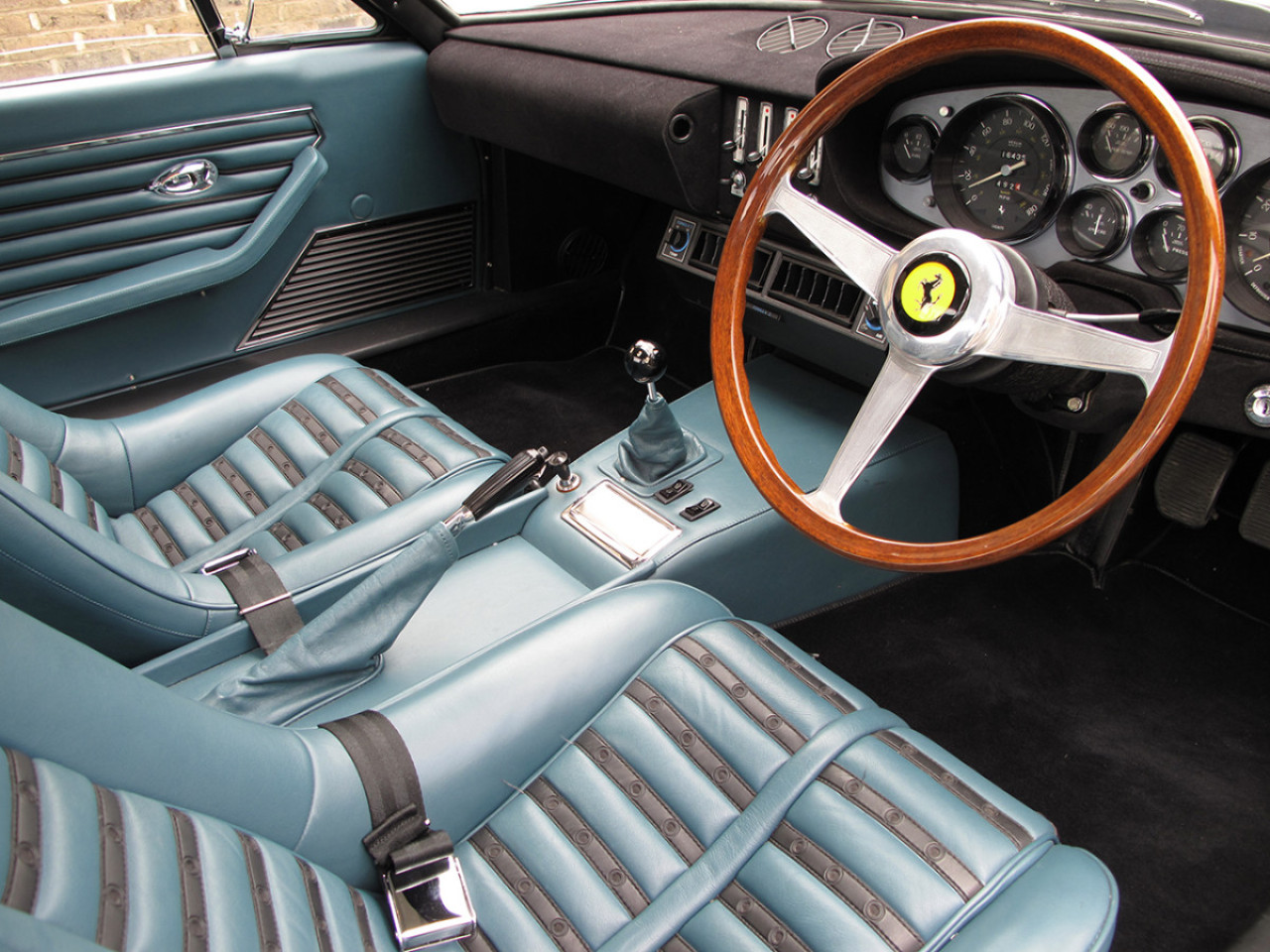
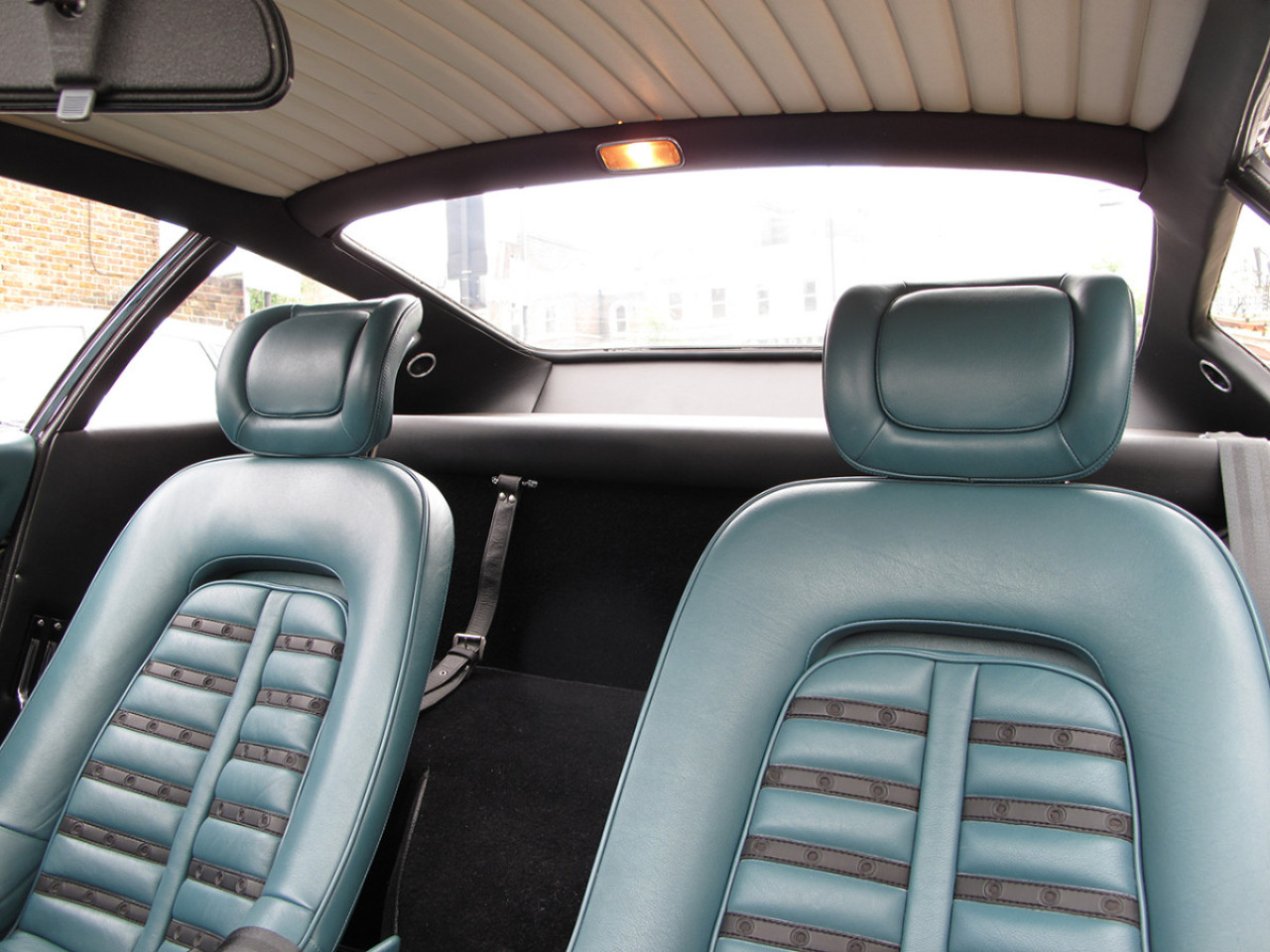
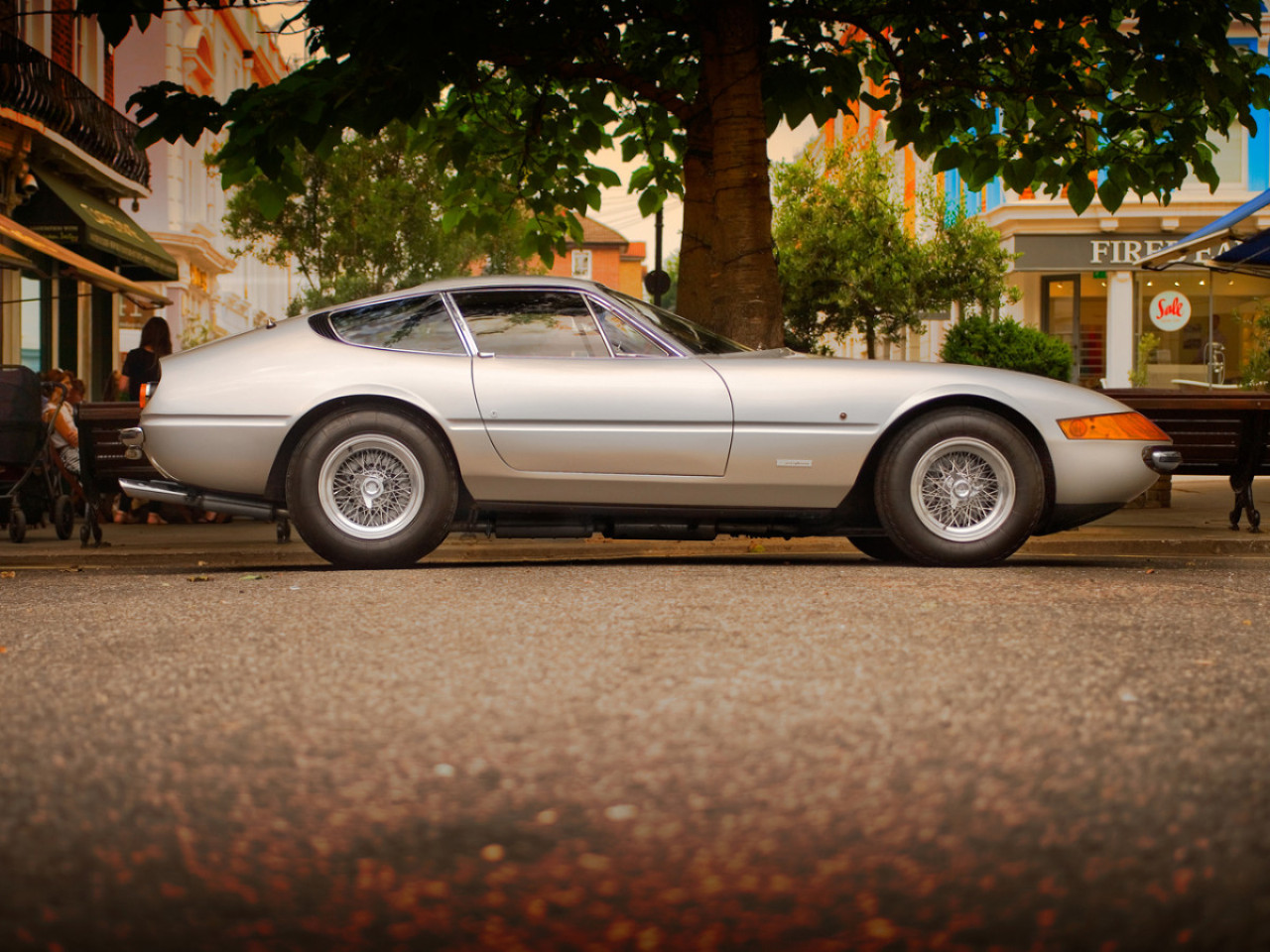
It was effectively the last hurrah of the front engine V12 Ferrari sports car (the 365 GT4 2+2/400/400i was based on the Daytona's underpinnings, but was more of a grand tourer, the later 456 served a similar purpose) until the 550 Maranello of the 90's. The 365 GTB4/GTS4 - the 'Daytona' moniker allegedly honours Ferrari's 1-2-3 finish in the 1967 Daytona 24 Hours with the 330P4 - was a development of the the 275GTB/4; a steel body by Scaglietti and underpinned by a tubular frame chassis. The wheelbase was the same (94.5 inches), but the track (56.7 inches front, 56.7 inches rear) was widened by half an inch. Suspension is classic 60's Ferrari; upper and lower wishbones, coil springs, telescopic dampers and beefy anti-roll bars front and rear. Controversially, Ferrari persisted with a steering box when the likes of the Miura and the E-type had steering racks; another sign that the Daytona was the last of a line. Like any Ferrari of the time though, the Gioacchino Colombo-designed V12 was it's crowning feature, taken out to 4.4 litres, 352bhp and 318lb/ft for this outing. But despite journalists of the time raising an eyebrow as to it's running gear and the engine placement, with unkind comments along the lines of the car being obsolete at launch because of the Miura, the car was proved to be more capable than Lamborghini's flagship.
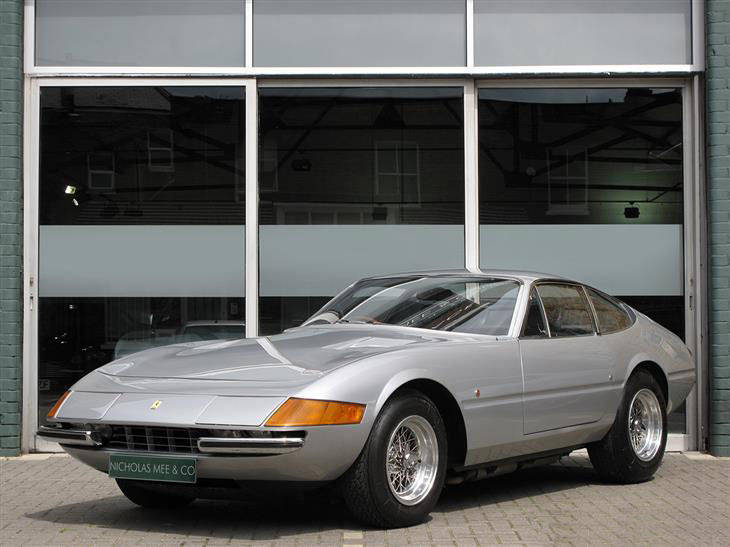
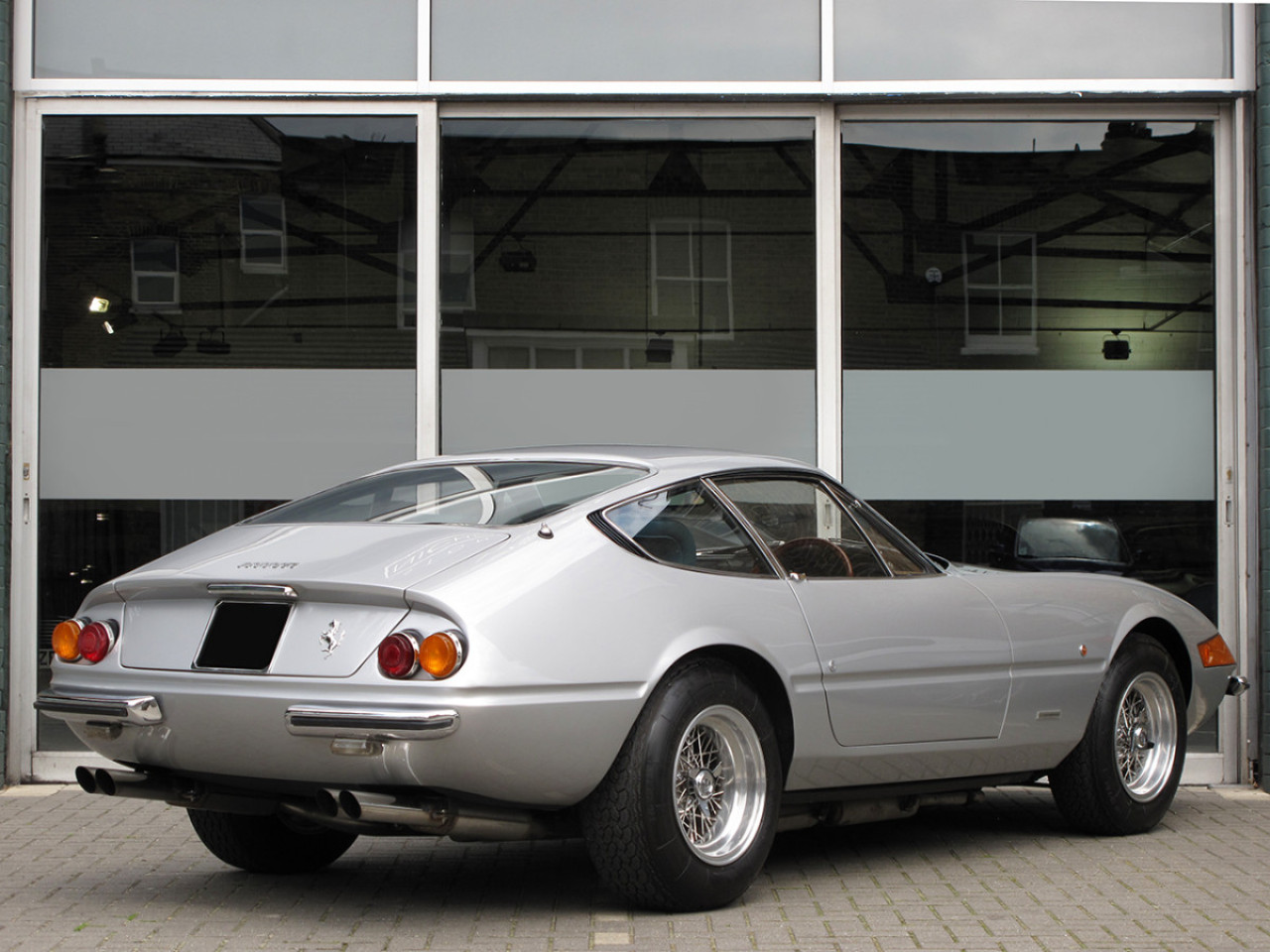
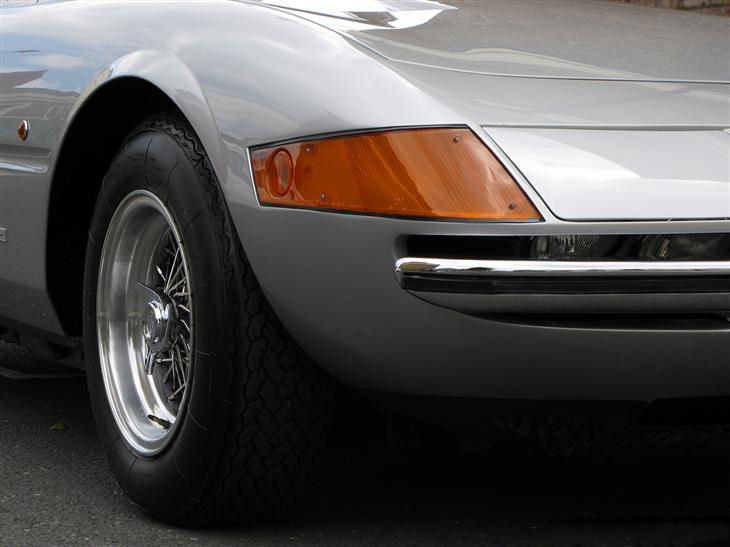
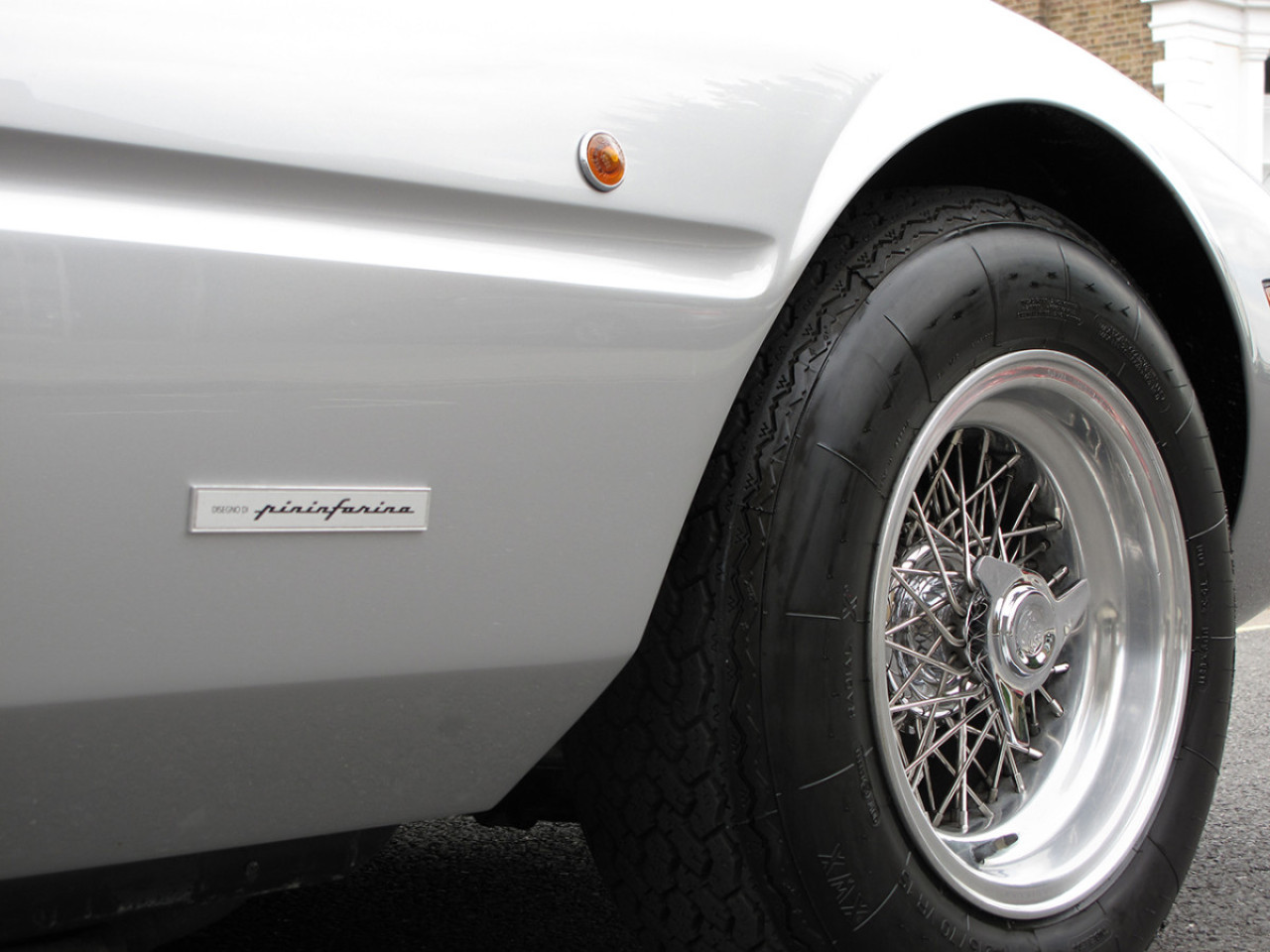
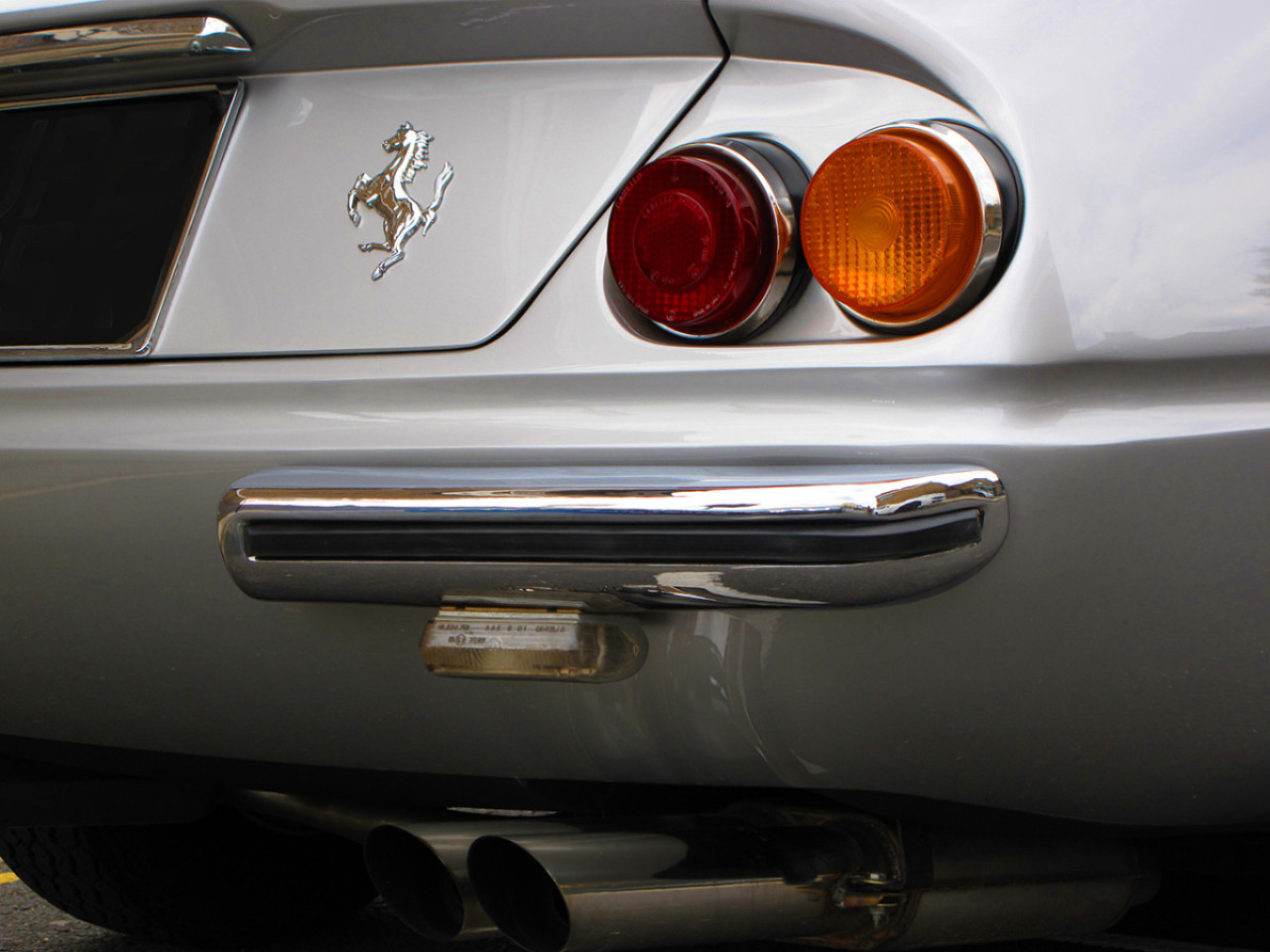
But it's the styling that really marks out the Daytona to the casual observer; Fioravanti took a clean sheet to the familiar mechanicals and created a design that really is timeless. Remember, the family cars at the time were the likes of the MKII Cortina and the Vauxhall Victor FD, while the recently introduced Series II E-Type had lost a little of the delicacy of the Series I. The lines are tight, there's no unnecessary ornamentation and the whole shape flows from bumper to bumper. Traditional Ferrari cues such as Borrani wire wheels and the four exhaust tips fit in perfectly, while the twin rear lights (first seen on the previous year's Dino 206) were to become a styling signature right up to the 612 of 2004. And the whole shape just looks fast, without trying too hard; the likes of the 250 GTO and 275GTB/4 also look fast but are styled more aggressively to accentuate that. The Daytona tells you that fact at no more than a visual whisper. I get the impression that Fioravanti drew three lines that defined the shape and the rest was mere details; it's probably the way the E-Type was also styled, but I think that Fioravanti's pen was just that much slicker than Malcolm Sayers on this occasion.
-Amazosan
NB the car here is actually for sale here; POA, naturally.