12 November 2012

Citroen 2CV By Hermés - Classe Ouvrière Chic


What does a Bugatti Veyron and a Citroen 2CV have in common? It's certainly not BHP, 0-60 times, top speed or showroom price, but you knew that anyway.
It's a French leather goods and lifestyle accessories brand established in 1837, called Hermès.
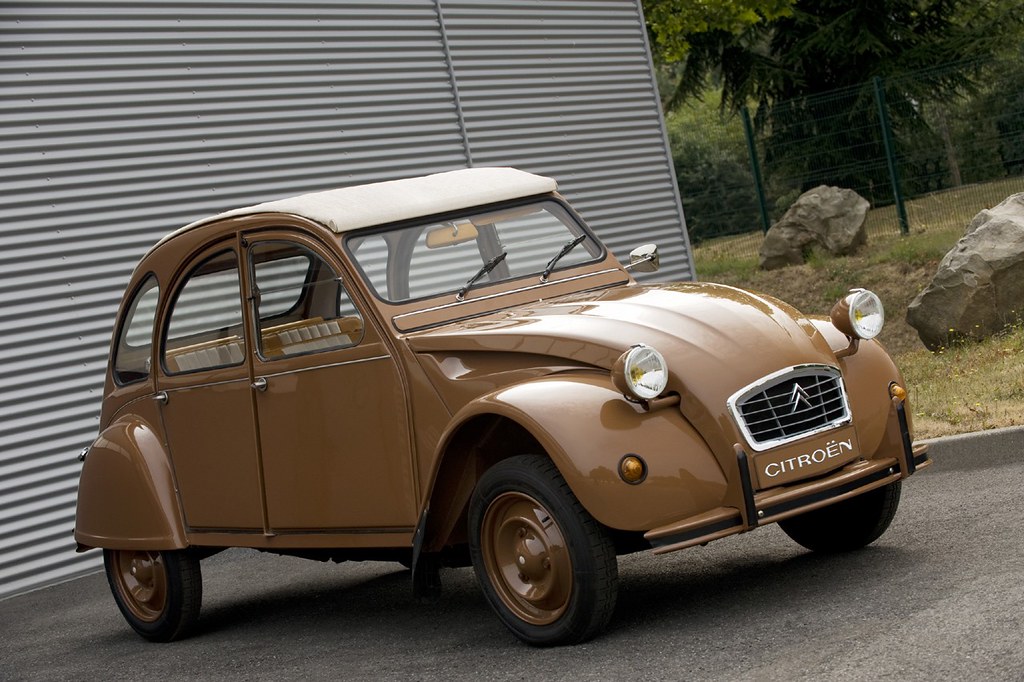
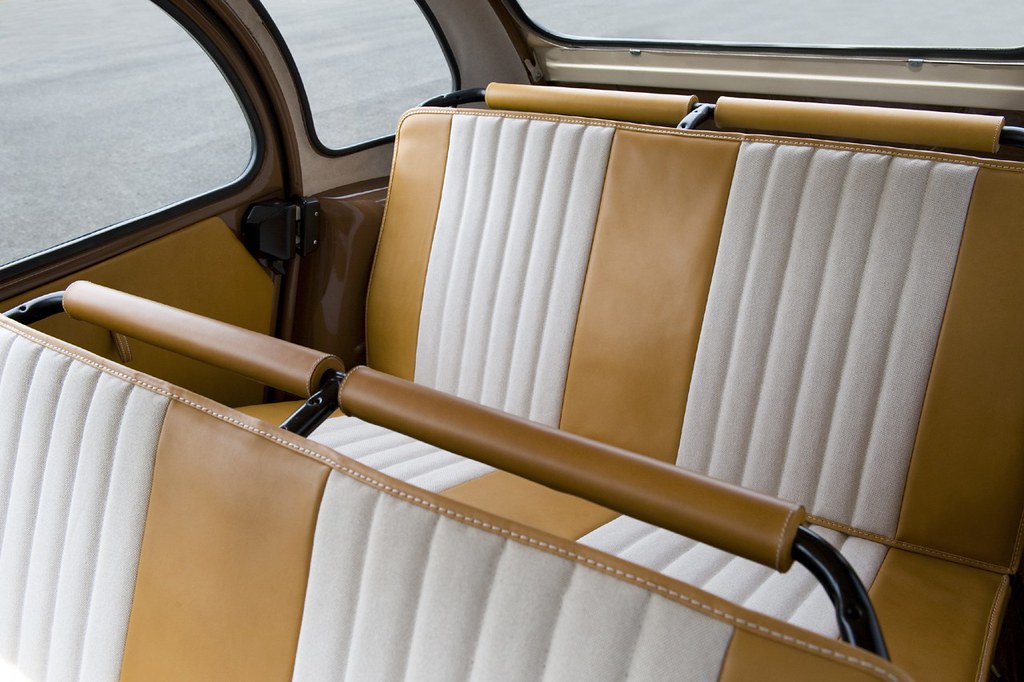
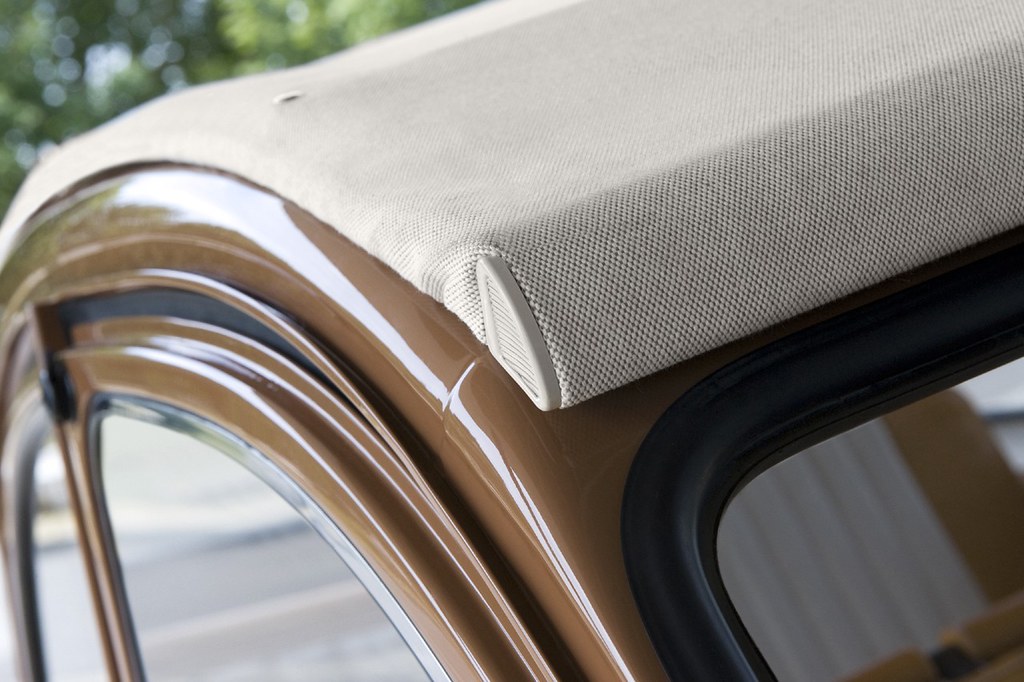
A Deux Cheveux does seem like a slightly odd choice as a 'lifestyle accessory', especially given that it was originally designed as a lifestyle necessity, but the re-imagined interior certainly does suit it. OK, the exterior colour choice does seems a bit ouvertement chocolaté, but once you open the wafer-thin door, that cabin does look like a great place to be.


Here's Citroen's own words on the 2CV Hermès:

'The 2CV celebrates its 60th birthday during the Paris Motor Show, on 7 October 2008. To celebrate the event, Hermes has designed a made-to-measure outfit that highlights the vehicle's ever-friendly and generous forms.
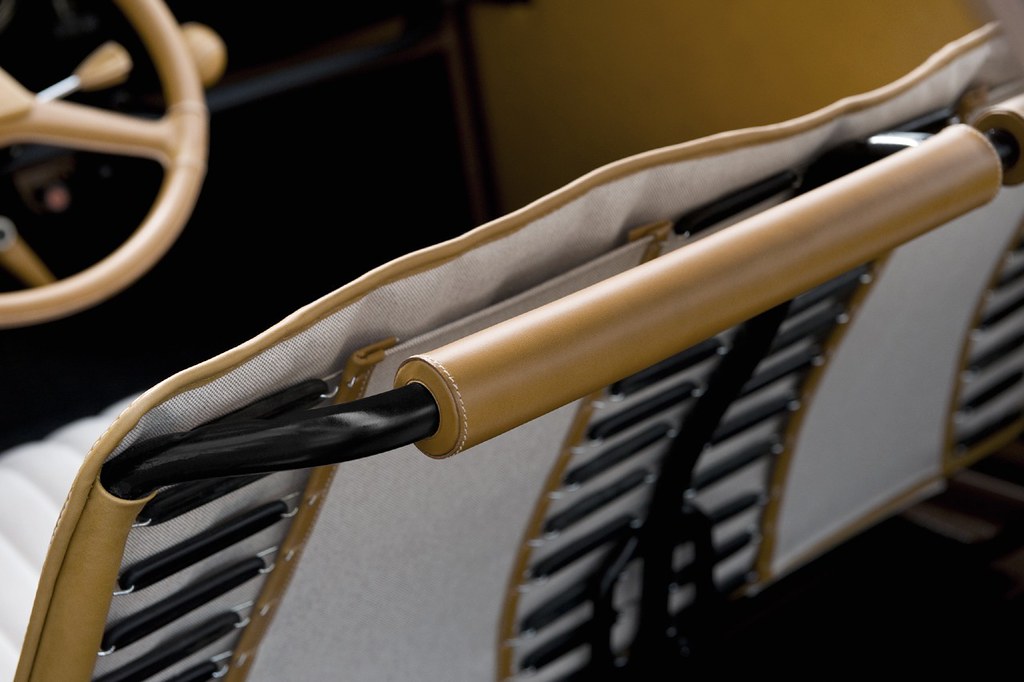
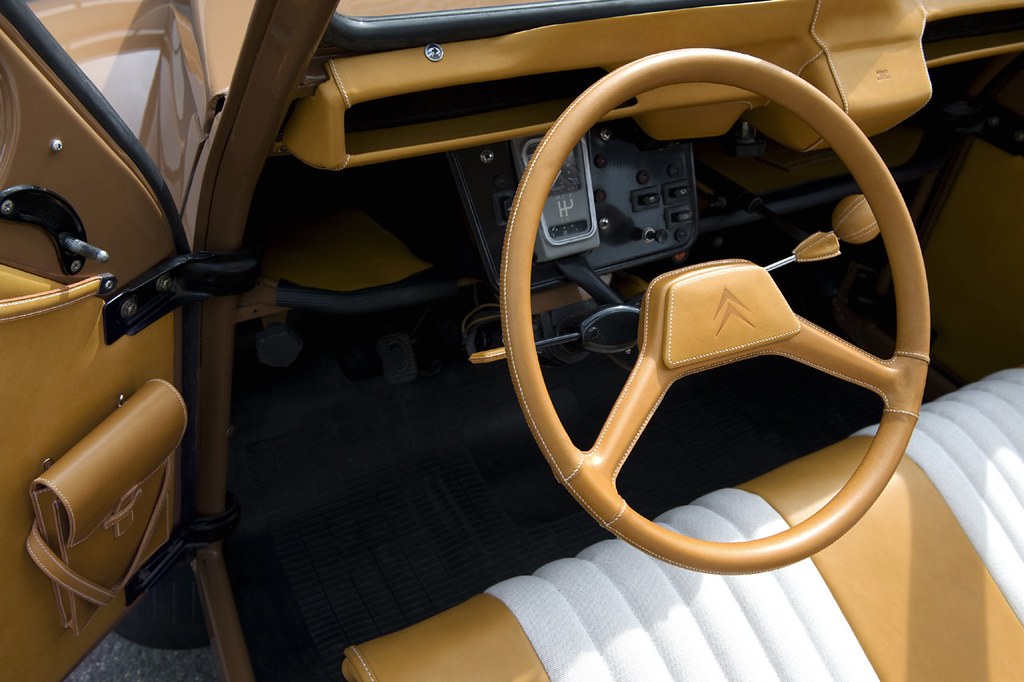
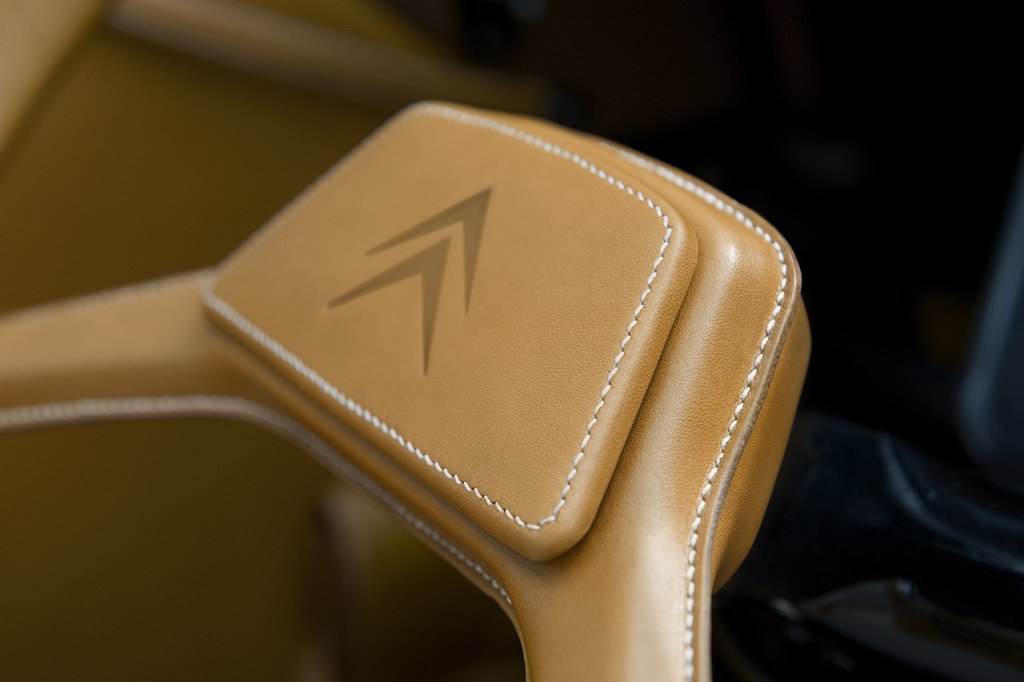
The 1989 2CV 6 Spécial, repainted in brown, gains a natural leather trim on the door facings, interior rearview mirror, gear knob, §teering wheel and driver's sun visor. For an even more elegant finish, the two seats are upholstered in Hermès grey-beige cotton canvas and natural leather. As a finishing touch, the bonnet and interior trim at the rear of the vehicle also feature Hermès cotton canvas.
An exhibition celebrating the birthday of this legendary car opened at the Cité des Sciences et de l'Industrie in Paris on 15 April and is scheduled to run until 30 November 2008.'


The car in question, a 1989 Citroen 2CV6 Special was refitted for the 2008 Paris Motor Show. If you've seen the Hermès Bugatti Veryon you know what to expect, with swathes of that trademark hand-stitched Hermes leather everywhere, contrasting with off-white canvas facings on the front and rear seats. The Hermes treatment is worth more than the car, but as it's a 2CV, we'll all forgive the lovable tin snail for a bout of hedonistic excess on it's birthday.
After all, Aston Martin are basically performing the same trick on a Toyota iQ, a car that has only a residue of character in comparison with it's illustrious antecedent.



Goldenrod


9 November 2012

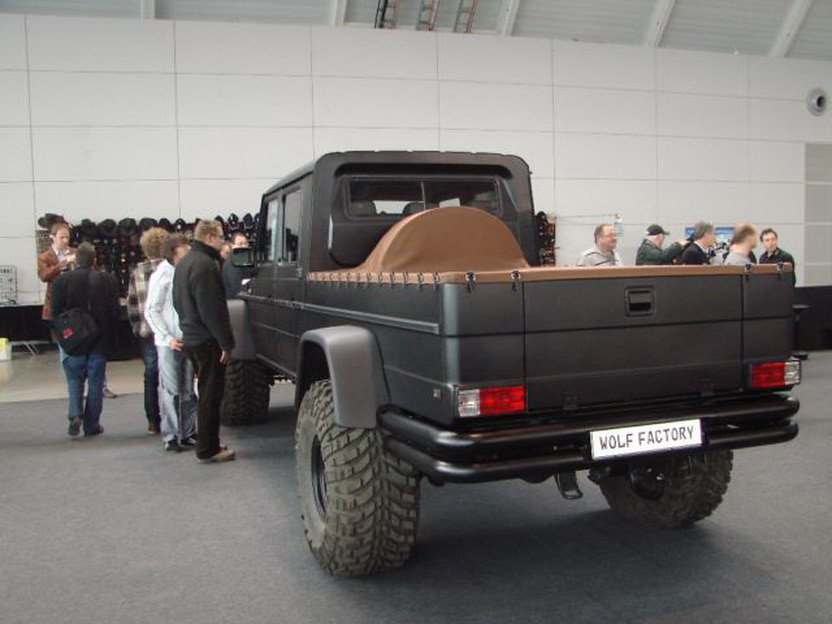
2002 Mercedes-Benz G500 XXL - Hammer Wagen


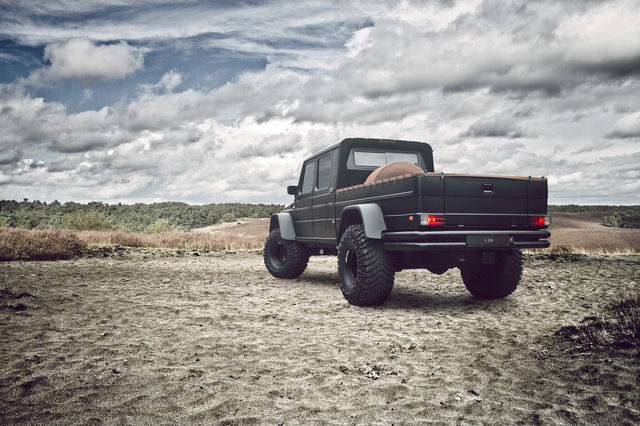
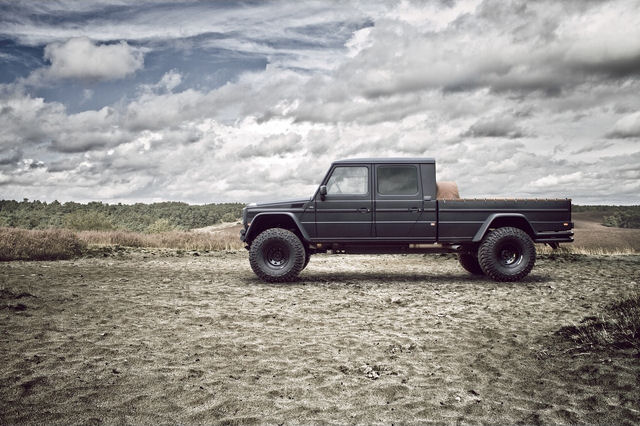
A one-off Mercedes G-Wagen pick-up truck forged from a humble 2002 G500, built by German customizer GWF for an American client and came up on eBay recently with a BIN price of $99,000. We'll take two.
The stats for this behemoth are impressively large: 86.6 inches tall, 88.6 inches wide and a touch over 248 inches (20.6 ft) in length, or just over 8 inches longer than a LWB Rolls-Royce Phantom. That and the fact that it weighs in at a honking 6173 lbs empty kinda makes this Geländewagen a Goddam-Wagen to our eyes.
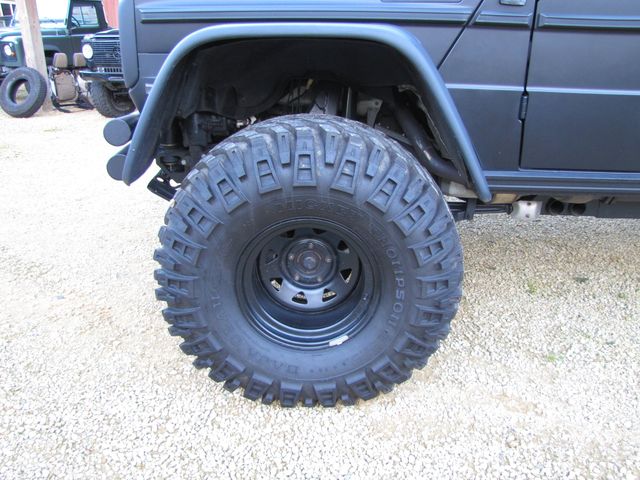
Engine is the US-spec 5.0-litre and the car rides on 38-inch Mickey Thompson off road tyres, while the interior is as Herr Benz intended, with black leather and the usual toys for a 2002 G-Class.
For those that like their Hummer with a Hammerschmiede twist.


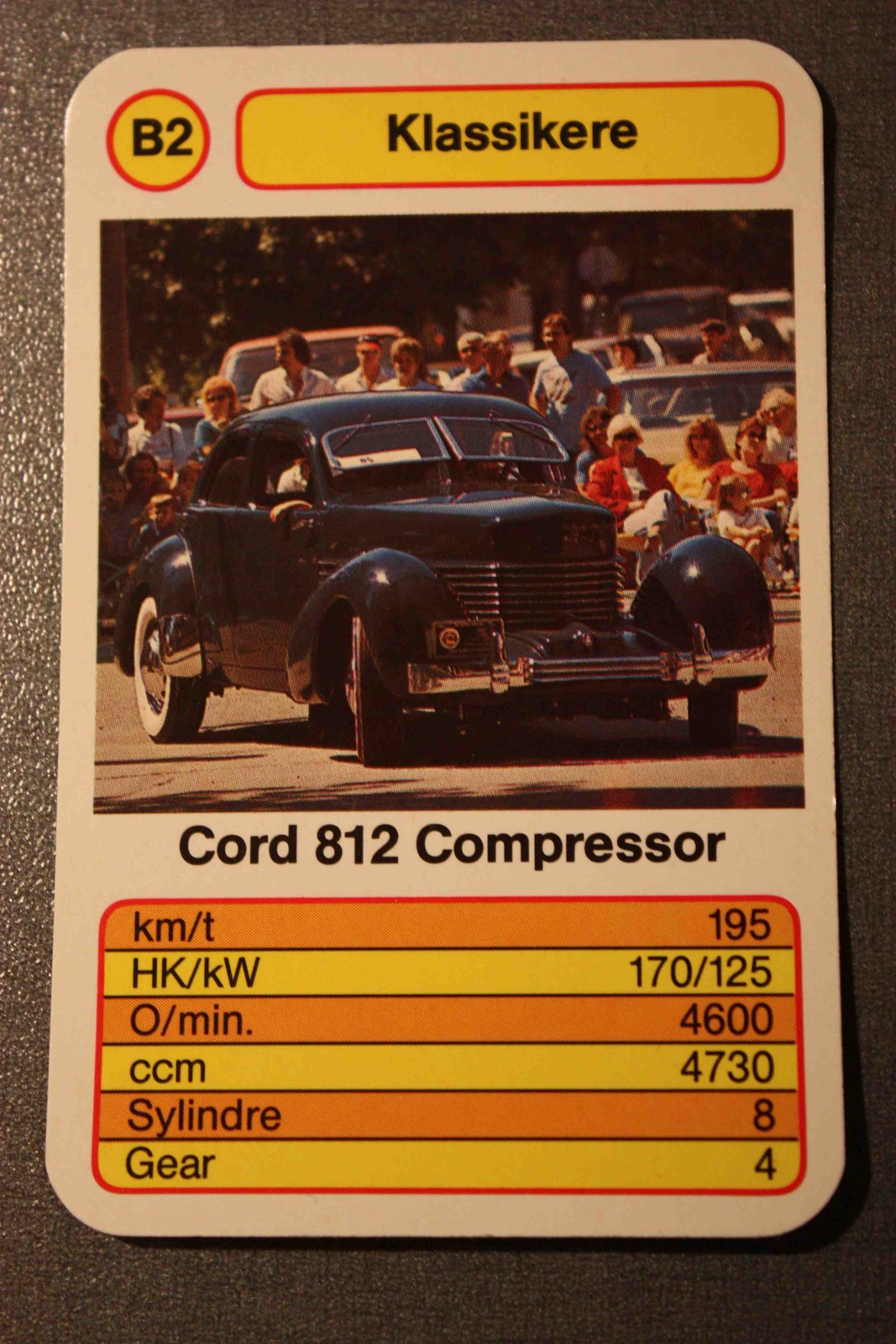
Top Trumps Car Of The Day - Cord 812


7 November 2012

Digging In The Crates: Just Another Mannic Monday


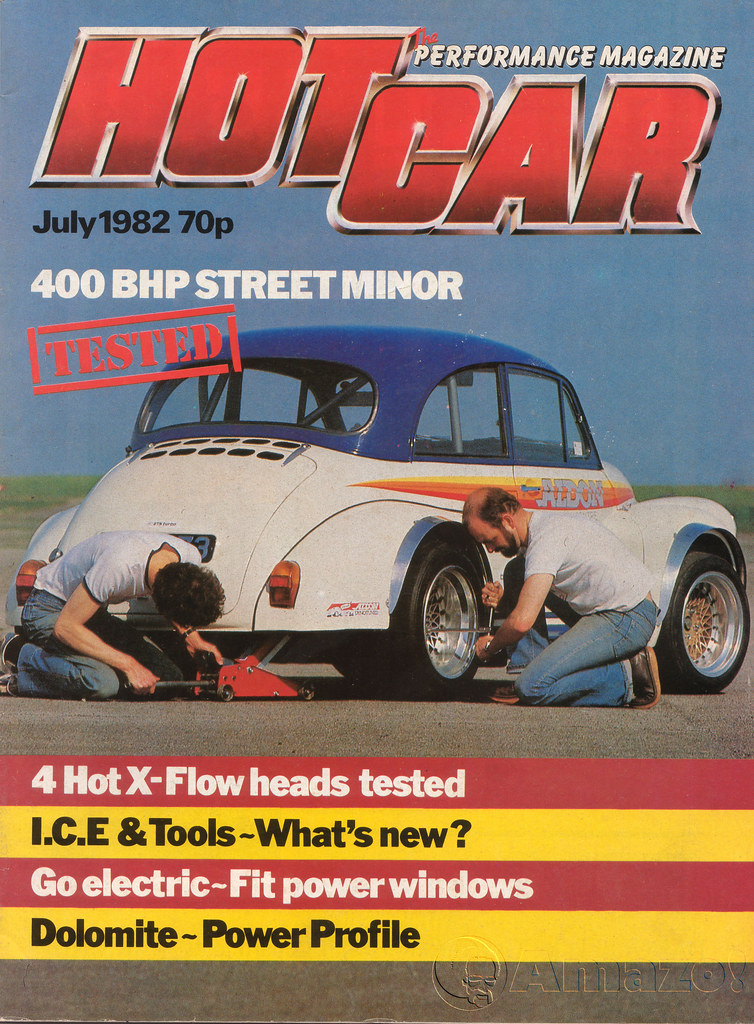
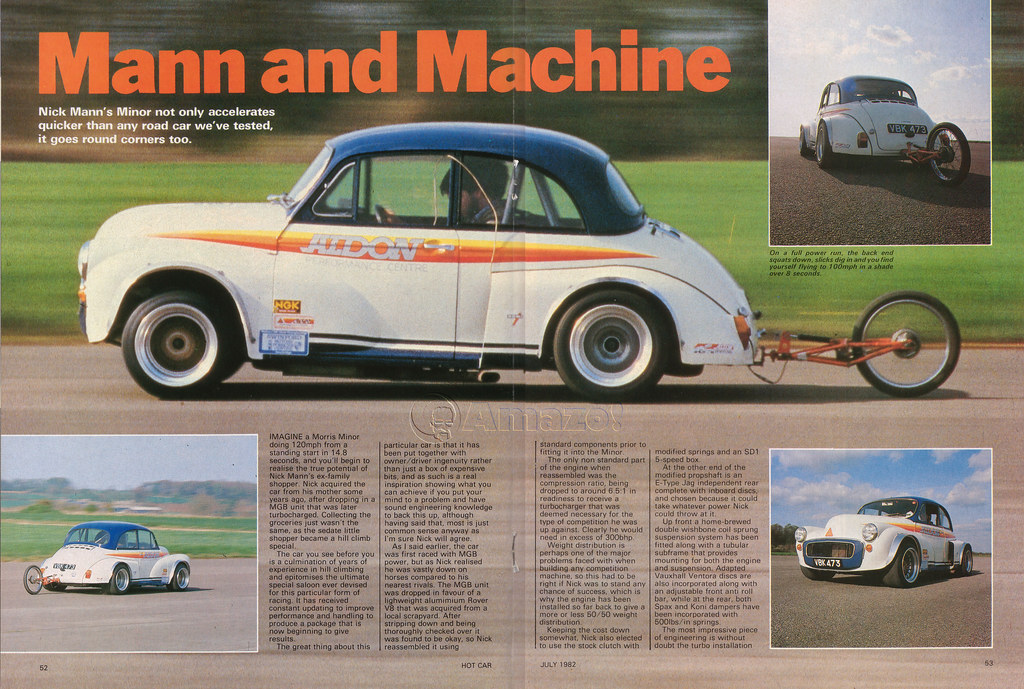
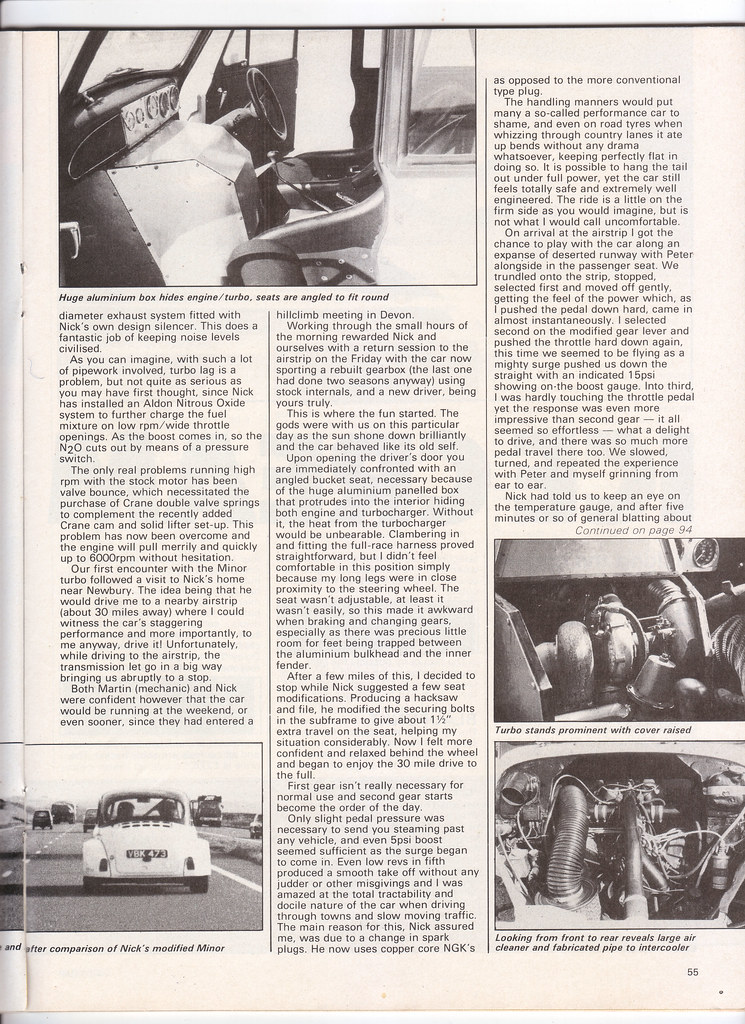
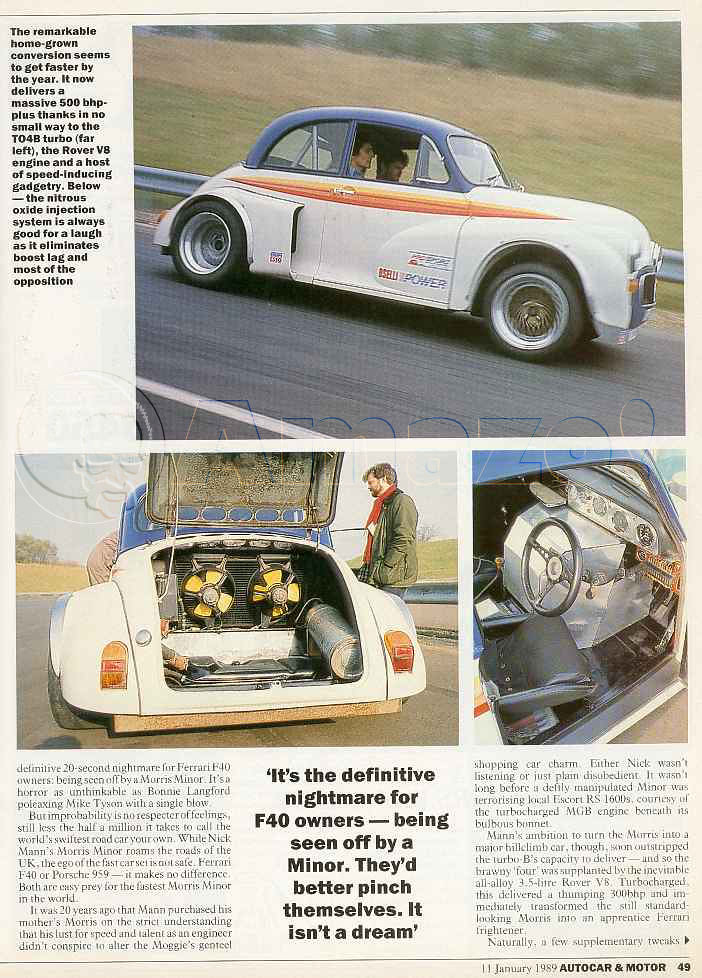
This car shouldn't need much of an introduction to most; Nick Mann's much-modified turbocharged, injected, NOS-boosted, 500 bhp 3.5 litre Rover V8 powered Morris Minor. The scans (as always on a 'crates' feature) tell the whole story, but to summarise for the uninitiated, Nick Mann originally built this machine to go hill climbing in the 1980's.
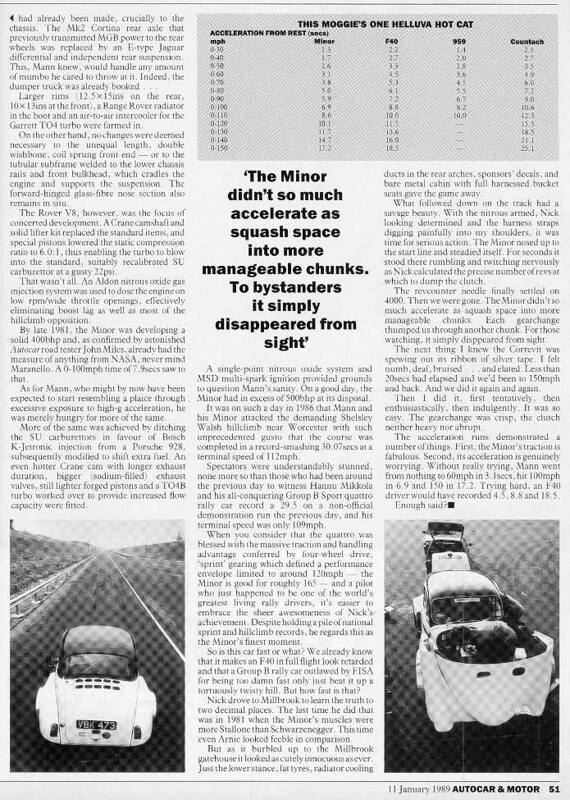
It took on (and beat) all-comers in the old Street Machine Street Racer championships for years, eventually on losing to a Alan Carter's Pontiac-powered Ford Pop. At Shelsley Walsh hill climb in 1986, it completed the course in 30.07 secs at 112 mph. To give you an idea how quick this was, the previous day, Hannu Mikkola, driving a works Audi Quattro Sport did the course in 29.5 secs at 109 mph. The amazing figures don't stop there. When tested by Autocar & Motor back in 1989, they squeezed these acceleration figures from it: 0-60 3.1 secs, 0-100 6.9 secs and 0-150 20 secs. Figures that blew away the contemporary Ferrari F40, Porsche 959 and Lamborghini Countach. Come to that even the mighty McLaren F1 isn't that much quicker until it gets over 120 mph (0–60 in 3.2, 0–100 in 6.3, 0-150 in 12.8).
Of course, being a home-built special, Nick didn't have access to the seemingly bottomless R&D budget the supercar makes had. Traction control? Try a length of railway line under the boot floorwith 'traction by GWR' written on it. It's still stupidly quick, even by today's standards.
There are conflicting (and probably unconnected) stories as to what happened to the car:
1) It's still owned by Mann (the car is still taxed, that's for sure)
2) Drag racer 'Wild' Bill Sherratt bought it
3) It was converted to twin turbos
4) The turbo was swapped for a gas turbine in the quest to eliminate turbo lag. Presumably then, this was the precursor for Nick perfecting the arrangement in his Mannic Beattie hill climb car, which has the starter motor off a Wessex helicopter.
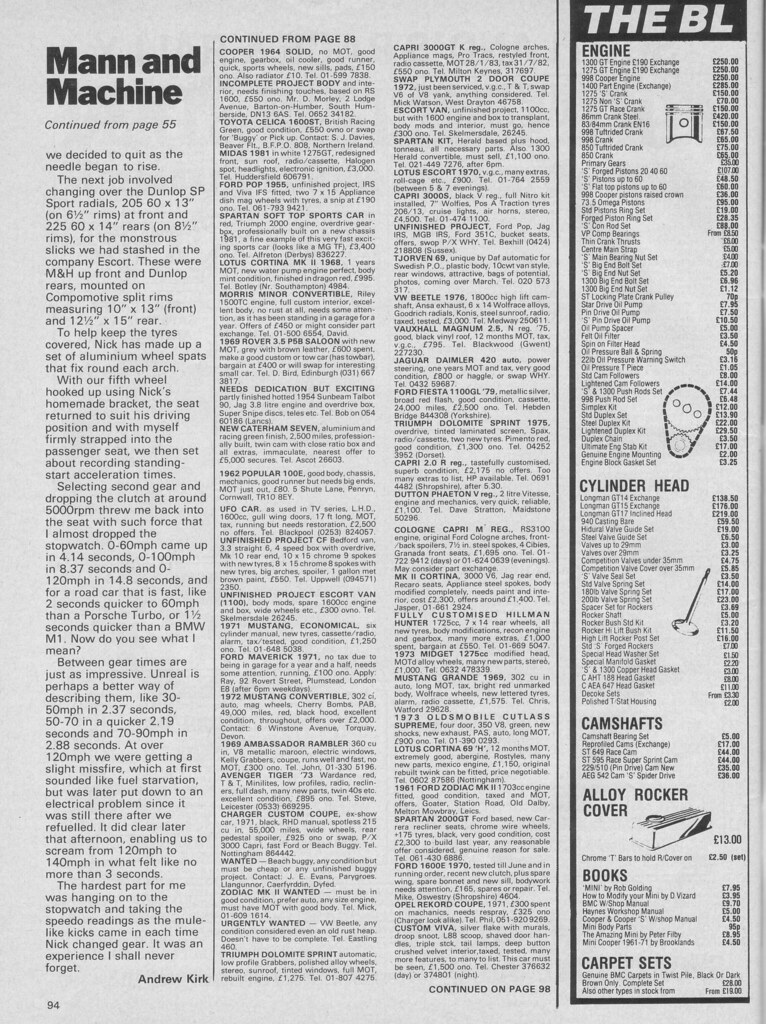
Scans from the Hot Car test in 1982, when it 'only' had 400bhp. On a tangent and just for fits and giggles, I've scanned the whole of the last page. Check the classified ads. Have a read. And then cry...
- Amazosan


A mint condition, MKII Lotus Cortina for under a grand? An Avenger Tiger for under £900?
I'm off to the broom cupboard to quietly weep .


And the Autocar & Motor test. The quote about the acceleration is a classic:


All Hail The Chief


5 November 2012

Cars Of The Blackout - Superstorm Sandy's Wheeled Survivors

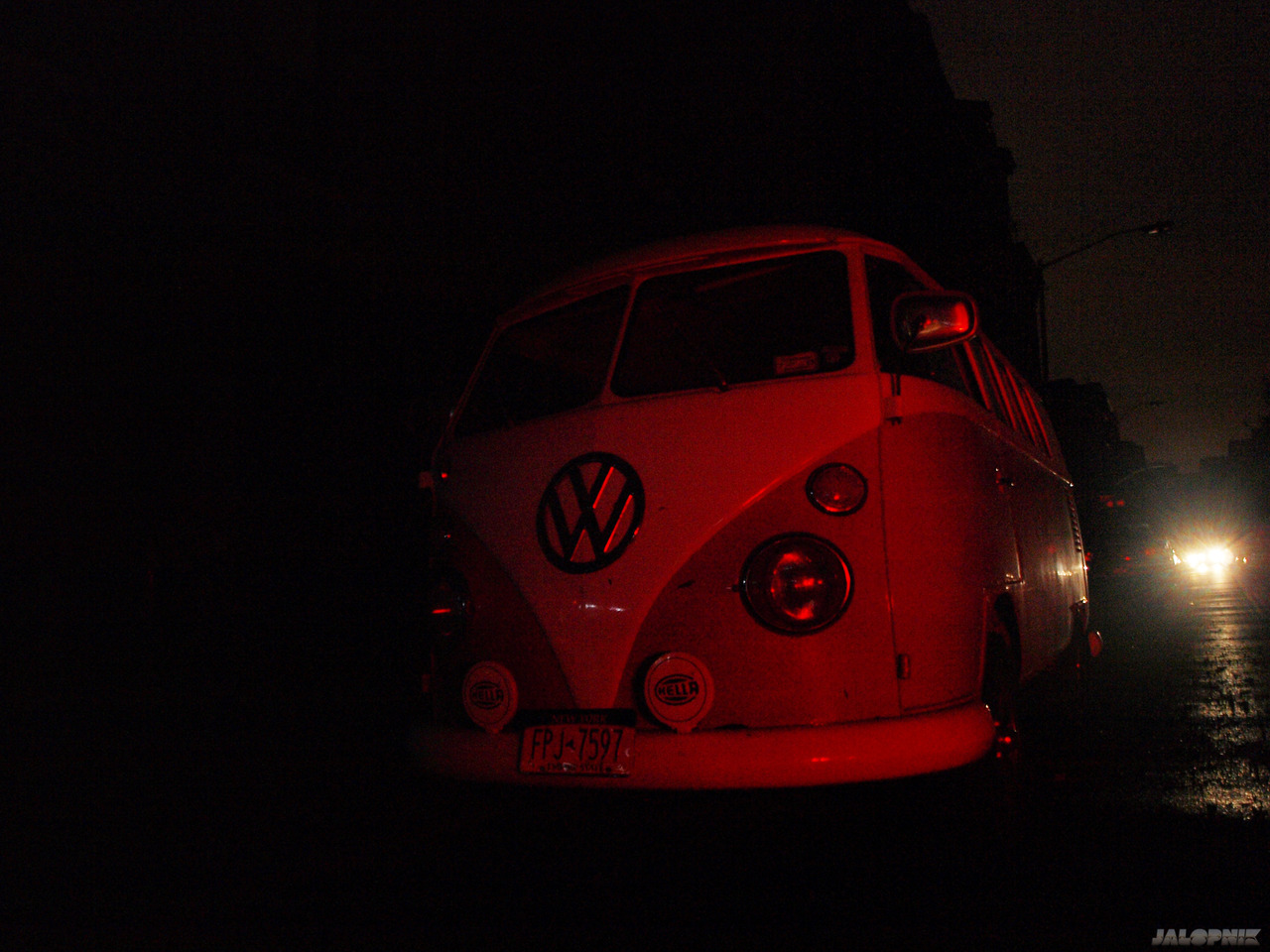
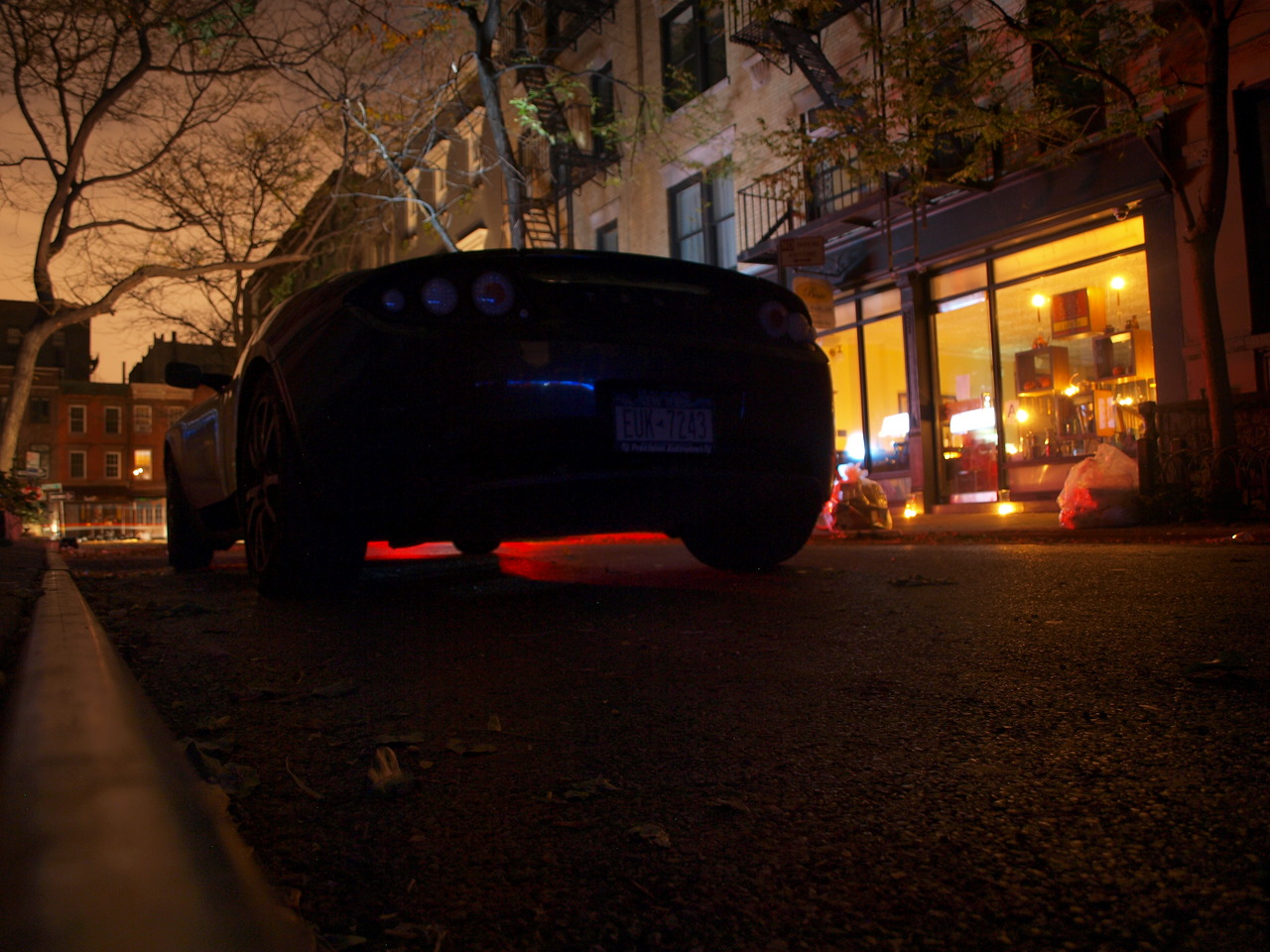
From Jalopnik's backup site; their main servers are down because of Superstorm Sandy on USA's east coast. You've no doubt seen what those conditions have done to the populace; compared to the efforts of everyone concerned to get back to normal, cars are naturally a very low priority. The pictures below are a sort of testament to that; not one person is to be seen in shot. Suddenly people's pride and joys are left to fend for themselves.
Ralph Orlove, a regular contributor to Jalopnik, decided to go in search of such temporarily-lost souls. While some might question that his time would have been better spent on humanitarian concerns, you can't deny his pictures, most of them taken in near darkness, with most of the illumination provided by passing traffic, are a little eerie. Lets hope that all of the countries involved - not just the USA; Cuba and Canada are two others that have suffered - make a swift recovery.


Forlorn-looking Lincoln Continental in Lower Manhattan:


GranTurismo MC Stradales hiding in a Maserati dealer, again in Manhattan:


While over the road, a Dodge Challenger contemplates while traffic flashes past:


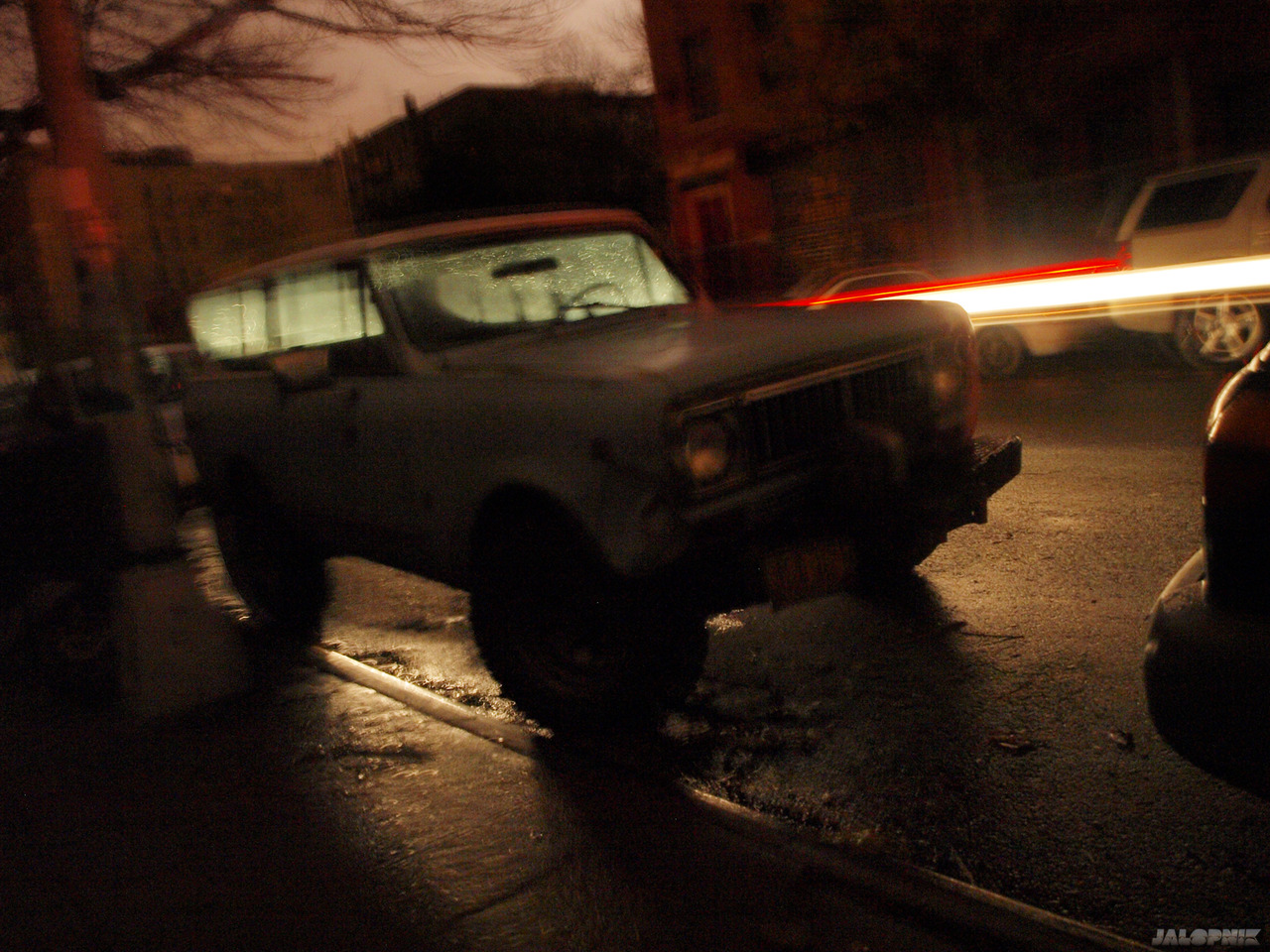
In East Village: an International Scout, parked outside for Sandy’s worst:


Type 2, hiding in the gloom:


It shouldn't happen to a BMW E3. Or it's owner.


One has to wonder what effect the flood water would have on the high-voltage electrics in a Tesla:


Val-deri,Val-dera


2 November 2012

NASA Moonstream - An Out Of This World Ride


Here at Amazo Towers, we like to pride ourselves on being able to bring you something just a little different from the automotive norm. This takes some doing sometimes; in searching for transportation-shaped nuggets, it often takes us to far flung-places, to foreign lands little heard of, hell even to the ends of the Earth.
And occasionally, off it.


People often forget about the fact that NASA has been instrumental in developing a nifty line in vehicles that are not only off-road, but off-world too. The Lunar Roving Vehicle (LRV) was a battery-powered four-wheeled vehicle used on the Moon in the last three missions of their Apollo programme during 1971 and 1972. Scarab is a new generation autonomous lunar rover designed to explore the lunar south pole. The ATHLETE (All-Terrain Hex-Legged Extra-Terrestrial Explorer) is a six-legged robotic lunar rover test-bed under development by the Jet Propulsion Laboratory and is a test bed for new systems. And of course, you've all heard of Curiosity, the car-sized robotic rover exploring Gale Crater on Mars as part of NASA's Mars Science Laboratory mission.


But none of these fine vehicles can fit more than 2 or 3 people, and in most cases, no-one at all. If we ever get to build bases on the Moon or Mars, how are we going to transport cargo or larger groups of people from one place to another? We need bigger vehicles. For this particular reason, NASA has just came up with a large vehicle design they call the Moonstream.
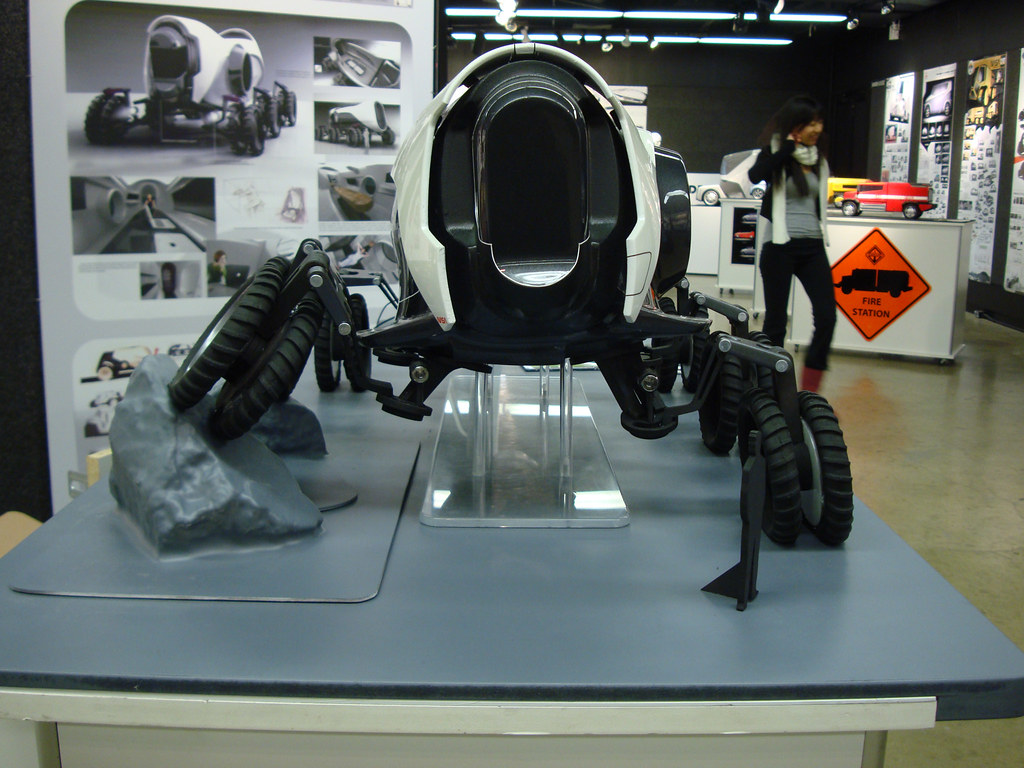
The NASA-sponsored Moonstream concept is a design proposal for a future moon exploration vehicle for the year 2020.


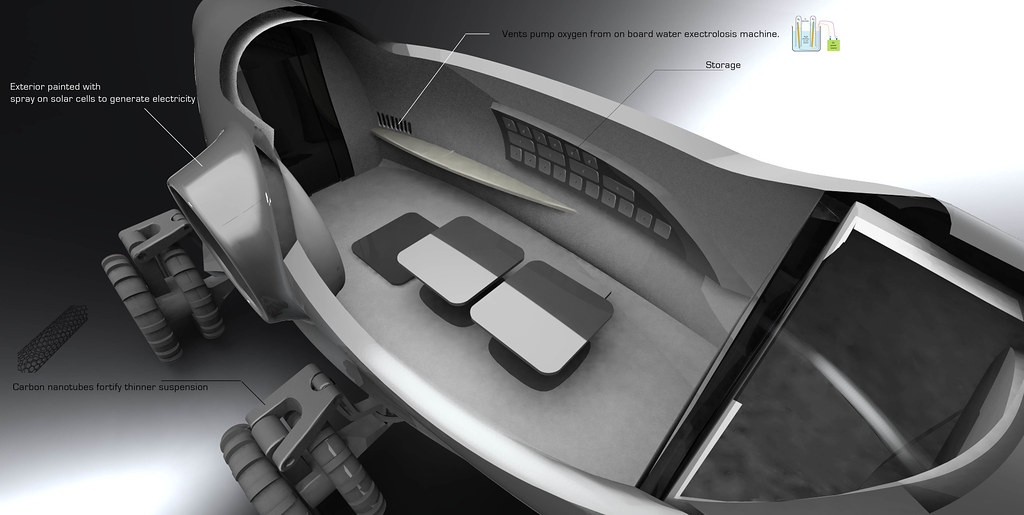
It was created by Anthony Sims, an Art Center (sic) College of Design student, who you might know for his Mazda Tanken concept. This is a vehicle heavily inspired by nature, for example the design of the body taking inspiration from the shell of a tortoise, the wheels have the capability to move slowly like an insect and are completely adjustable for height and track, similar to Curiosity. The difference lies in its size and in the fact that it can be manually driven by a pilot, standing in a separate, elevated pod at the front of the vehicle.


From inside, the vehicle is styled to offer a comfortable living space with provision for the latest communication technologies. Every commodity and functionality allowed by today's technology has been incorporated and combined into a retro look, which seems to have been drawn from 2001: A Space Odyssey. Just make sure that none of it has a HAL moment when you need to hook up your Nintendo. The rest of the capsule has a big enough area for sleeping and working, furnished with all the amenities you would expect in what sounds essentially like an lunar motorhome. Check out the size of the Moonstream in comparison to its passengers; this beast would be big.
If the return to the Moon and exploration of Mars goes ahead in the next few years, then Moonstream may well become a reality. At this point, however, it is still a design exercise, but we can dream.
In this instance, the sky isn't the limit.


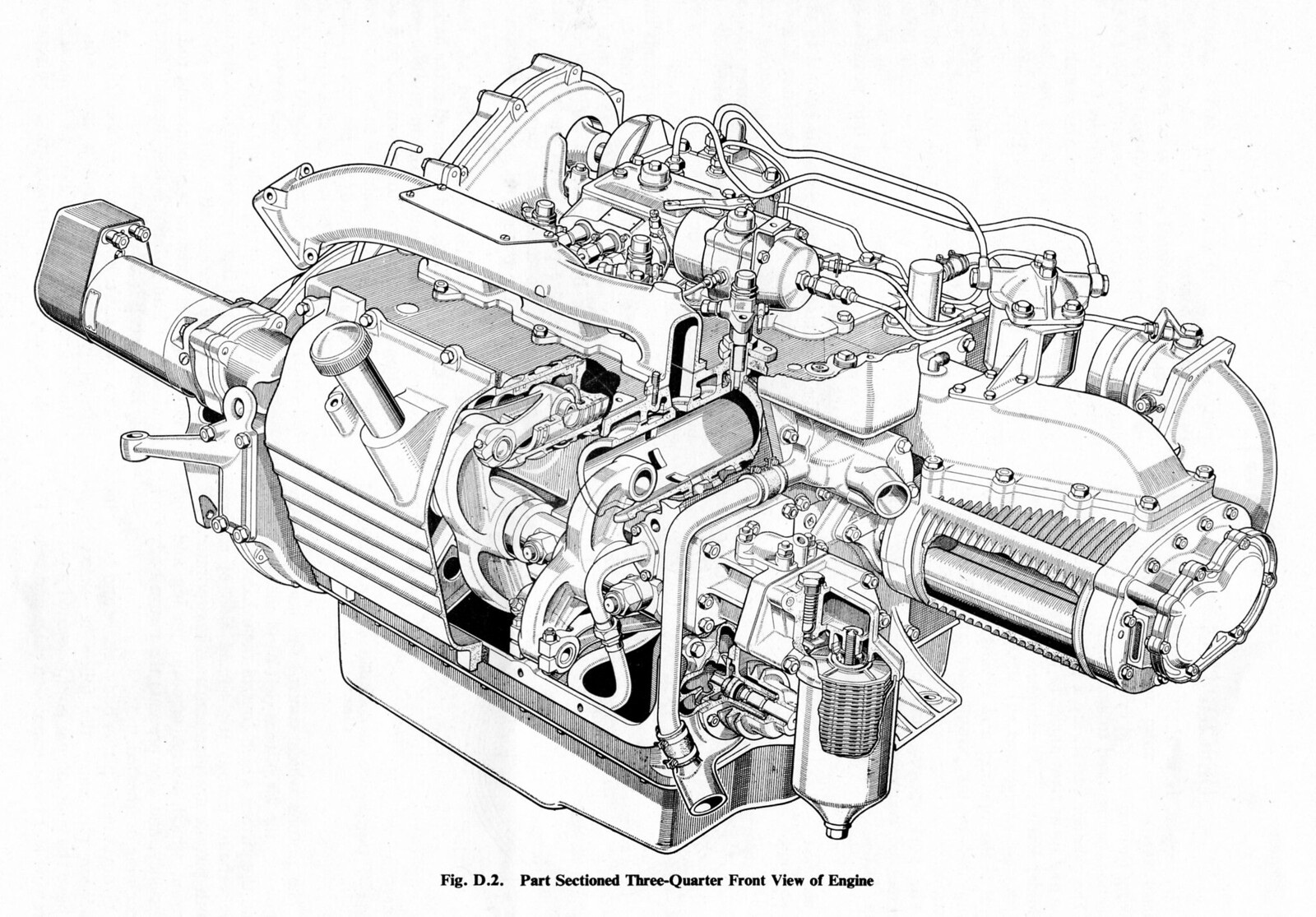
The Cutaway Diagram Files: Commer TS3 2-stroke Diesel Engine