

21 September 2012


19 September 2012
Digging In The Crates: Ian Etheridges's 'Celestial'

ce·les·tial
phonetic: [suh-les-chuhl]
adjective
1. pertaining to the sky or visible heaven.
2. pertaining to the spiritual or invisible heaven; heavenly; divine: celestial bliss.
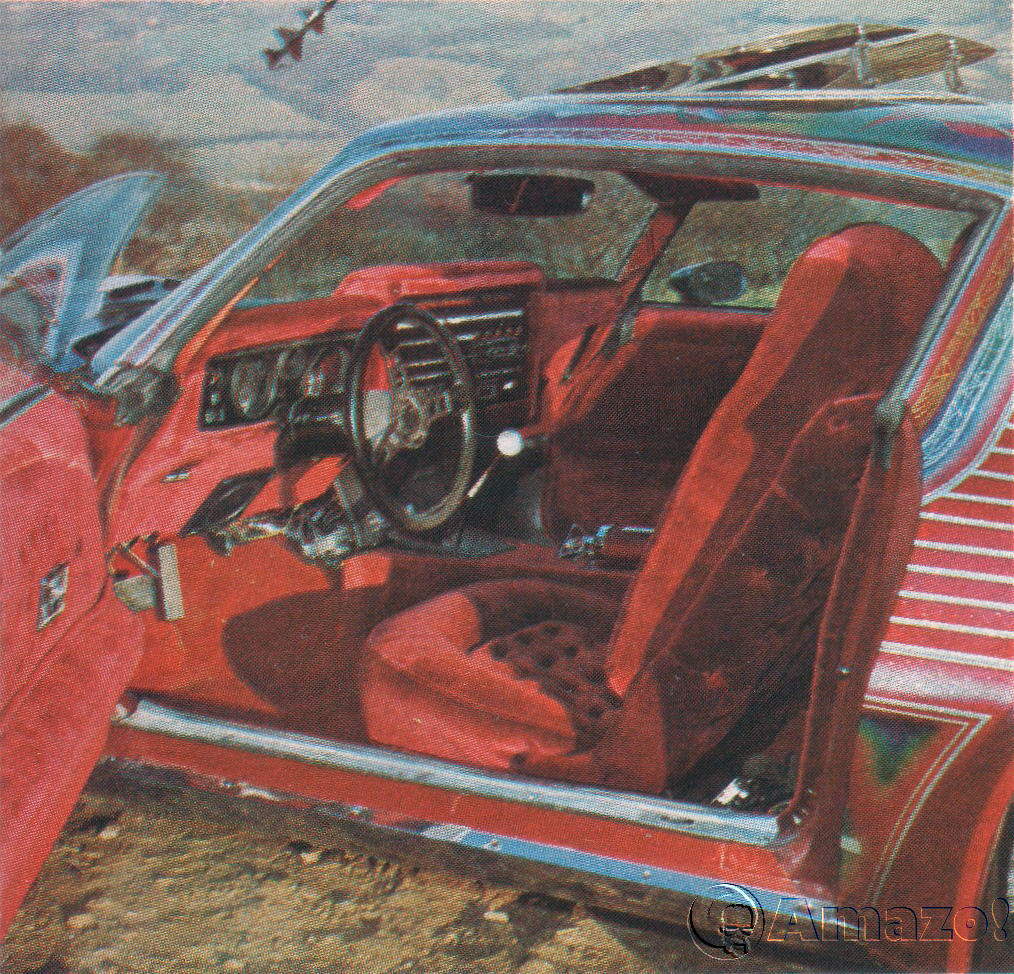
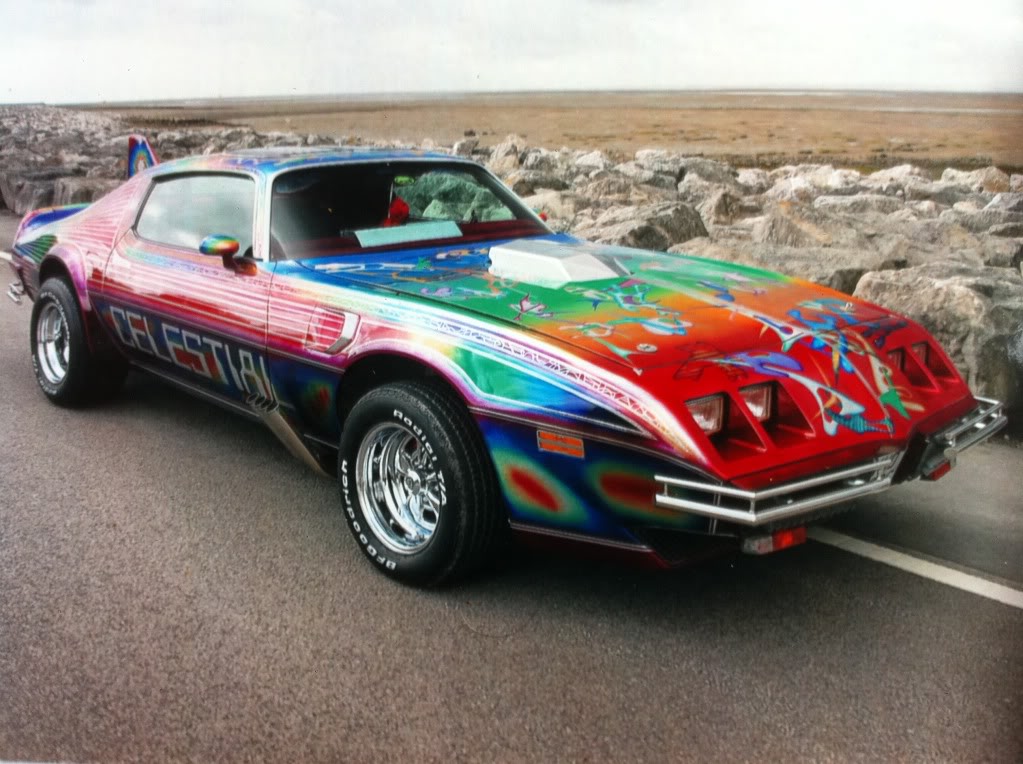
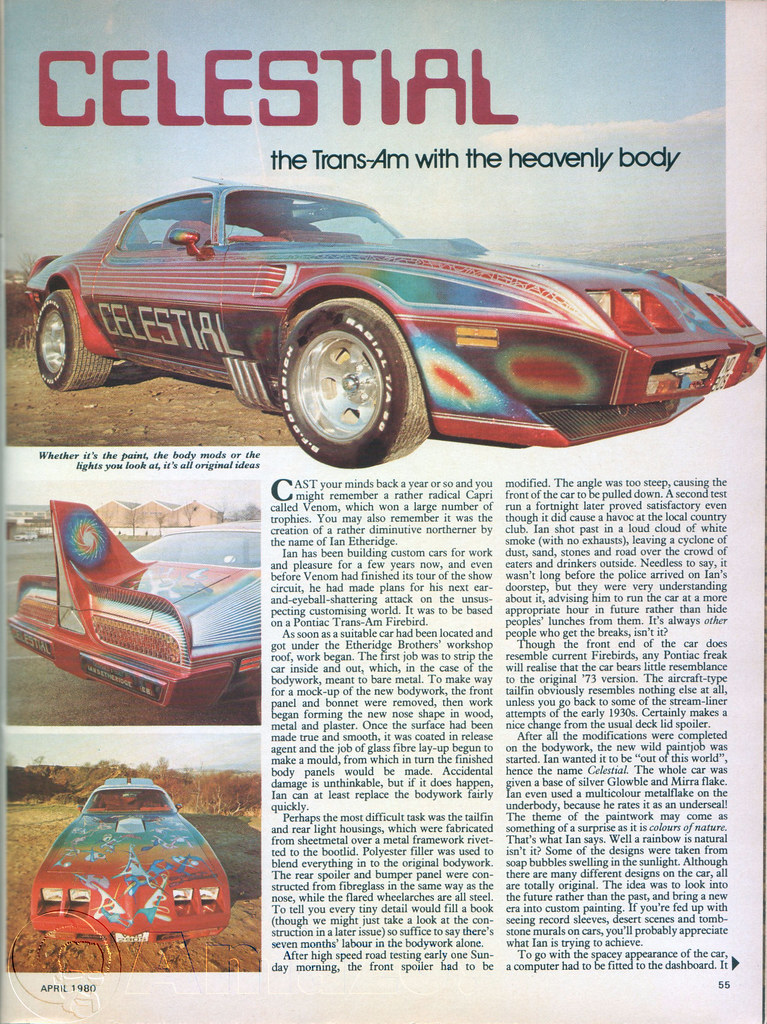
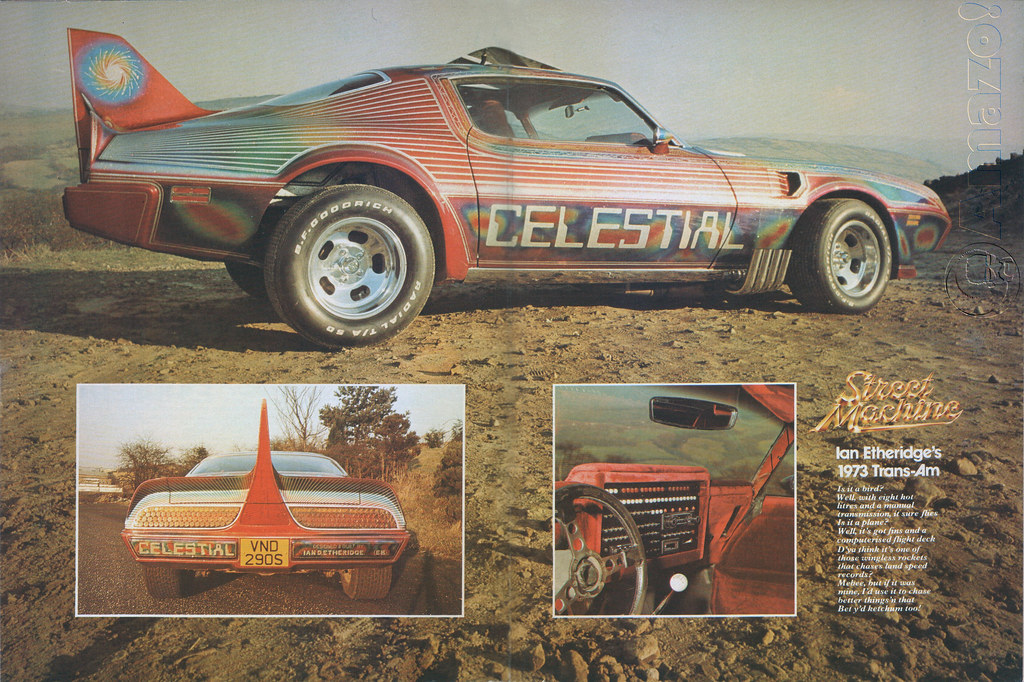
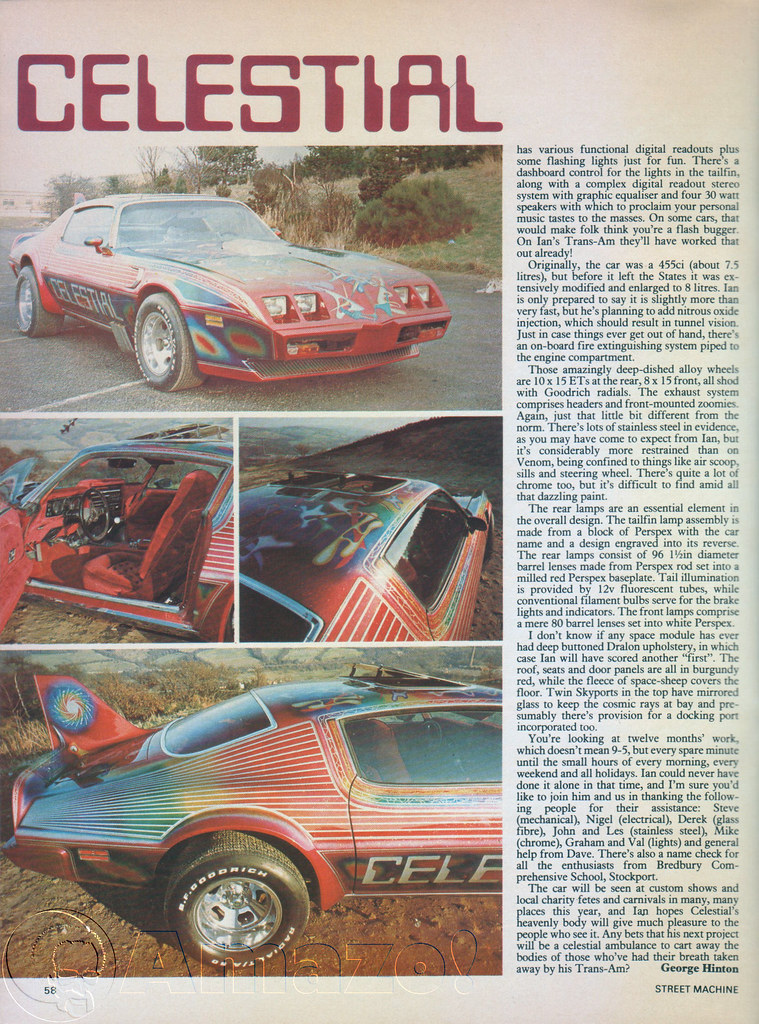
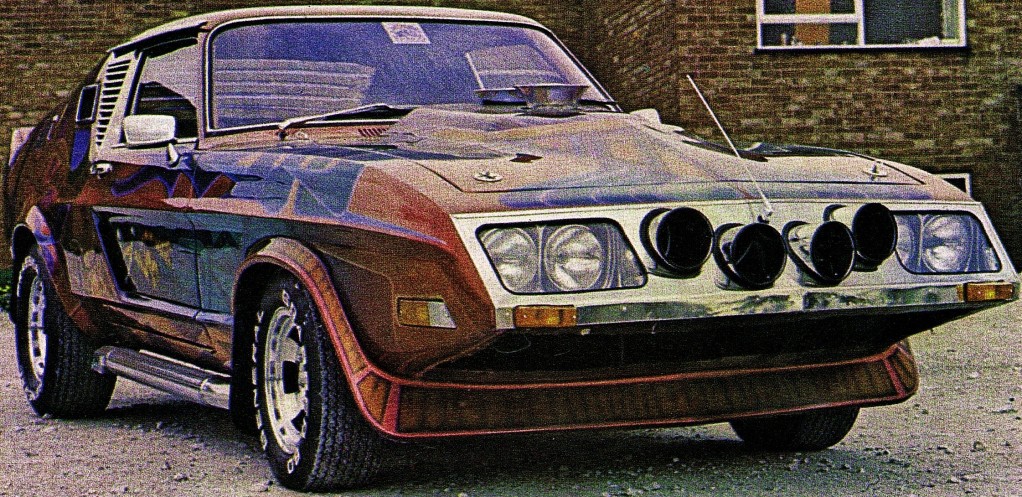
A description fitting for this car, hence the name. Masterminded by Ian Etheridge with help from others, he built this preposterous Poncho as a follow-up to Venom, his almost equally outrageous Ford Capri. Don't be fooled by the shovel-nosed front; Celestial is based on a 1973 'bullnose' Firebird Trans Am. Normally these have a 455ci (7.5 litre) Pontiac V8, but this engine has been taken out to a round 500ci (8.2 litres) for that extra touch of insanity.
But this car isn't about the engine, it's about that body and that paint.

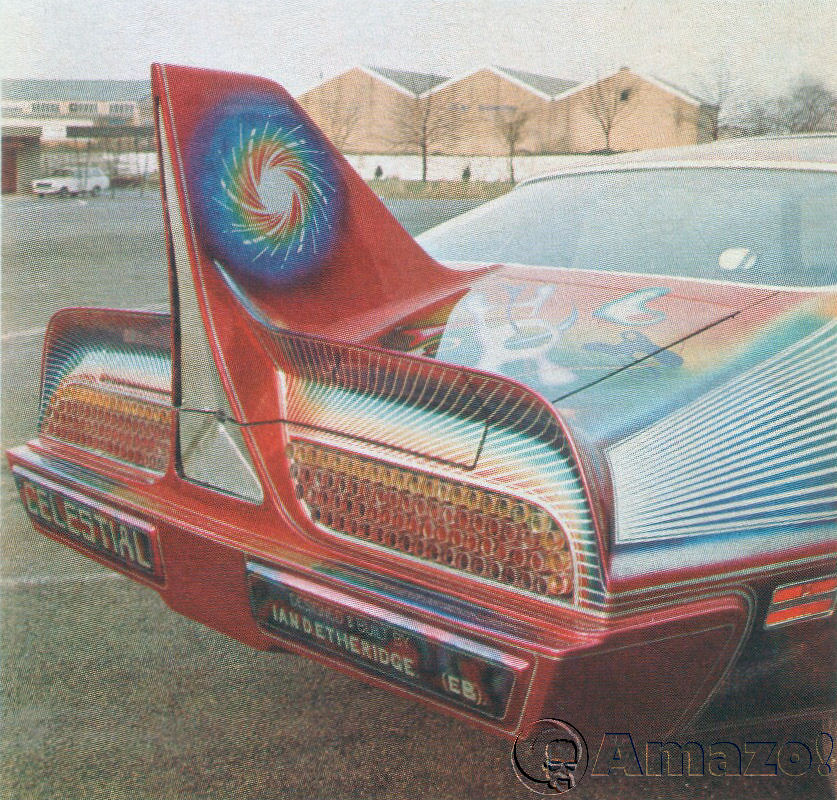
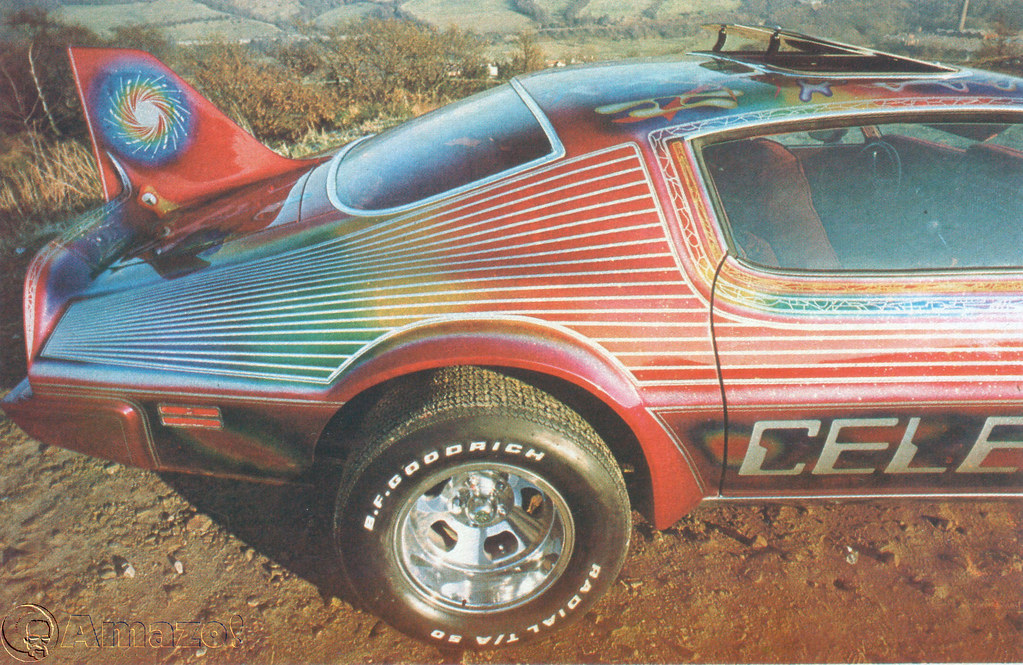
A product of twelve months intensive labour; the body mods on their own took seven months and are all fabricated from scratch, including the bits to make it look like the '77-'81 models. And as for that paint; well the scans do not do it justice. Ian wanted to do something different than the usual mural and artwork style that was so prevalent at the time. Based on a theme of colours of nature, the paintwork is like nothing else you've seen; it still looks incredible today.
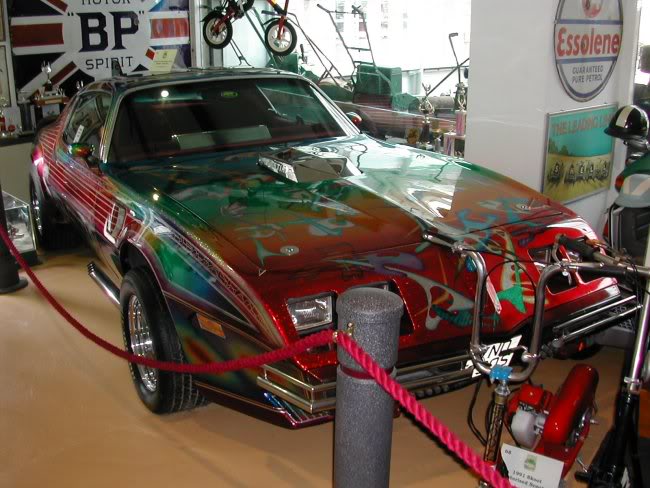
And that segues perfectly into the question we usually ask in these features: where is the car now? The car still exists in it's original customised state; here it is at the unlikely venue of the Lakeland museum in 2003, where it was displayed for over 20 years.
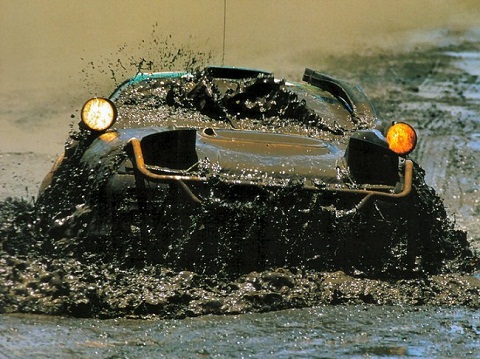
And in 2011, unleashed on the streets. Modern digital photography really brings the fantastic paintwork to life; so much so, we'd love a magazine to re-feature it now.
18 September 2012
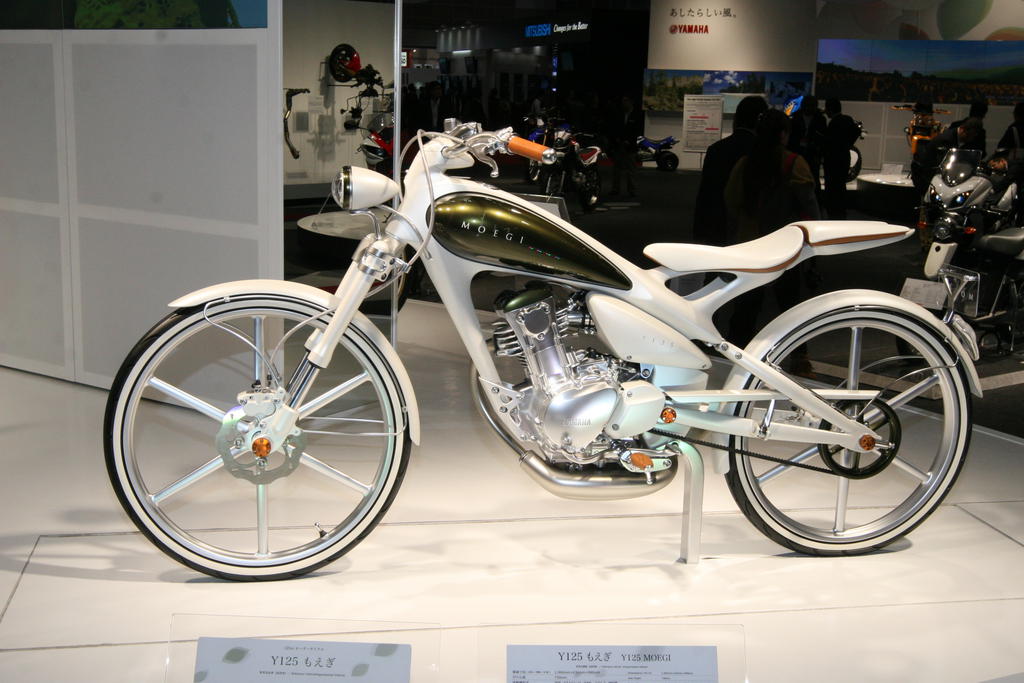
T.W.O. - Yamaha Y125 Moegi Concept


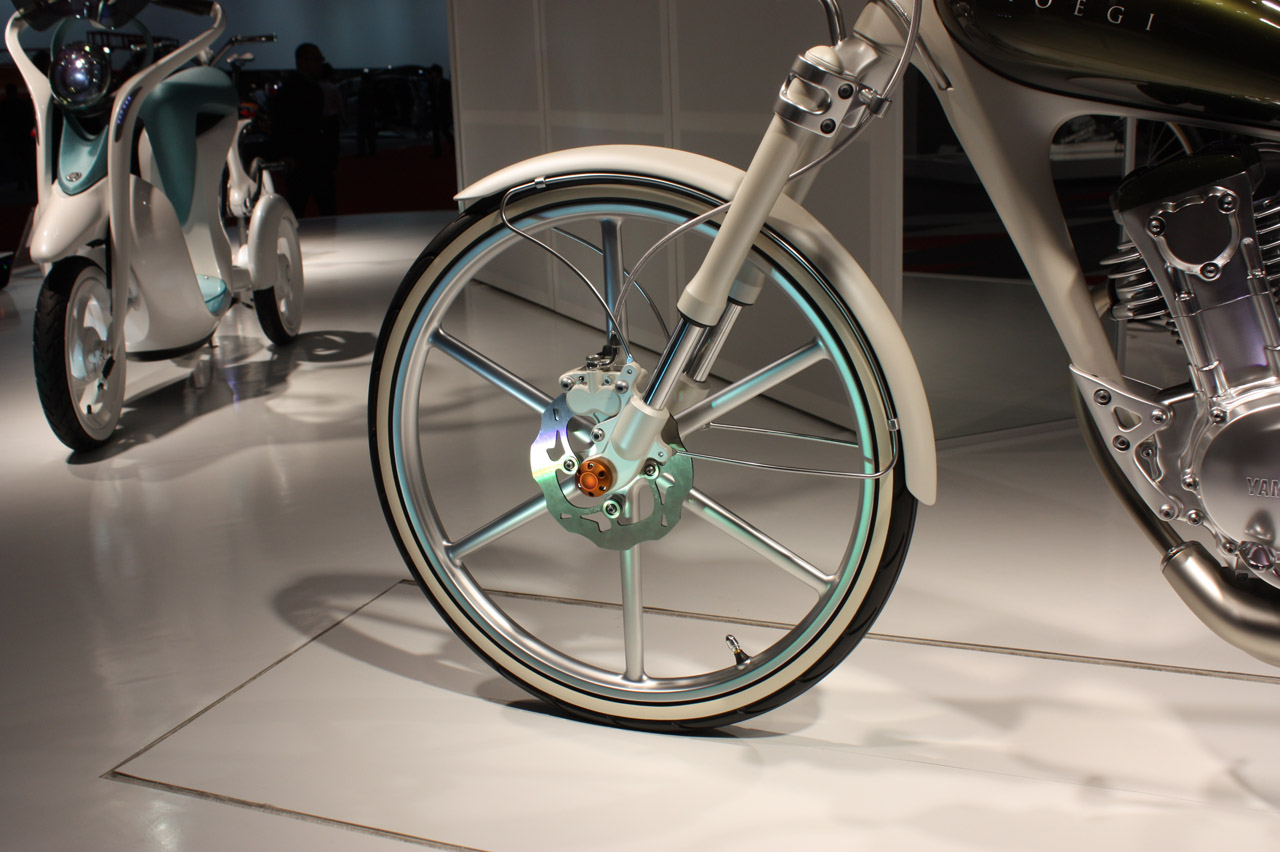
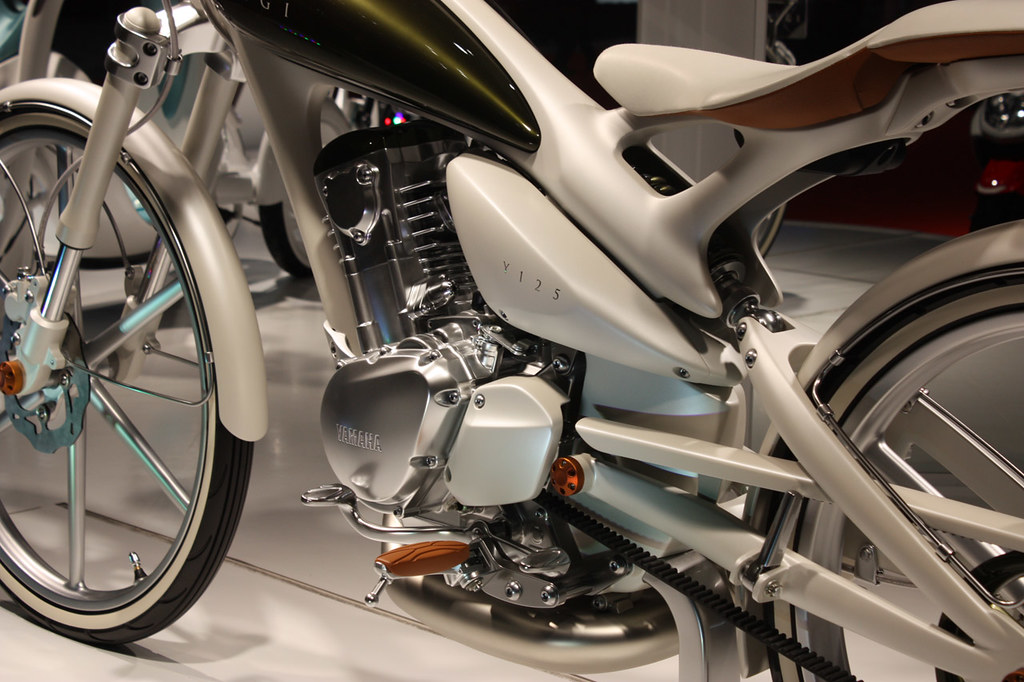
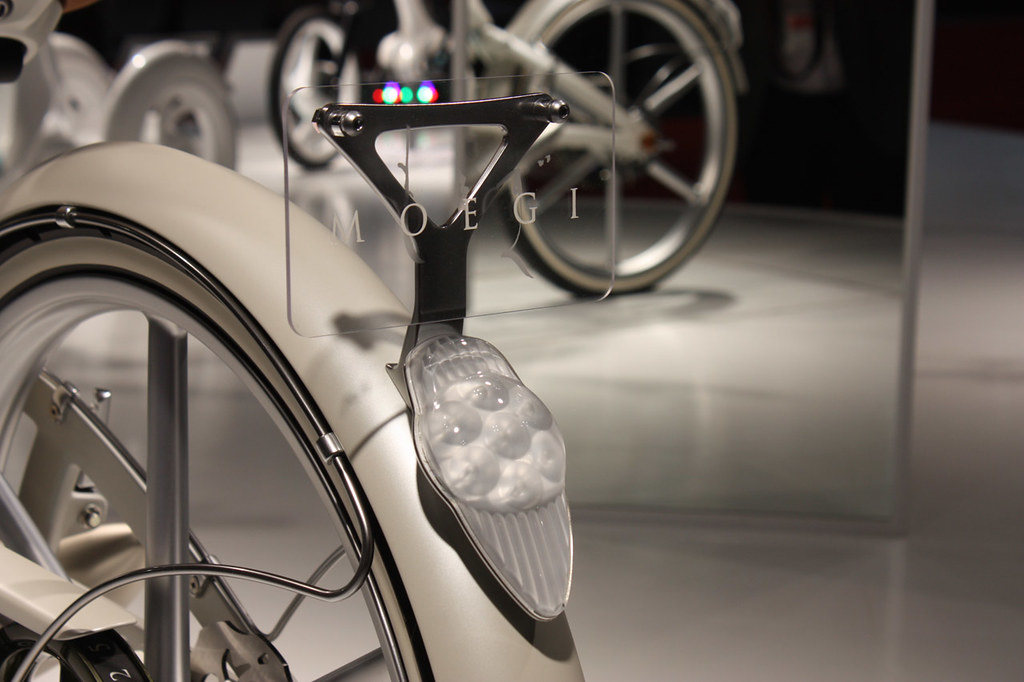
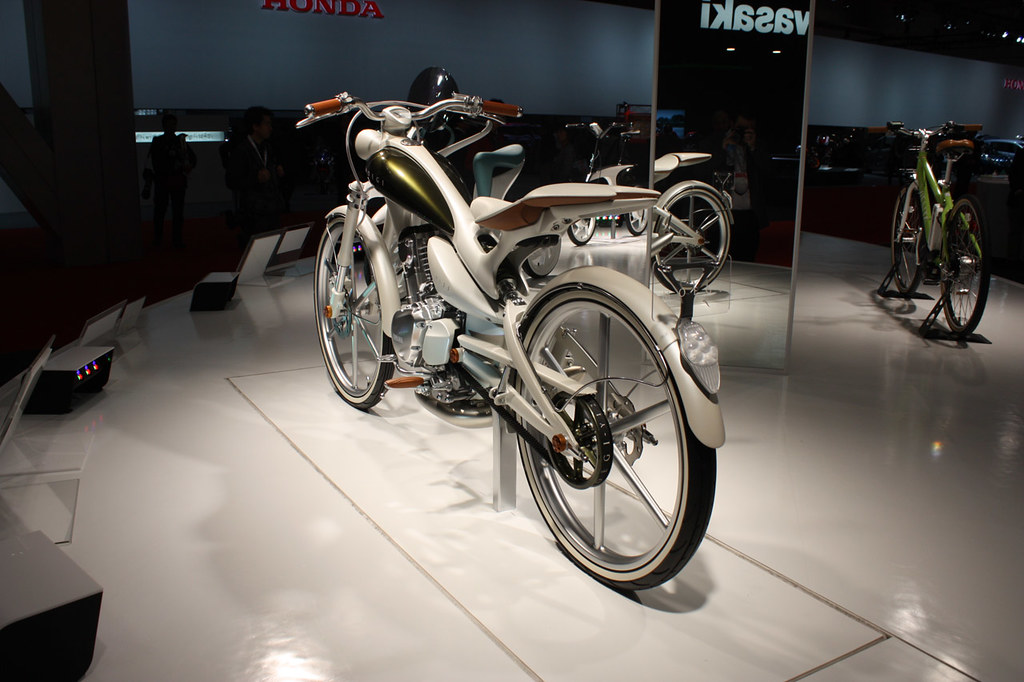
From the 2011 Tokyo Motor Show; a retro-styled concept from Yamaha. Their Y125 Moegi is a lightweight motorcycle designed after the iconic 1955 Yamaha YA-1. Its 125cc SOHC four-stroke single cylinder engine does an astounding 188 mpg.

The YA-1 was Nippon Gakki‘s (later Yamaha) first motorcycle. Like the Moegi, it had a 125cc single, albeit a two-stroke. It sold at a rate of about 200 per month and was immediately entered in the 3rd Mt. Fuji Ascent Race and the 1st Asama Highlands Race, both of which the little Yamaha won.
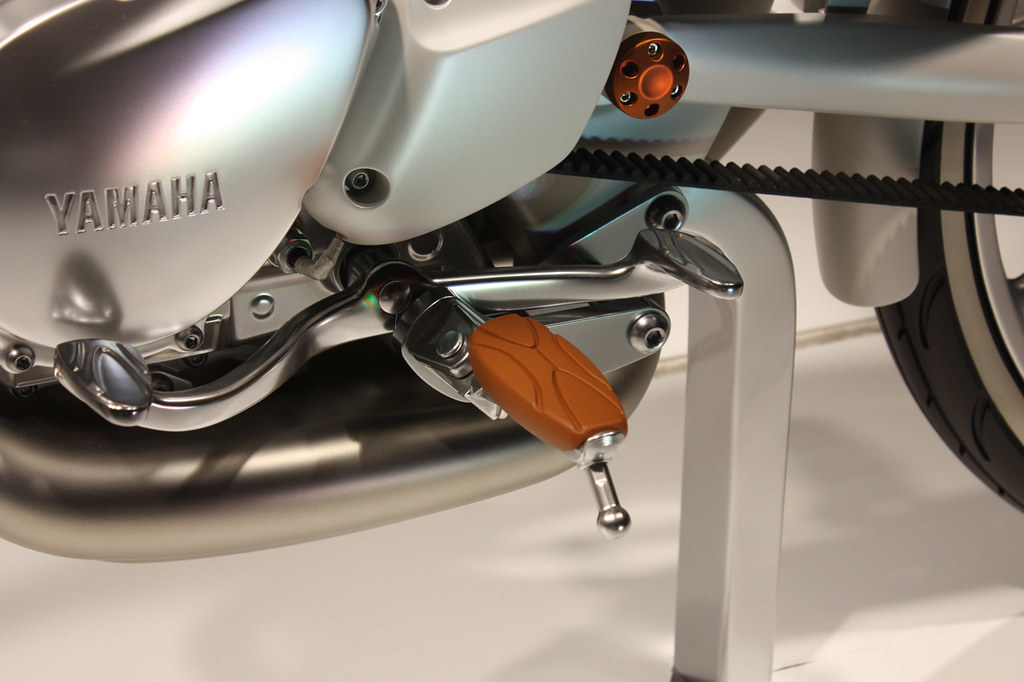

The YA-1′s distinctive burgundy & white paint scheme was patterned after the chestnut coat of a horse and developed by a team from the Tokyo National University of Fine Arts and Music. It set itself apart from the typically black bikes of the day and garnered the nickname akatombo, or red dragonfly.
The Moegi wasn't painted in the iconic colors of the YA-1, instead it’s white finish is intended to give it an air of lightness. It weights just 176lbs, 33lbs less than the YA-1.

 |
| The original YA-1. Looks almost timeless |

17 September 2012
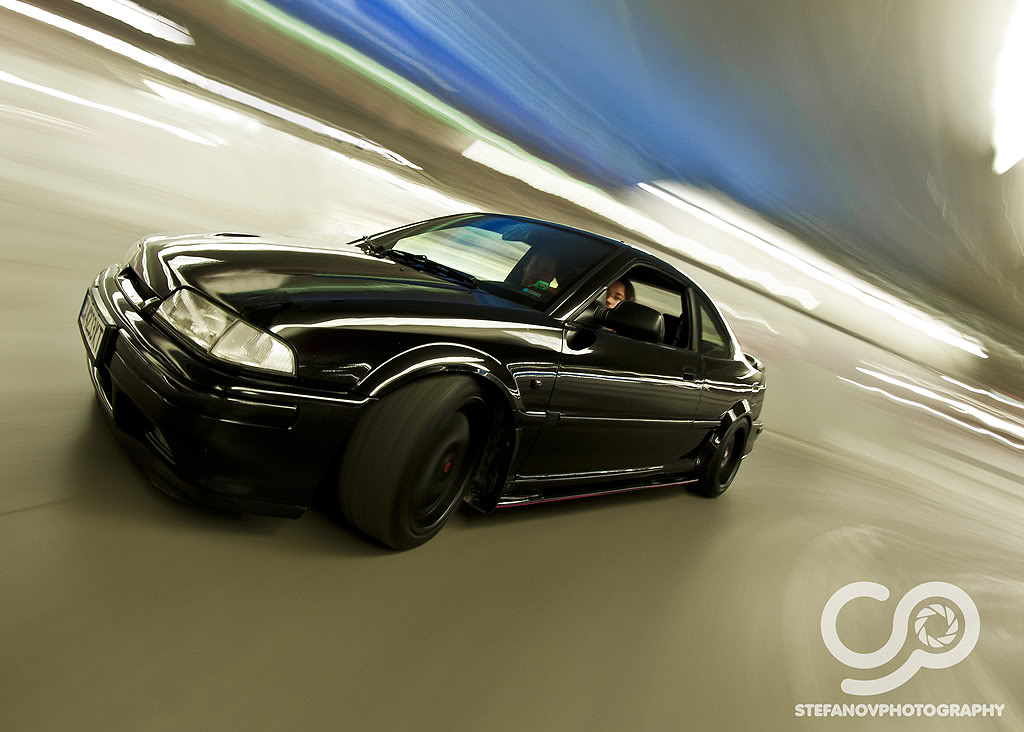
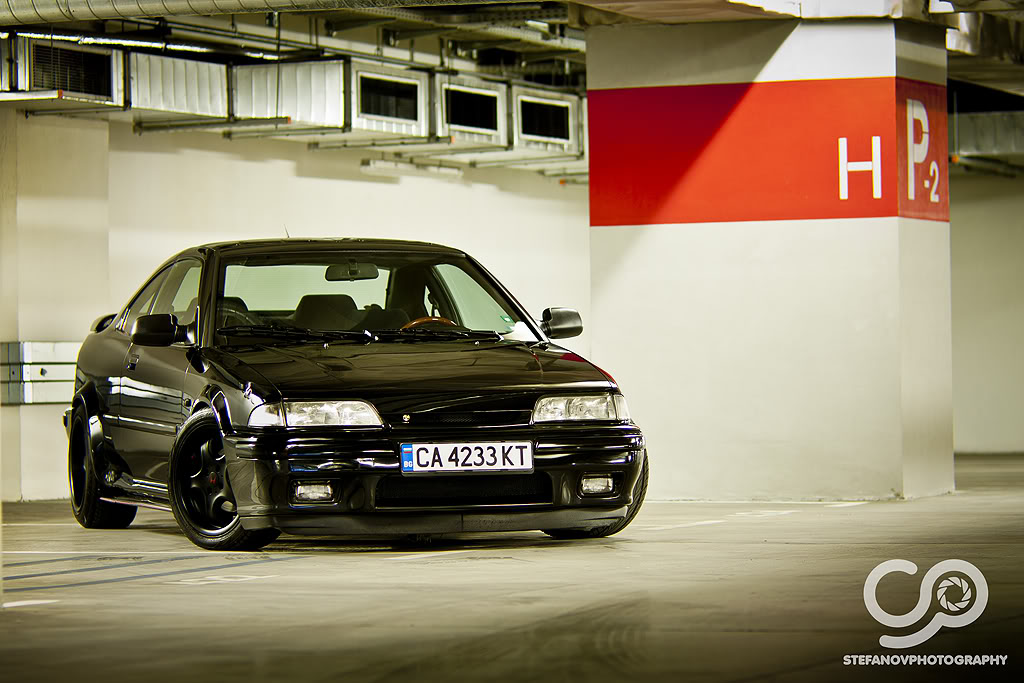
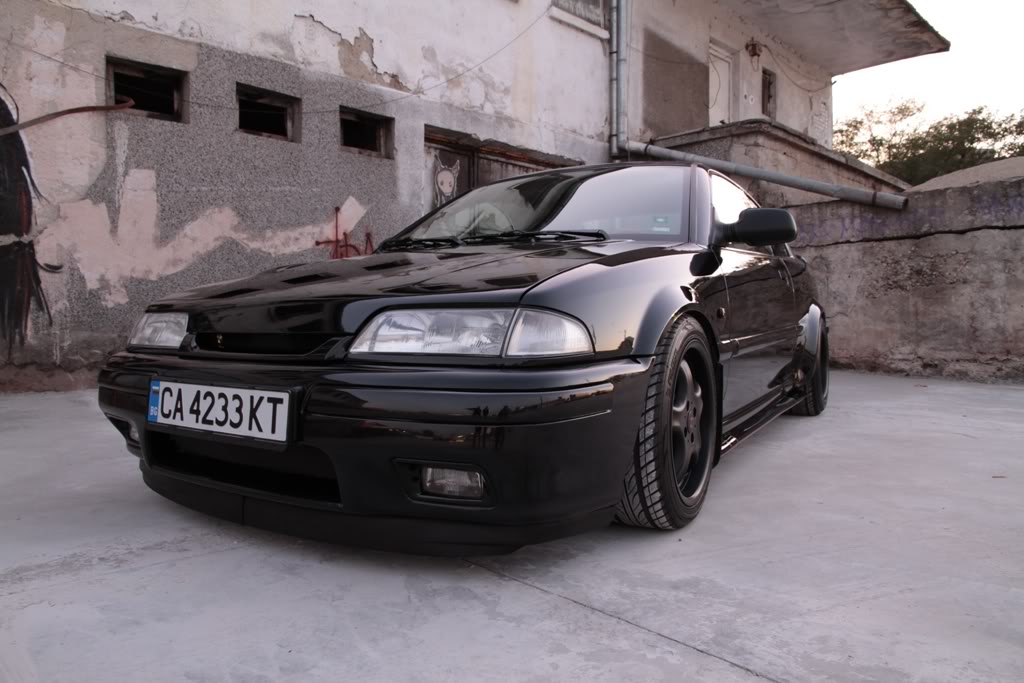
Stanced Rover Coupé - The Dog Has It's Day
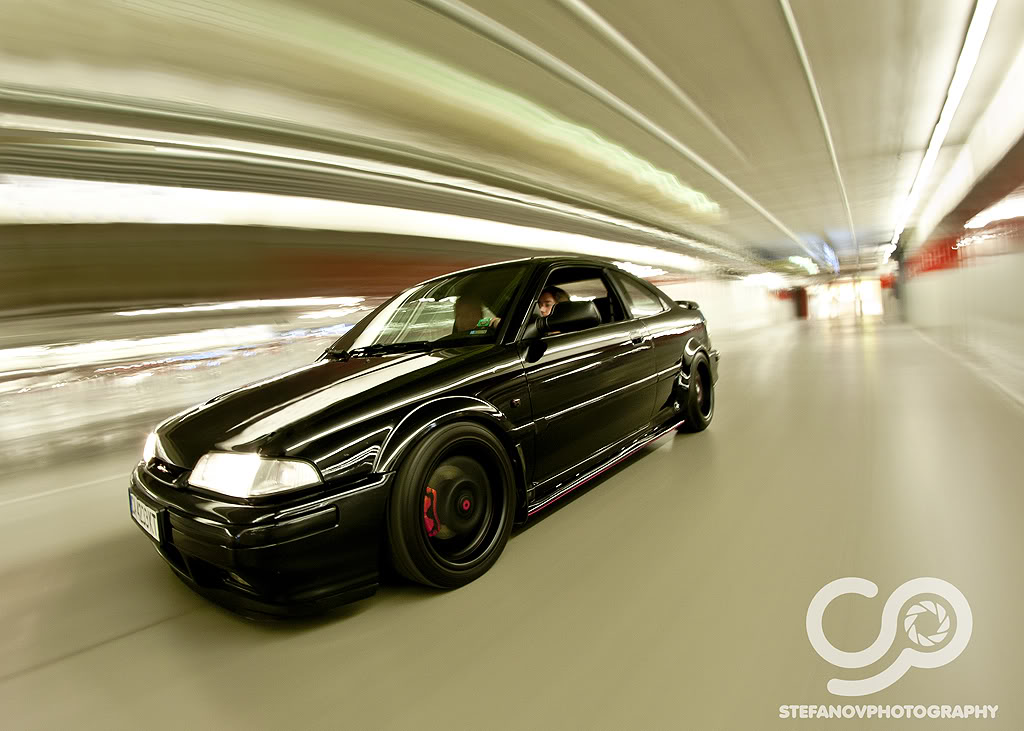
An R8? Don't you mean an Audi, Amazo-san? Er, no. The second generation Rover 200:
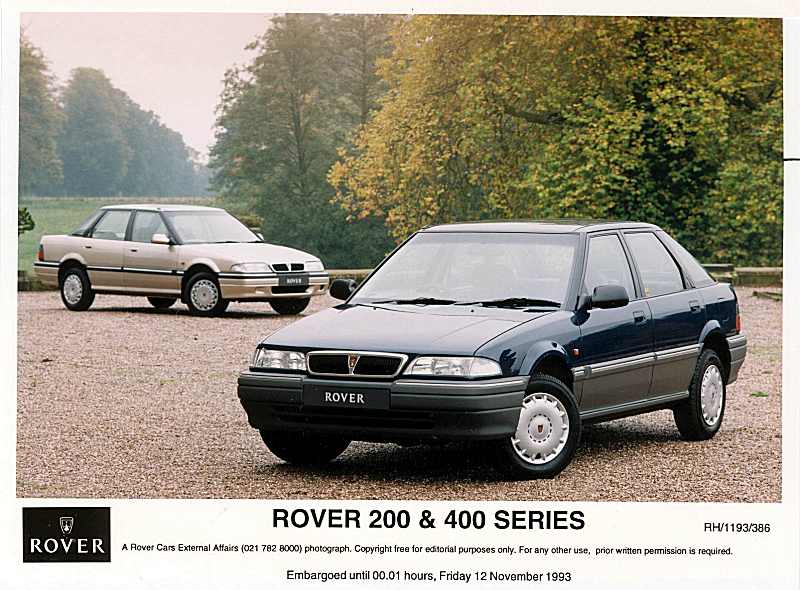
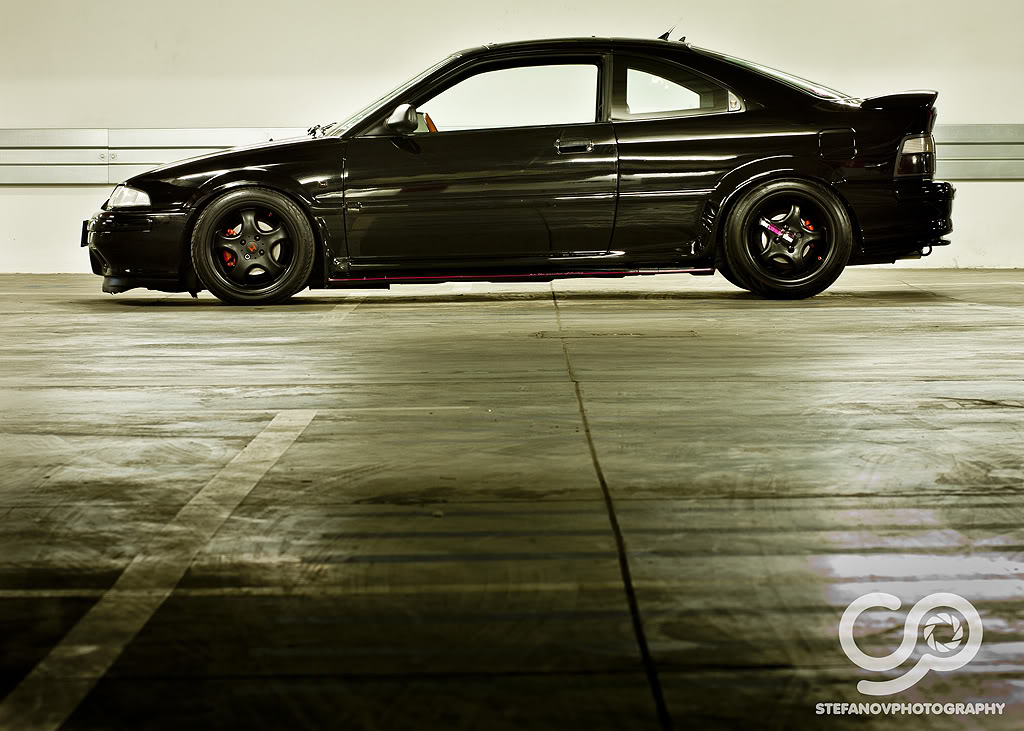
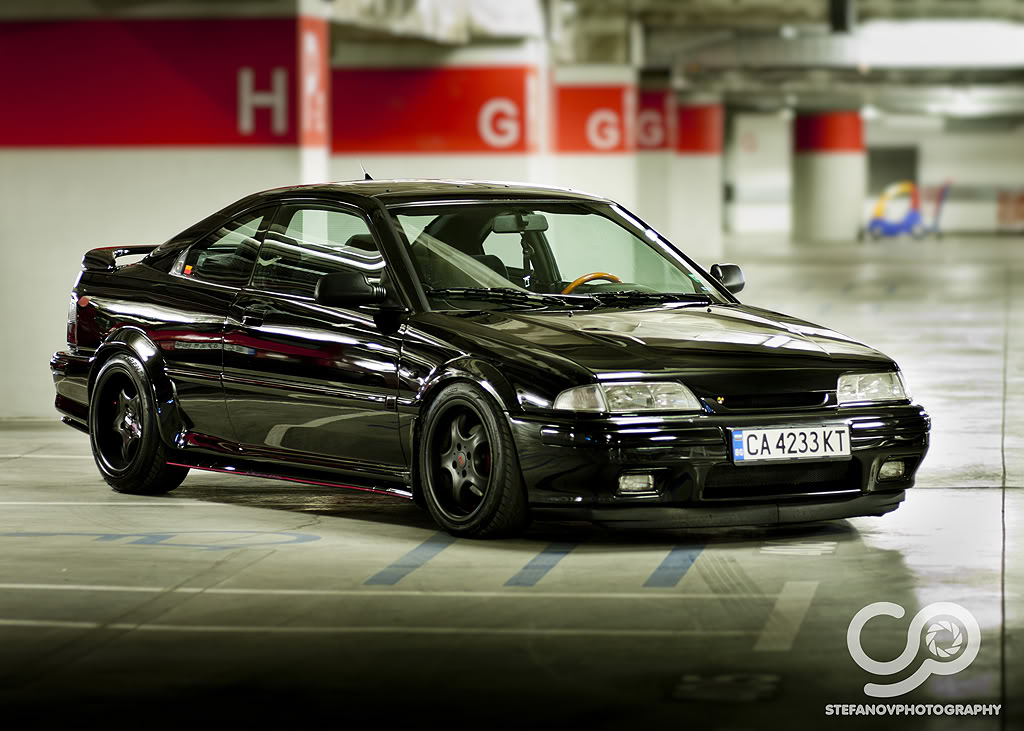
As well as the hatchback and saloon you see above, there is of course a coupé version, like you see below. And bloody good it looks too, even in standard trim. The 'dark and low' treatment also works well on the other models in the range too; imagine the hatchback above with that attitude? Exactamundo.
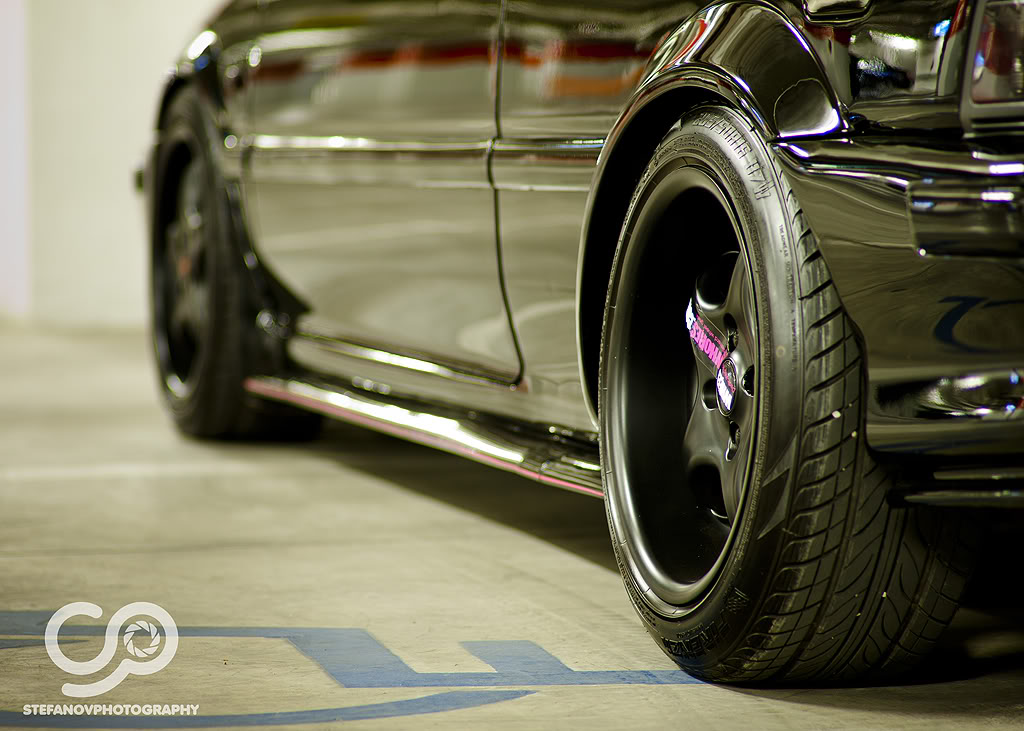
Shame on all of you Rover-haters; it took a Bulgarian to show the way that a 'stanced' Rover can look this good.
THIS is how I want my 214SEI hatch to sit. Oh yea. Bow-wow-yippie-yo-yippie-yea.
Read more about this atomic dog here.
- 'ZO


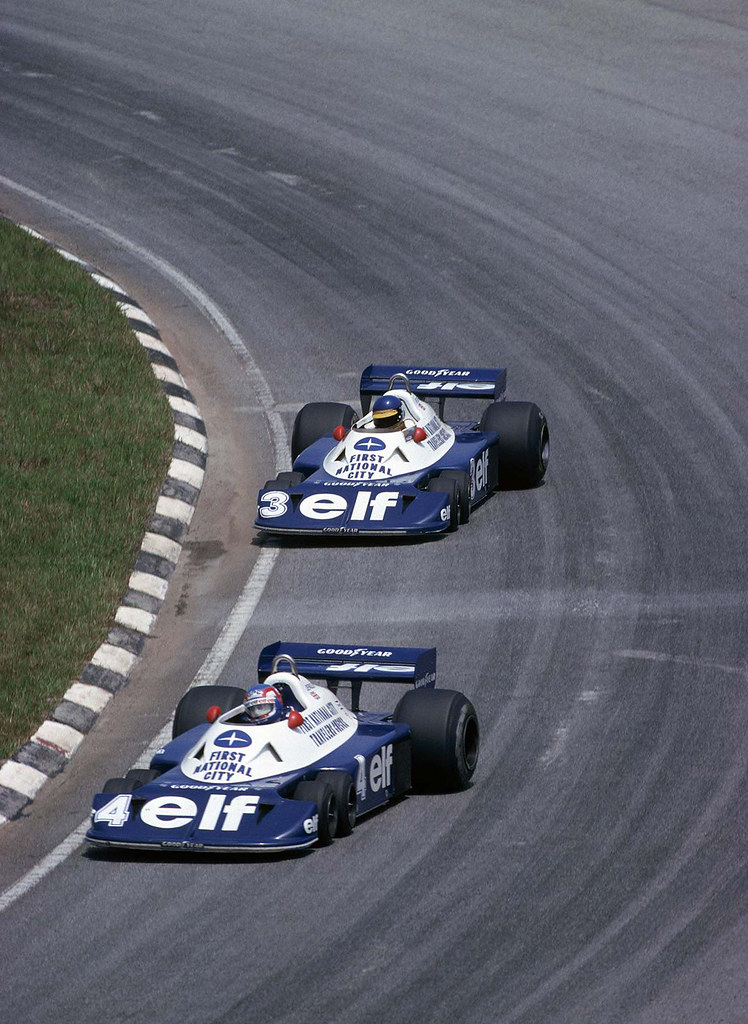
Brazilian Grand Prix, Interlagos, January 23, 1977
Patrick Depailler leads Ronnie Peterson, both in Tyrrell P34 Cosworths. Both would retire after separate accidents; Peterson on lap 13 after being caught in catchfencing strewn onto the track after Jochen Mass crashed. Depailler crashed in the closing laps after getting caught in a pile-up with Jaques Laffite, John Watson and Carlos Pace who crashed into the cars parked beside the track.
Only seven cars finished the race.

Only seven cars finished the race.
14 September 2012
Drag Racing History - Dick Kraft's "The Bug"
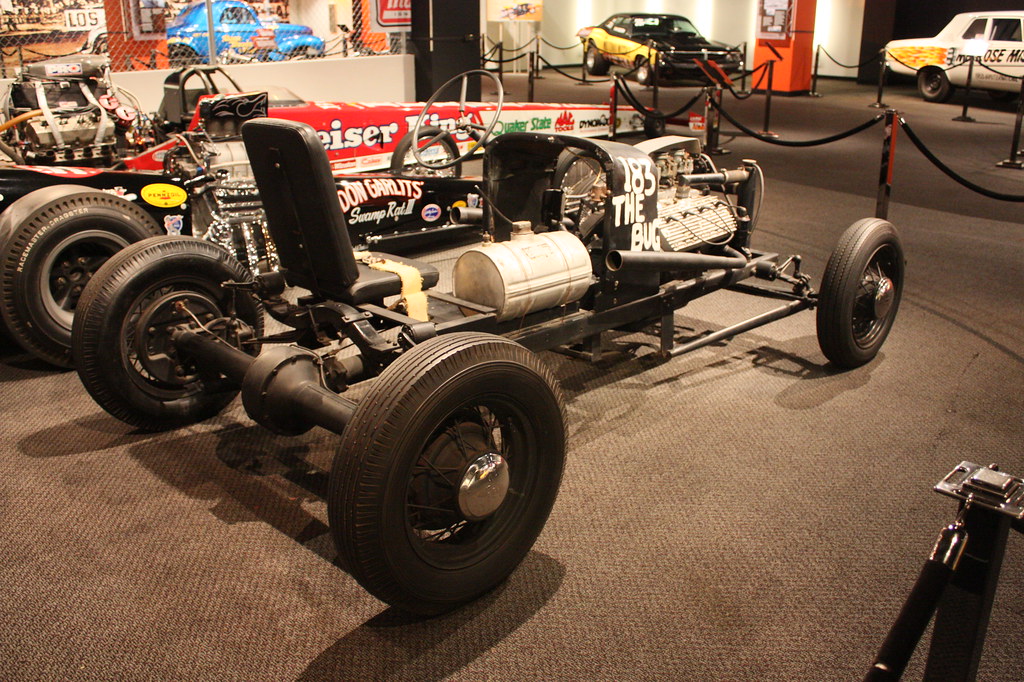
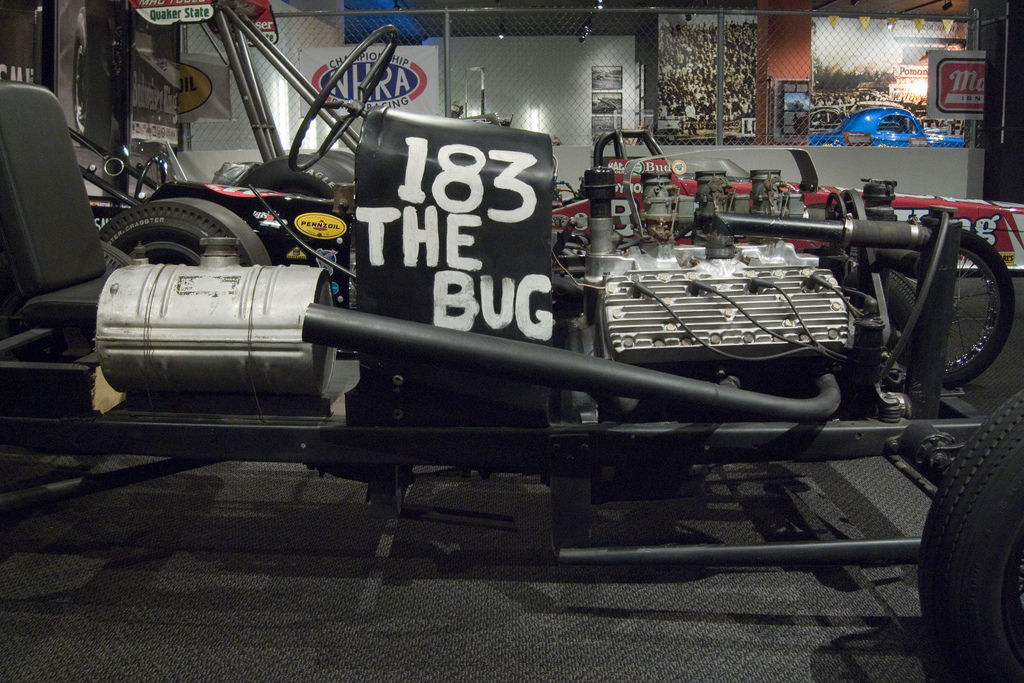
The Bug. A flathead V8-powered 1927 Model T stripped down to the bare frame rails in 1950 that became the “daddy” of modern dragsters.
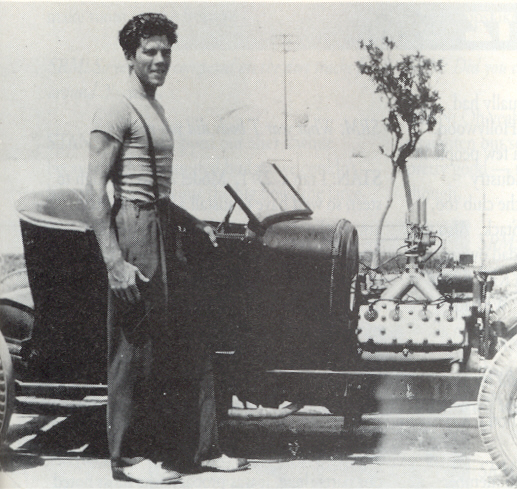
Kraft got his first car when he was 14. He was 16 in 1937 when he began to build his reputation as one of the most competitive street racers around.
He was an avid street racer, but as soon as C.J. Pappy Hart & Creighton Hunter started holding legal drag races at a seldom-used runway taxi strip, Kraft became a regular competitor. For the first time, guys like Kraft could race legally on a paved track with the police watching the action rather than chasing it. With this fledging sport came a different kind of race car. Running for top speed at the lake beds (as Kraft was at the time) was one thing; you had miles to do it. But drag racing consisted of just a quarter of a mile; top speed mattered, but acceleration mattered more. As a result, vehicle weight became a big factor.

The Southern California Timing Association (SCTA) was started in 1937, organising races at the dry lakes north of Los Angeles. In 1950, the first drag strip in the country was created by the SCTA on an airfield in Santa Ana, California and Kraft soon became one of the best, and best-known, racers out there. He was known for his attention to detail to reduce the weight of his cars in order to go faster; Kraft was known to strip down himself, racing shirtless, and even wearing just a bathing suit, he even arrived at Santa Ana sometimes in damp swim trunks from a morning of surfing before getting behind the wheel.
It was this attention to detail that motivated his switch from Model As and Deuces to Model Ts.

Dick showed up at Santa Ana in 1950 with a contraption that consisted of four wheels, an engine, and a seat; the only piece of sheet metal on the car was the cowl. Dick gave his rail job a name:
The Bug.
The Bug had to earn its keep on Dick’s parents’ orange grove as a weed-sprayer. Dick commandeered what was left of the ’27 T frame and made a race car out of it. The weed-sprayer ran a number of times at Santa Ana with both a roadster body and a coupe body before it was stripped to the bone.
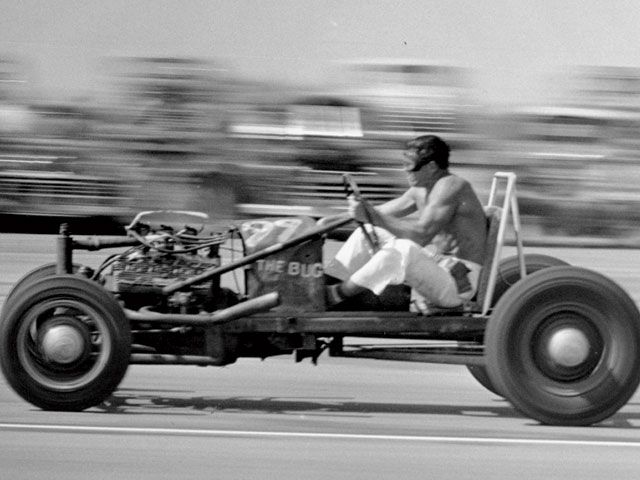
The car must have been as scary as it looks in the photos; no roll cage, no front brakes, and the seat was simply two pieces of wood (or later on, a B-17 bomber seat). Safety equipment consisted of, ironically, a seatbelt and goggles.
The fuel tank was an old pesticide sprayer that Kraft would pump up to pressurise it; this ensured that the carbs were fed the mixture of alcohol and (supposedly) nitro under acceleration. The contraption weighed less than 1,200 lbs and the nickname was brought on because of the light weight and the fact that the pesticide jug was being used as the fuel tank. Except for the hubcaps, only the bare essentials were tolerable on what was to become one of the first dragsters. For example, the sheet of aluminium over the Strombergs prevented some of the 30% nitro from splashing back on Dick’s face.
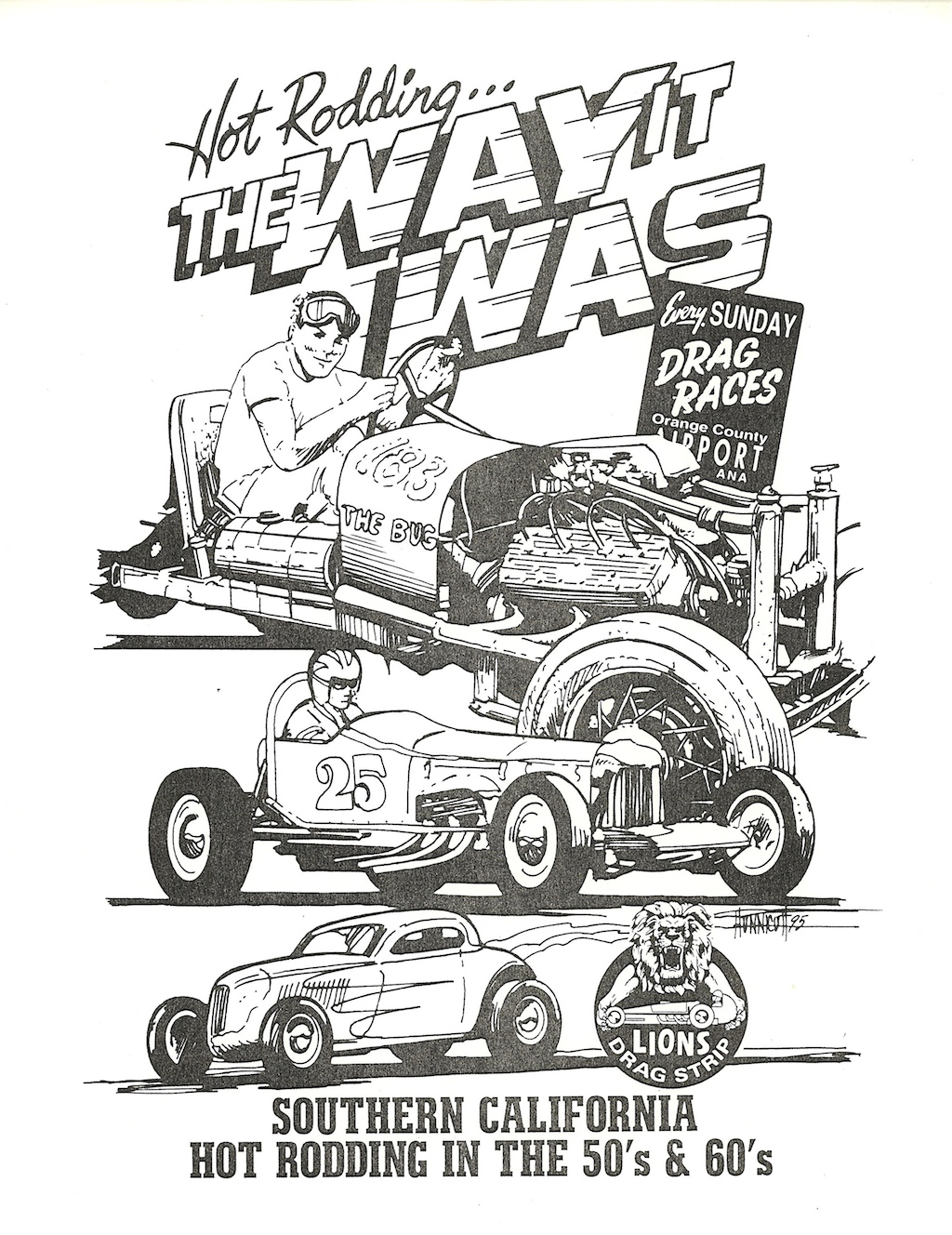
The power for the machine came from a triple-Stromberg-carb’d, Evans-headed, Winfield-cam’d, 24-stud, 59A block’d, ported and relieved, 268ci flathead Ford V8. Kraft started running the car with a 296ci mill but the car would just smoke the tyres due to the torque the larger motor was making; the smaller engine got the car moving without the wheelspin and the results soon came.
He posted top speed at 109.09mph on Sept. 24, 1950, at Southern California's Santa Ana Drags.
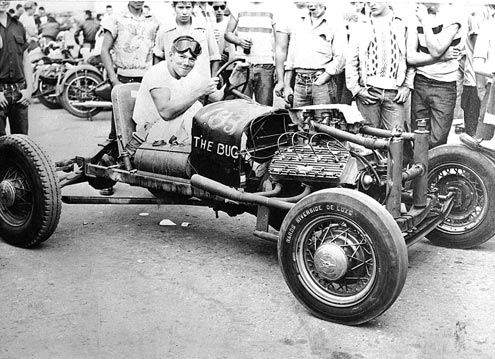
The front tyres in the picture above are Wards Riverside DeLuxe tractor tyres from the family orange grove - maximum speed rating: 35 mph. At one point he was screaming down the quarter-mile at 116.50 mph! Promoter C.J. Hart requested more coverage of both car and driver, creating some the sport's first safety rules.

Kraft sold this car for an unheard of $5,000 at the end of the 1950 season. He probably had less than 1/10th of that invested in it.
Kraft had enough parts and pieces to build two recreations of the car, so he did in 1985; one resides at the NHRA Motorsports Museum in Pomona, California, and the other at Don Garlits’ Museum of Drag Racing in Ocala, Florida. Kraft built several noted hot rods after his days with The Bug, probably in an effort to show the world that he was more than a stripped down jalopy builder.


Drag race machinery has always been single minded in its purpose and function. Dick Kraft’s car was simply one of the lead dominos that started the chain moving that led to elapsed times in the 4-second zone and speeds that at one point were rapidly approaching 350 mph.
All that from a stripped down Model T.


Kraft lived to be over 80 years old, not bad when you consider how many times he ran this car down the strip and how fast he was going with such minimal equipment to protect him in the event of a problem. Showmanship and personality would soon become a big part of drag racing, but Kraft was arguably one of the very first of that breed.

Subscribe to:
Posts (Atom)