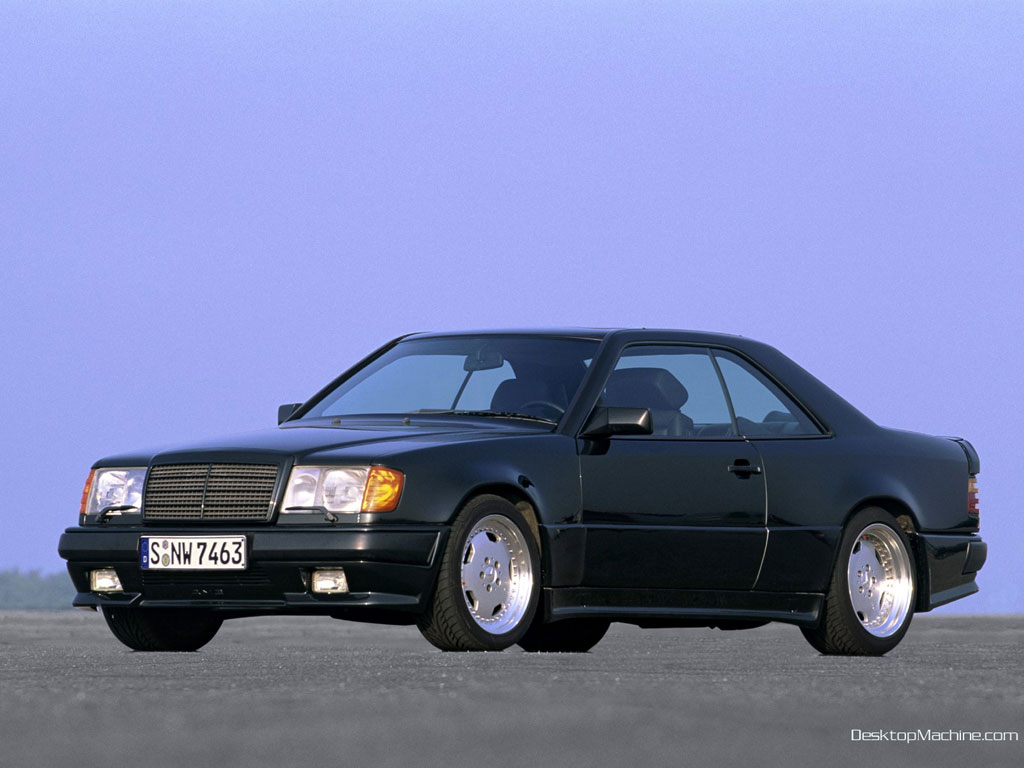
As a child raised in the neon lit 1980's, one vehicle pierced through the cocaine addled veil of the automotive world. It was draped in a jet black paint scheme, with a stance that would make a pitbull cry. Various car magazines likened it to Darth Vader's Mercedes. Just standing there in the presence of this car would've sucked all the blow and air out of your lungs in an instant engulfing you in its shadowy embrace. In an era which adored flashy flamboyant vehicles as fashion accessories, the AMG Hammer brought something new to the table.

The release of the Hammer in 1986, (the nickname I think was coined by Road & Track magazine back in 1987) based on the Mercedes-Benz W124, took AMG’s performance modifications for a fast Merc to a new level. AMG made the world’s fastest passenger saloon at the time by squeezing Mercedes' 5.6 V8 tuned in-house to 360 bhp into the elegant but slightly stuffy 300E (the US spec version to be exact, not sure why). It was very aggressive for the era, with 32-valve cylinder heads and twin camshafts.
Later models were even more powerful, as 1986 was also the year Mercedes introduced the 560 M117 engine. This provided yet another opportunity for customers to order the largest AMG displacement available at the time, the 6.0 100mm bore SOHC or DOHC engines available for both the W126 (S-class saloons & coupes).


Additionally, AMG revalved the four-speed automatic from the S-Class, replaced the rear subframe with a beefier one and fit the biggest M-B diff available, A Gleason-Torsen (Torque Sensing) unit; one of the first uses of the Torsen diff, by the way.
AMG-spec suspension was installed with shorter springs, stiffer dampers, 8x17-inch alloys, and Pirelli P700 tyres: 215/45/17 front, 235/45/17 rear.
To reduce frontal area and improve wind resistance to 0.25 Cd, a front air dam and side skirts, and a ducktail blended into the deck were included. The Hammer also had the first use of the 17″ AMG Aero 1 wheels.

All the numbers associated with the larger-engined Hammer are huge: 6.0-litres, 375 bhp, 407 ftlb of torque and its 190mph top speed. What's amazing is that it was faster through the gears than just about anything on the road, including cars like Lamborghini's Countach from 60 to 120 mph.
In August 1987, Road & Track said it was a ''4-door that runs like a Ferrari Testarossa''. It reached 0-60 in 5 seconds dead; the quarter-mile in 13.5 seconds and a top speed of 186 mph. The car they tested was the 5.6-spec Hammer, so a 6.0 surely would be much faster...


It's unknown just how many Hammers were built as each was custom ordered. This meant that the only common aspect of each car was the M117 V8, sometime with our without the DOHC 4 valve cylinder heads.
Back in the shoulder-padded, fleck pastel-suited day when the Hammer was on sale it'd have cost you a not unsubstantial £50,000 for the 5.6 litre version. The actual price for the 6.0 litre car is a mystery, although £112,000 has been quoted - if you add all the options AMG offered then this figure is not completely unrealistic. A quick adjusted for inflation calculation (okay, an online equivalence calculator) pegs the Hammer's price today at about £230,000. Ouch. It's hardly surprising so few were built; a BMW M5 back in the day would have cost you about £31,000 and a Ferrari Testarossa £63,000.
This was a car for those whom money really didn't matter then.


Perhaps the first real supersaloon, the Hammer is certainly responsible for helping create a very specific genre of cars that exist to this day.

AMG-spec suspension was installed with shorter springs, stiffer dampers, 8x17-inch alloys, and Pirelli P700 tyres: 215/45/17 front, 235/45/17 rear.
To reduce frontal area and improve wind resistance to 0.25 Cd, a front air dam and side skirts, and a ducktail blended into the deck were included. The Hammer also had the first use of the 17″ AMG Aero 1 wheels.
All the numbers associated with the larger-engined Hammer are huge: 6.0-litres, 375 bhp, 407 ftlb of torque and its 190mph top speed. What's amazing is that it was faster through the gears than just about anything on the road, including cars like Lamborghini's Countach from 60 to 120 mph.
In August 1987, Road & Track said it was a ''4-door that runs like a Ferrari Testarossa''. It reached 0-60 in 5 seconds dead; the quarter-mile in 13.5 seconds and a top speed of 186 mph. The car they tested was the 5.6-spec Hammer, so a 6.0 surely would be much faster...

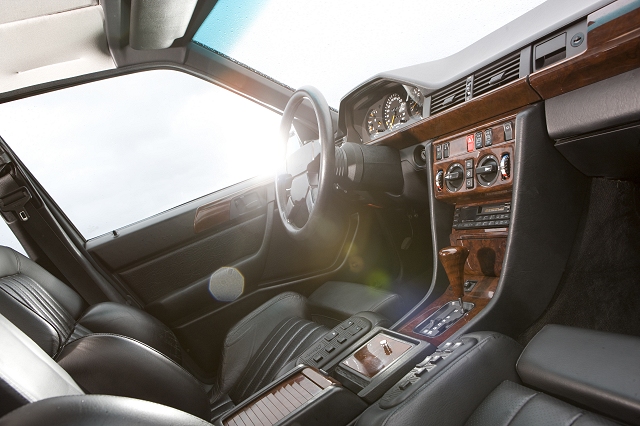
It's unknown just how many Hammers were built as each was custom ordered. This meant that the only common aspect of each car was the M117 V8, sometime with our without the DOHC 4 valve cylinder heads.
Back in the shoulder-padded, fleck pastel-suited day when the Hammer was on sale it'd have cost you a not unsubstantial £50,000 for the 5.6 litre version. The actual price for the 6.0 litre car is a mystery, although £112,000 has been quoted - if you add all the options AMG offered then this figure is not completely unrealistic. A quick adjusted for inflation calculation (okay, an online equivalence calculator) pegs the Hammer's price today at about £230,000. Ouch. It's hardly surprising so few were built; a BMW M5 back in the day would have cost you about £31,000 and a Ferrari Testarossa £63,000.
This was a car for those whom money really didn't matter then.
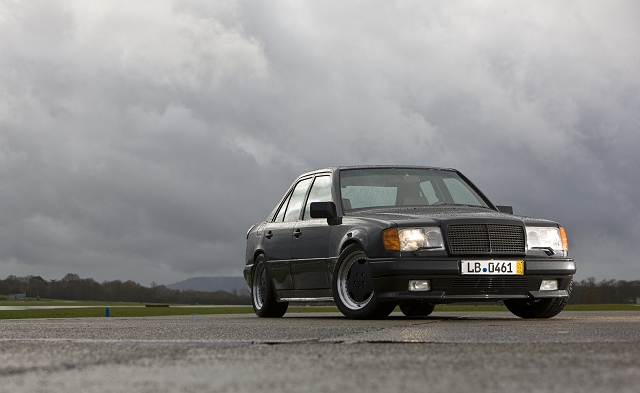
Perhaps the first real supersaloon, the Hammer is certainly responsible for helping create a very specific genre of cars that exist to this day.