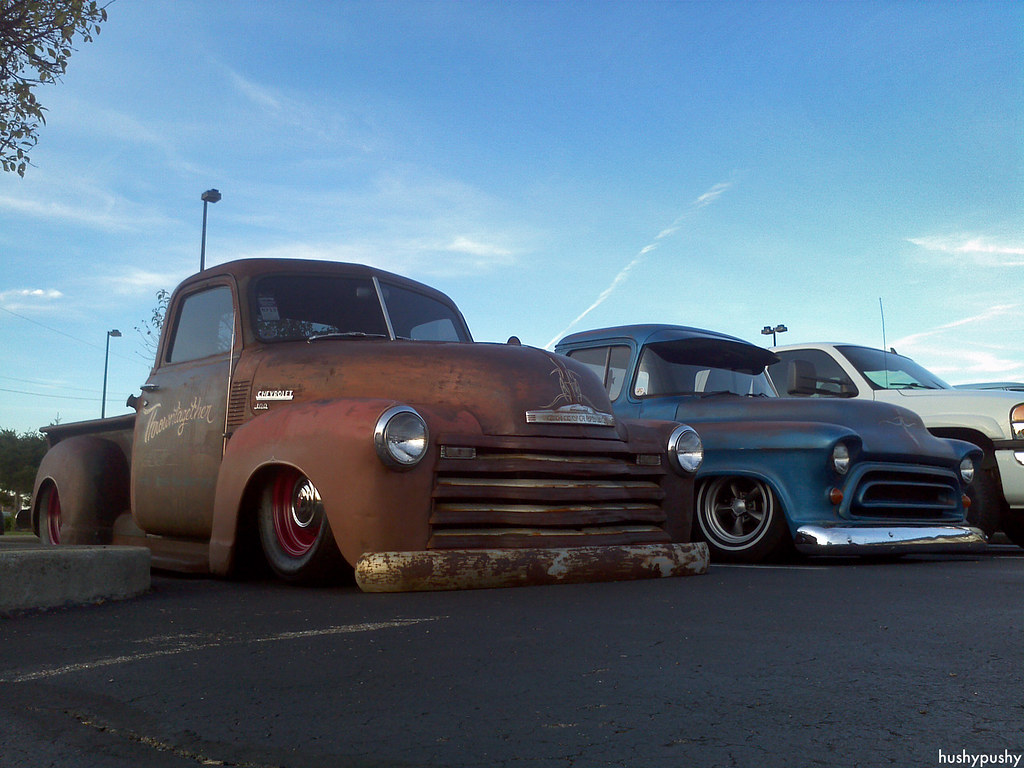

16 December 2011


Hot Rod Racing - The British Kind
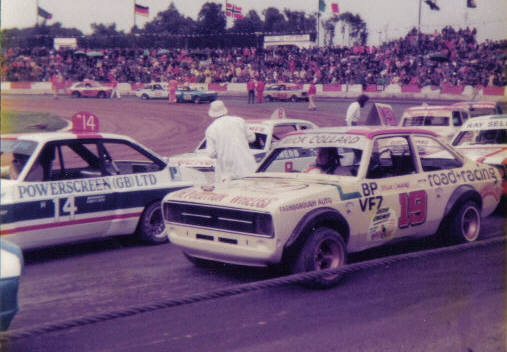
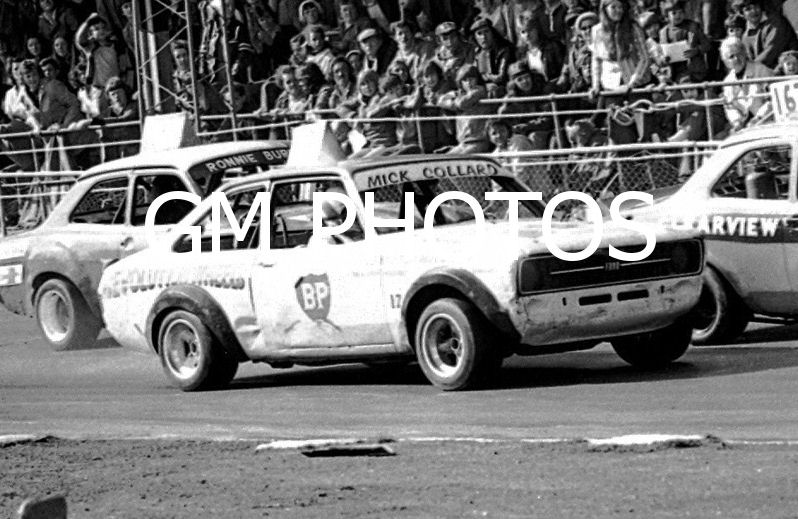
After the modern-day hot rod racers we featured back in October, it was high time we paid some respect to some of the cars that helped put the discipline on the map back in the 1970s. Many a happy Saturday afternoon was spent by the (ahem) older members of the 'effect watching hot rod racing on World Of Sport, and looking at some of the cars, its easy to see how the look of them has helped influence the look of the scene afterwards, especially the old Ford cars. We will be expanding the subject in due course, but in the meantime break out the egg nog and marvel in the spectacle of 1970s Hot Rod World Finals. Theres a treasure trove of hot rod racing footage on YouTube, thought you might like a gander.
Hot Rod World Final 1974:
1975:
1976:
1977:
1978:
1979:
Of course, you meantion hot rod racing to the fanboys, and three numbers usually crop up in conversation:
351 (Barry Lee)


306 (George Polley)


19 (Mick Collard)


1976:
1977:
1978:
Of course, you meantion hot rod racing to the fanboys, and three numbers usually crop up in conversation:
351 (Barry Lee)

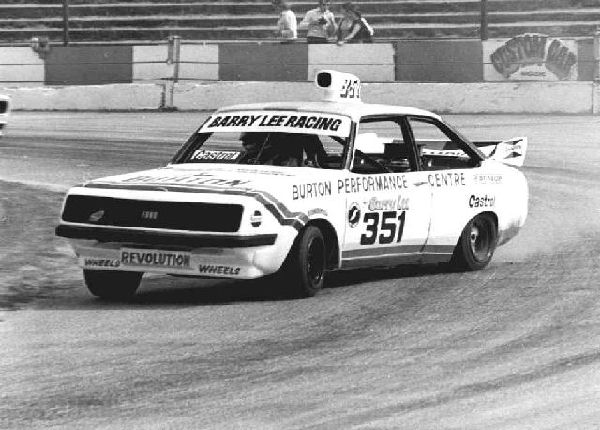
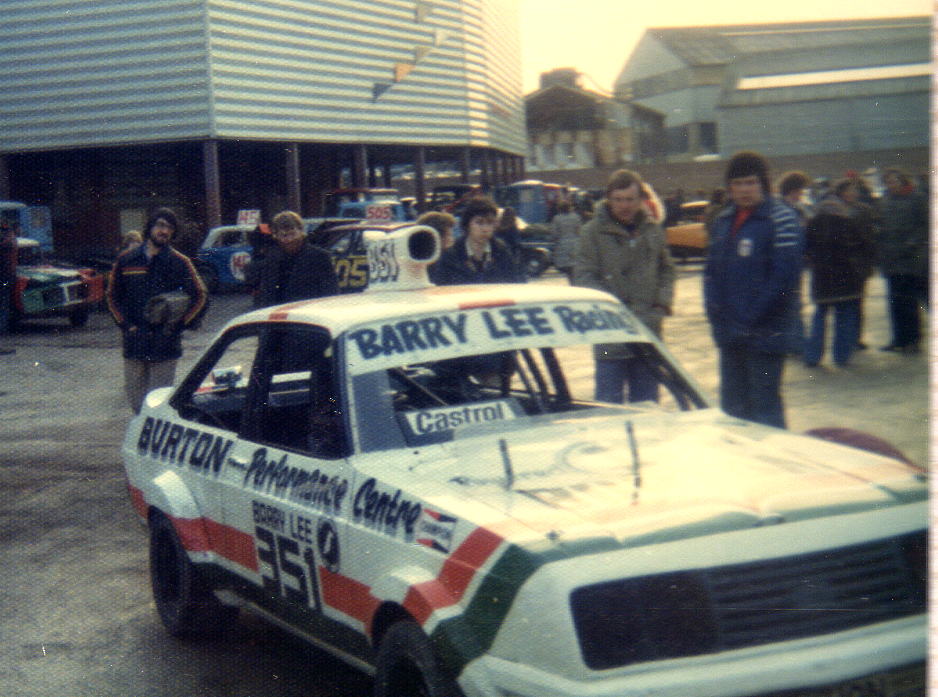
306 (George Polley)
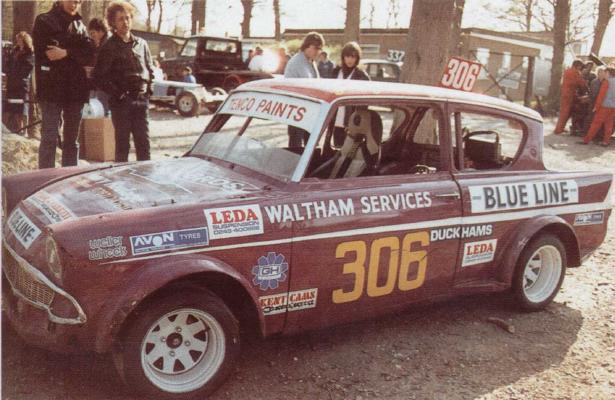


19 (Mick Collard)
14 December 2011
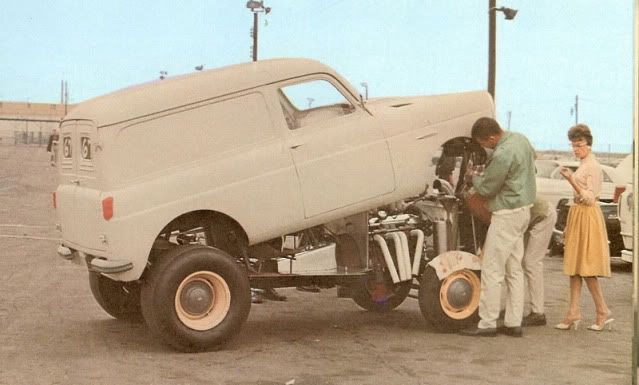
Irwindale Raceway, 1965
The Kirsch family Ford Thames 300E A/G at Irwindale Raceway, southern California. Note the front number plate; the owner actually drove it to the dragstrip to race, I believe 427 Chevy powered. Neat funny car-like flip body too and I love the high rider (not gasser) stance, due to the straight tube front axle.
Who's gonna build a modern replica? Please?


Who's gonna build a modern replica? Please?



12 December 2011
Street Life: The Devil's Taxi

The Amazo guide to car-spotting rule 1: always keep a camera on your person; you never know when a hot motor will come into view. Like when popping to the local supermarket for milk.
The driver flew into the store I'd just come out of; he'd literally pulled up to where I was standing (with jaw now dropped), so it seemed only rude not to take a few pics...
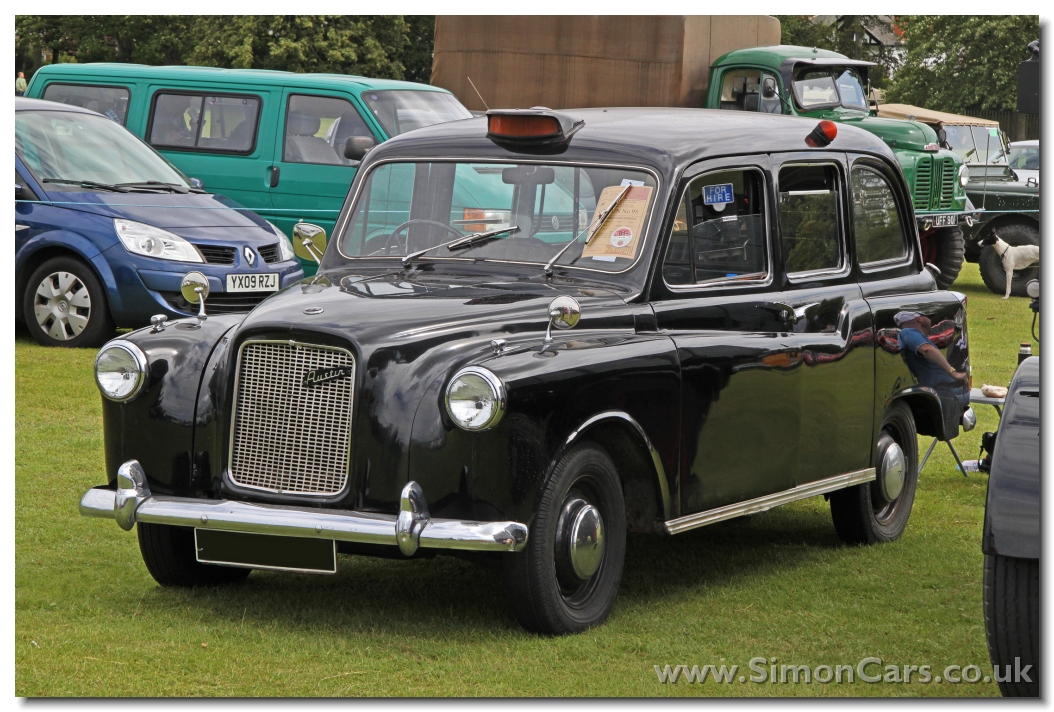
Now any petrolhead with a pulse knows 'it's a taxi innit', but what is a 'black cab'? With the help of the Wiki God, let me elaborate.
The FX4 London taxi was the successor to the market-leader Austin FX3, which was produced between 1948 and 1958. Like the FX3, the FX4 was designed by Austin in collaboration with Mann and Overton, the London taxi dealership that commissioned it (and paid for half of its cost) and Carbodies, the coachbuilder that built the body and assembled the cab ready for sale. The original design was by Austin’s Eric Bailey and it was engineered for production by Carbodies and was the first London taxi to go into production that had four doors. Like the FX3, the FX4 had a separate chassis, but with independent front suspension and dual-circuit hydraulic brakes. The first FX4, registration number VLW 431, was delivered in July 1958 and went on test with York Way Motors; the official launch was later that year at the Commercial Motor Exhibition.
The first FX4 was fitted with a 2178cc Austin diesel engine and a Borg-Warner automatic transmission. In 1961, the manual transmission from the Austin Gipsy was available as an option. From 1962, the Austin 2199cc petrol engine was available. However, almost all FX4 taxis were fitted with a diesel engine and, until the mid-1970s most had a manual gearbox.

In 1969, the cab was altered, to offer a new version in place of the abandoned replacement model and to amend some of the shortcomings of the original. The original Austins were provided with small rear stop and taillights and roof-mounted turn indicators, commonly known as "bunny ears". On the revised model, the rear wings were modified to accept the taillights from the MkII Austin 1100 / 1300, front indicators were also mounted below the headlights and side indicators to the front wings. The "bunny ears" were alas abandoned. In 1971, the 2178cc diesel engine was replaced by a larger, 2520cc version. This engine proved to be better for use with an automatic gearbox and gradually fewer cabs with manual gearboxes were sold. The petrol engine was discontinued in 1973. In that same year Carbodies' owner, BSA collapsed and was bought by Manganese Bronze Holdings, who continued making the FX4, with only detail changes until 1982, when Carbodies, who had been producing the FX4 for Austin and Mann and Overton, took over the cab's intellectual property rights when British Leyland lost interest in it, so began to produce it under their own name. Carbodies changed to the Land Rover 2286cc diesel engine and also offered the similar-sized Land Rover petrol engine as an option; the new model was branded the FX4R (R for Rover).
.jpg)
The FX4R was not well-recieved by the trade, due to poor overall performance from the new engine; some cab operators replaced the Land Rover engine with the Perkins/Mazda 2977 cc diesel, with showed a marked improvement. a lot of 'R's were retrofitted with the new engine and other detail improvements - the FX4Q - and were re-registered with a 'Q' plate. In 1984 London Taxis International (LTI) was formed after Manganese Bronze Holdings bought the London taxi dealers Mann and Overton. LTI replaced the 2286cc Land Rover diesel engine with the new 2495cc version, plus other detail changes (new bumpers and an improved dash) with he new model designated the FX4S, in turn replaced in 1987 by the FX4S-Plus, which had a rear compartment redesigned to allow five passengers, a new moulded plastic dashboard was also fitted. In February 1989 the Fairway was introduced with a 2664 cc Nissan TD27 diesel engine, with many more detail changes were made until the very final Fairway made, with registration mark R1 PFX (i.e. RIP FX), was built on 1 October 1997 and was presented to the National Motor Museum at Beaulieu; the baton having been passed to the all-new TX1. The basic design survived over 40 years and despite the last FX being built over 14 years ago, you still see enough of them on London (and elsewhere) streets, such is the affection that cabbies have for the old girl.
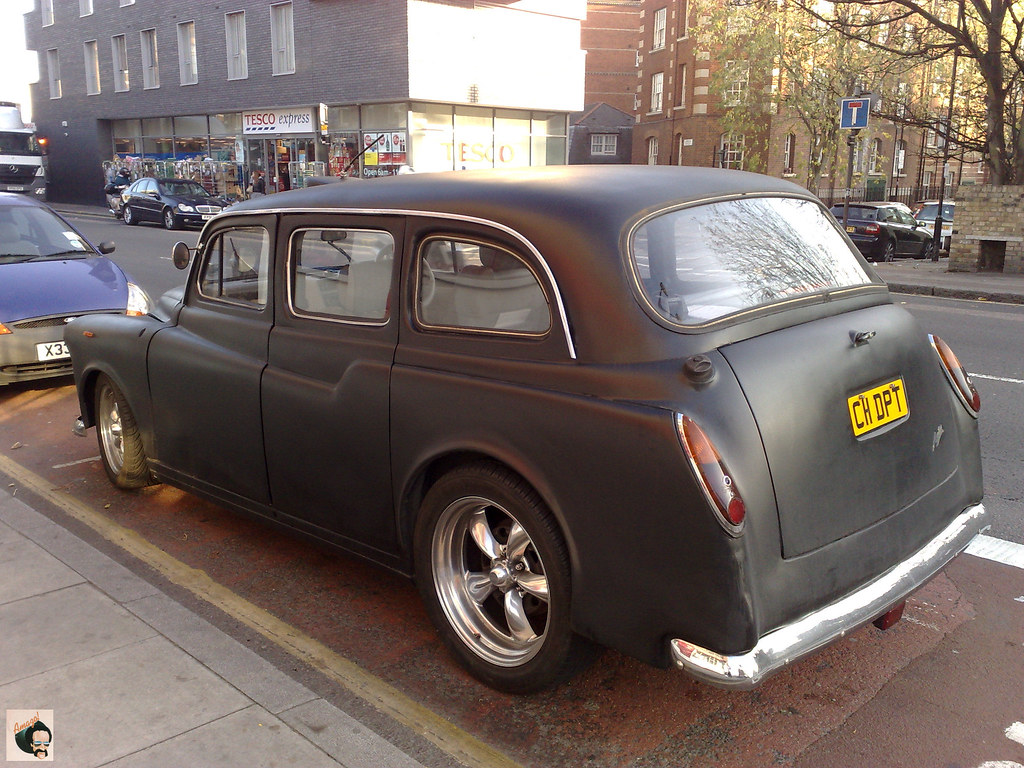
Someone had even more affection for their FX4, as this '91 Fairway has enough modifications to it to send the average 'fare' running in the other direction. As the driver (looking ironically fitting in suit and tie) was in a rush, all I could glean from him was a few rushed details. It has an MG RV8 engine, and rides on airbags to keep it close to Mother Earth. The FX4 has a separate chassis, making body mods an easier task than on a unitary construction car ; the well-executed roof chop was done a few years ago as the pic below is from 2008; still with it's original engine:
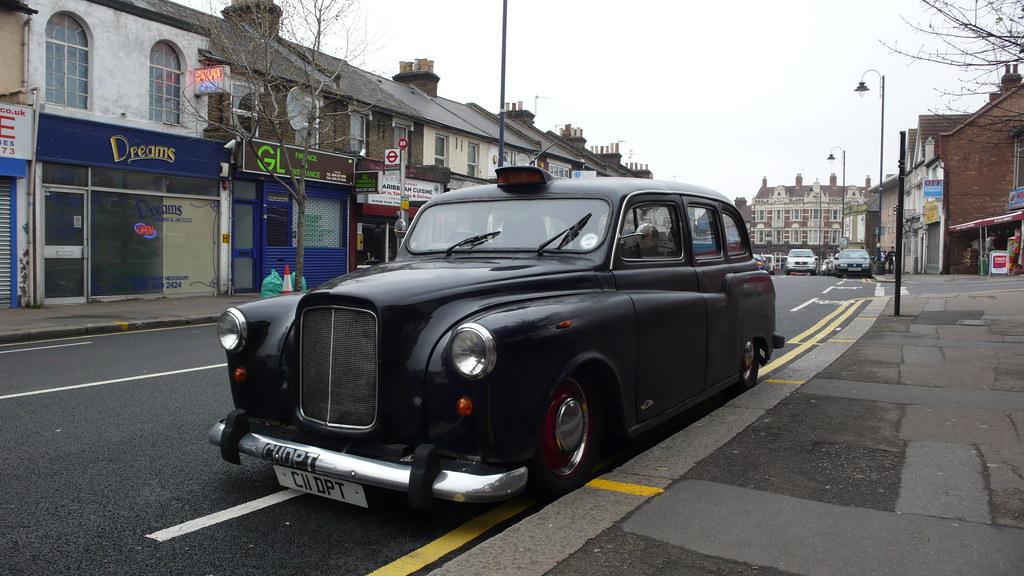
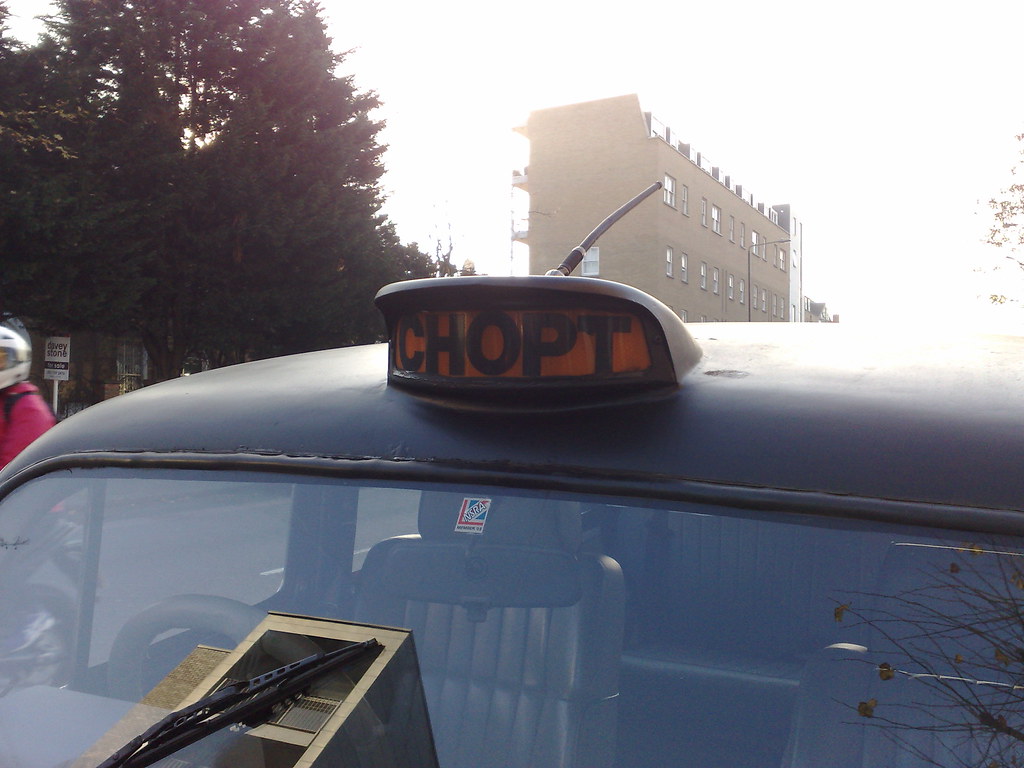
It's obviously come a long way since then; those headlight surrounds look like they're off a '55-'57 Chevy pickup, the arches have been modded to squeeze those excellent Torq-thrust wheels in, no doubt in my mind that the rears are attached to probably a Ford 9-inch or 10-bolt GM axle. That bonnet scoop made from an old 'FOR HIRE' sign is a stroke of genius, as is the delicious play on words with the no. plate - C11 DPT turned into 'CHOPT'.
A black cab you'll never see in a taxi rank, mores the pity. London would be a lot more fun with a fleet of these babies roaming the streets!
 |
| Neat (and fitting) use of a 'TAXI' sign as an air scoop |
 |
| Damn straight it is! |
 |
| Did you ever think a black cab could look that mean? |
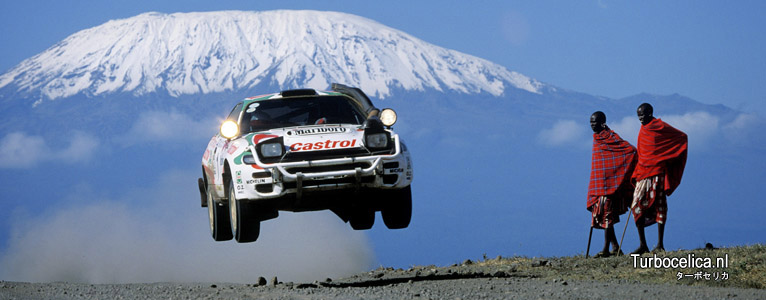
8 - 12 April 1993, Trustbank Safari Rally, Kenya
After Lancia withdrew from the WRC after the 1992 season, Juha Kankkunen came back to Toyota as the new main man that season, piloting the Toyota Celica GT-Four ST185 with which Sainz had defeated him the previous year. He changed co-pilots three times during the season after Juha Piironen suffered a brain hemorrhage. Kankkunen went on to take a record fourth drivers' title by winning five of his ten WRC events; the Safari Rally with Piironen, the Rally Argentina, the Rally Australia and the RAC Rally with his new co-driver Nicky Grist, and the 1000 Lakes Rally with Denis Giraudet due to Grist's pre-arrangement with Armin Schwarz. Kankkunen's win at the RAC marked his career 20th in the series, breaking Markku Alén's record for most wins. Kankkunen and his third-placed teammate Didier Auriol brought Toyota the manufacturers' crown, the first for a Japanese manufacturer.
His Safari win was his 16th and 39th podium.

His Safari win was his 16th and 39th podium.
9 December 2011
1985 Toyota Levin GT - Scrapheap Challenge

The AE86 Toyota Levin (Corolla to us Brits). A car of such cult status that has sent values through the roof, which combined with high attrition rates due to the drifting and time attack brigade munching through a fair few examples, has conspired to make finding a ideal paradigm near-impossible.
Kazumi Nakamura. A man not so easily deterred from attaining AE86 nirvana. As founder of '86' specialist Custom Garage Speed (original name, that), it wouldn't do for him not to have an ultimate example of the breed. Starting with a $600 bargain as base material, he's massaged this Levin to heavenly heights of perfection, from the breathed-on 4A-GE powerplant, to those achingly cool Panasport rims wrapped by his company's N3 wide arch kit, to the hard as nails interior and the tons of detailing. This AE86 has made me an avid fan of the model, from being the fence-sitter I once was.
Roll over for this Corolla here.


 |
| Kazumi Nakamura - the Edd China of the far east? |
7 December 2011
Sbarro Lancia Ionos
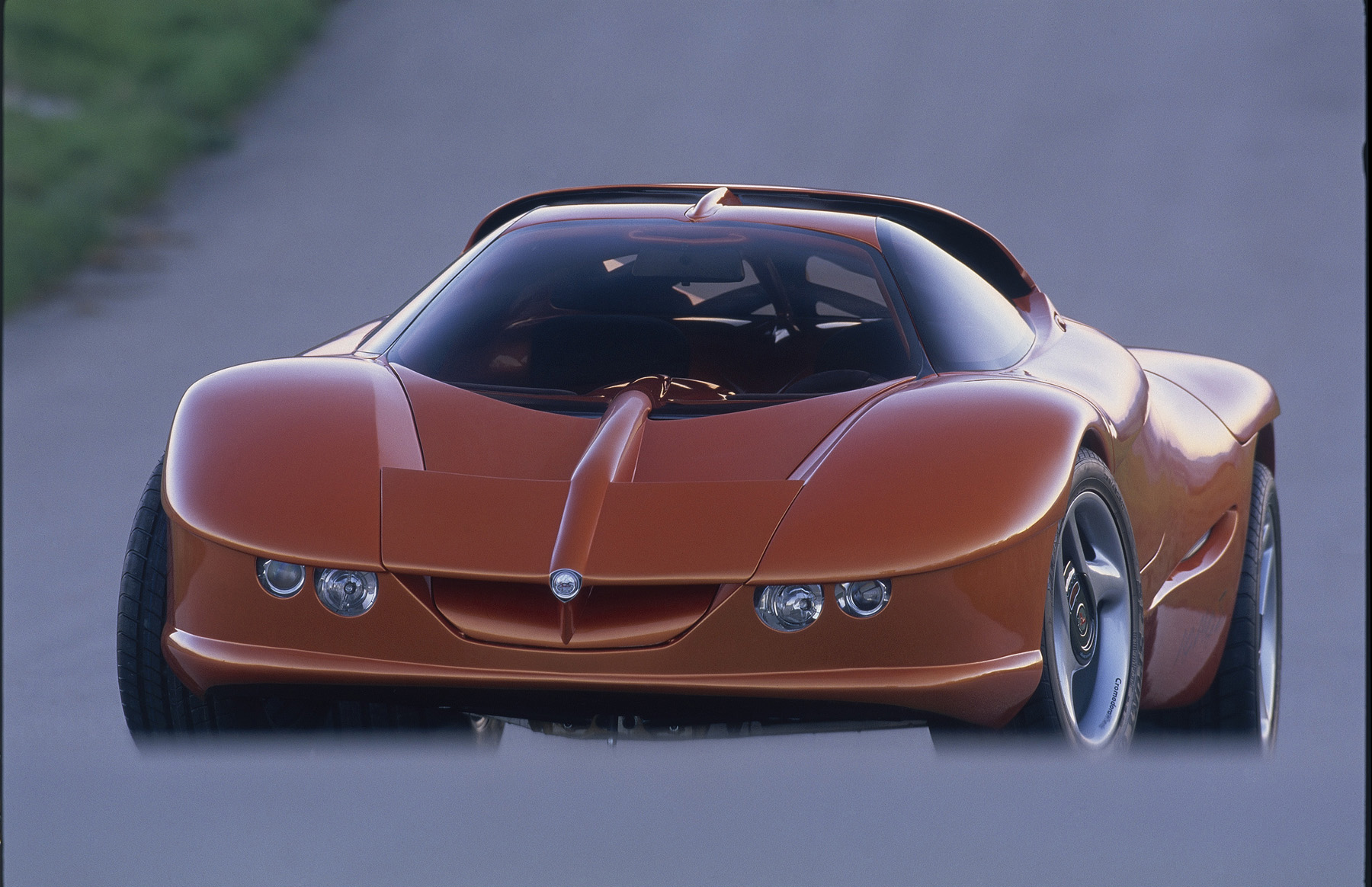
'A modern interpretation of the Stratos'How many times had that holy grail turned to a poison chalice; re-inventing the Lancia Stratos? Never mind the weight of trying to re-invent an icon (Land Rover DC100, anyone?), there's also the burden of trying to position it in the public mindset. Should it be a rally weapon like the 2005 Fenom concept proposed? An all-out supercar like the 2010 reimagining? Well let's consider a Stratos 'tribute' concept you may not have heard of before that predated both of the above - the Ionos from 1997, from the wizard of odd, Franco Sbarro.

Sbarro, with Lancia's blessing and with the help of students at his school Espera Sbarro, went to work on the tough task of re-inventing the Stratos. The engine no longer originates from Lancis'a kissing cousins in Maranello, but arguably is a more mouth-watering prospect than a 'mere' 2.5 litre V6.
Powered by two Lancia Kappa 2.4 litre 5 cylinder engines joined at the crankcase to form a 4.8 V10 (the straight-five itself is a development of the engine in the later Fiat Coupé), the engine reputedly made it to dyno testing and produced 400bhp. Sbarro already had form with coupling two engines together; on the Royale (Rover V8), the Super Twelve (Kawasaki 1300cc straight-six) and Issima (Alfa V6).
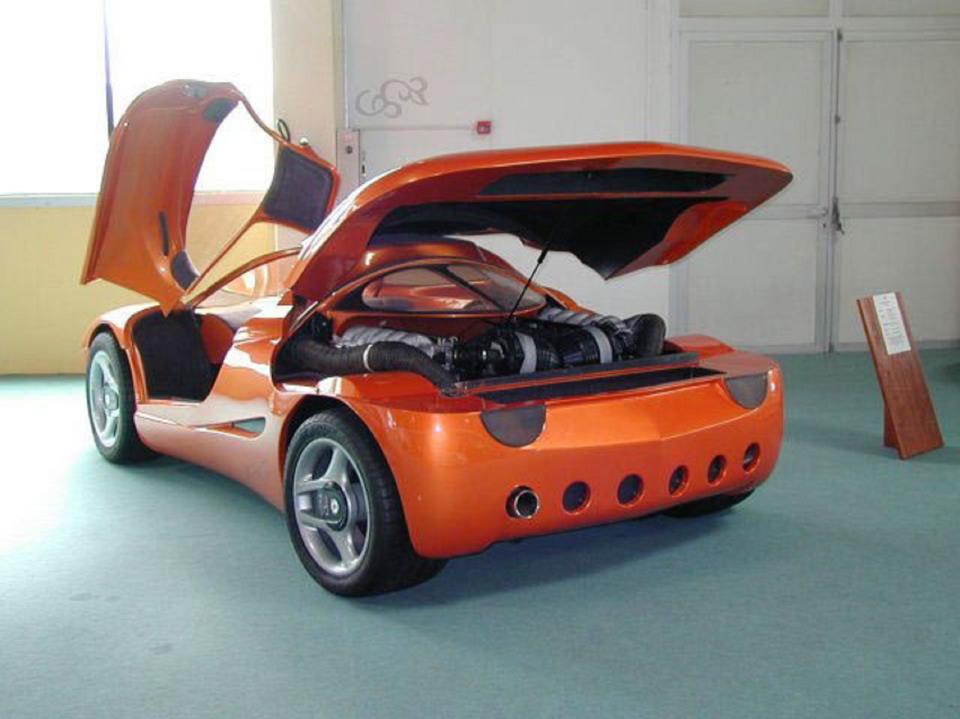
While the Ionos' engine may be distinctly Madama Butterfly, it's running gear is pure Die Walküre. The transmission comes from a Porsche 911 Carrera 4 with a twist, a 90-degree one actually, the engine was apparently upturned with the gearbox nestling between the cylinder banks; quite what that would do to oil flow is anyone's guess. The Carrera's 4WD system is also used, with Brembo brakes as used by Alfa Romeo on its DTM racers, so no problems in slowing it down.

The “crash helmet” window profile was reminiscent of the original Stratos, but the Ionos takes it a stage futher; rather than slavishly following the Stratos line for line, Sbarro & Co have given the car it's own identity, which while it pays respect to the original, it very much has a flavour all it's own. In our opinion.
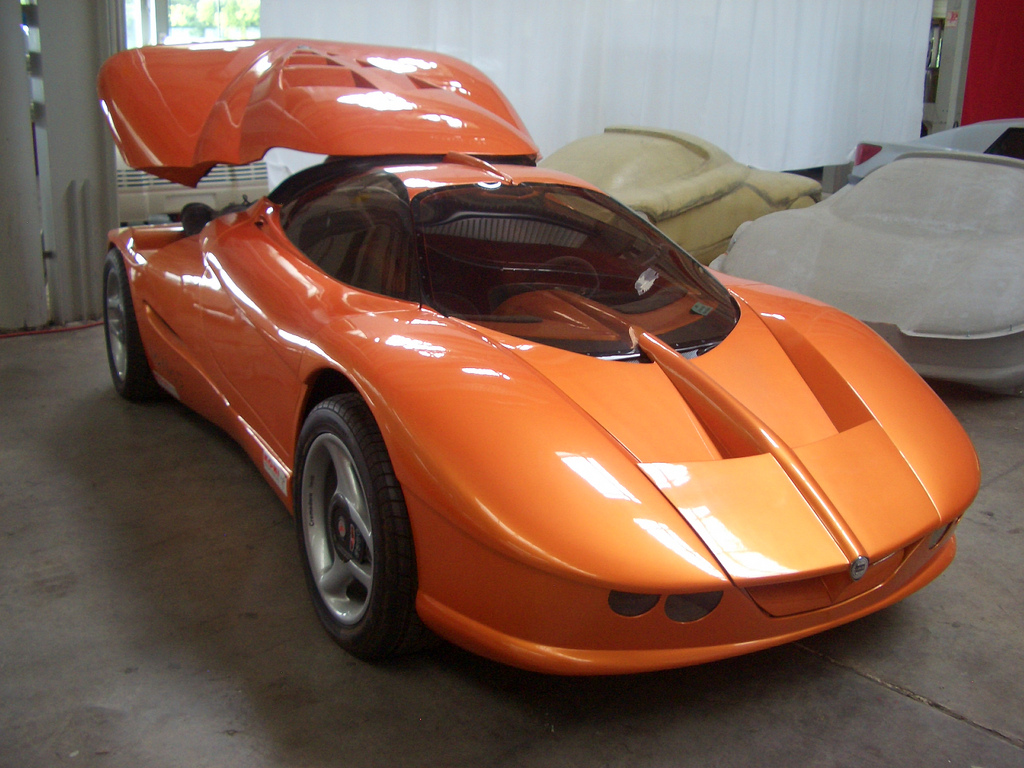
But enough of our opinion, the following is an extract from Sbarro's 1997 catalogue:
"From the Stratos of the 1970s to the lonos of the year 2000: such was the route taken by the Espera Sbarro students, interpreting the Lancia look in an all-new sports two-seater to unveil, in best school tradition, at the Geneva show. After last years Alfa Romeo lssima roadster it was suggested that the fifth-semester students of 'Automobile Creativity and Engineering' work on another Fiat Auto make, the aristocratic Lancia. The creative cue came from the legendary Stratos, first designed in 1970 by Bertone - the work, in particular of Marcello Gandini - as a research prototype and later in 1971, with a different shape, as a production car.
"This coupé project began with Ermanno Cressoni, director of Fiat Advanced Design, and Mike Robinson, chief of the Lancia style centre, and was driven by their enthusiasm, which immediately fired the students' creativity, " says Franco Sbarro.
In the first place, the students received documentation about the make from the Turin studio. "It wasn't easy, early on, to get them to understand what the true Lancia spirit was," Franco Sbarro remembers. "Then I explained how Lancia, throughout its ninety-year history has represented the forefront of styling and technology in the automotive field, so much so that solutions that might look new to young designers, such as aluminium bodywork or a pillarless DLO, have already been used by Lancia in the past."
During their first visit, in summer last year the Turinese companys design chiefs took a look at the preliminary research sketches. "Some of them were excellent designers, others less so. We tried to point them all toward a slightly more focused project. What was important, though, was that they made their own cars and not "ours"," says Robinson. As a 'homework exercise' during the July break, the students constructed their scale models. Two of these were selected and their concepts synthesised in a single 1:4 model, which was subsequently interpreted in two more models produced by two groups of students. The final stage was producing the definitive scale model, while the work developed into full size with the milling of a 1: 1 polystyrene model at the Lancia style centre in Turin.
What remained of the Stratos spirit throughout all these stages? "Analysing the Stratos, we realised that it was the first time, since the 1970s, that a car maker had volume-produced a car especially for competition. It was compact, wieldy and low-weight. a born racer " explains Sbarro. "We've maintained the concept on the lonos (it was Ermanno Cressoni who suggested the name, it makes you think of the ionosphere, like Stratos and stratosphere), although the aesthetics are very different. "
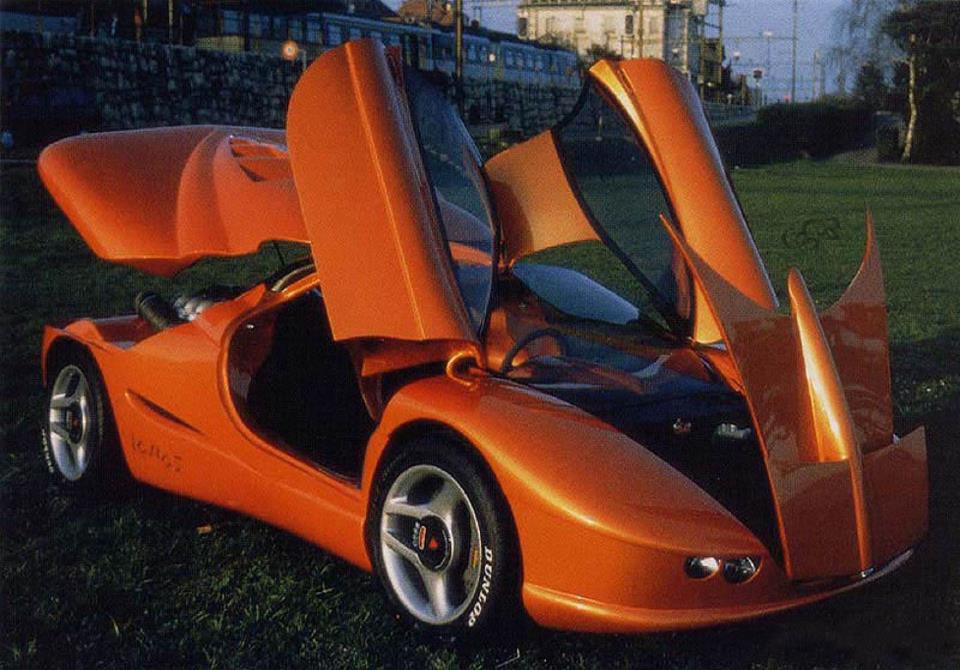 |
| Get any closer, and it will fly off... |
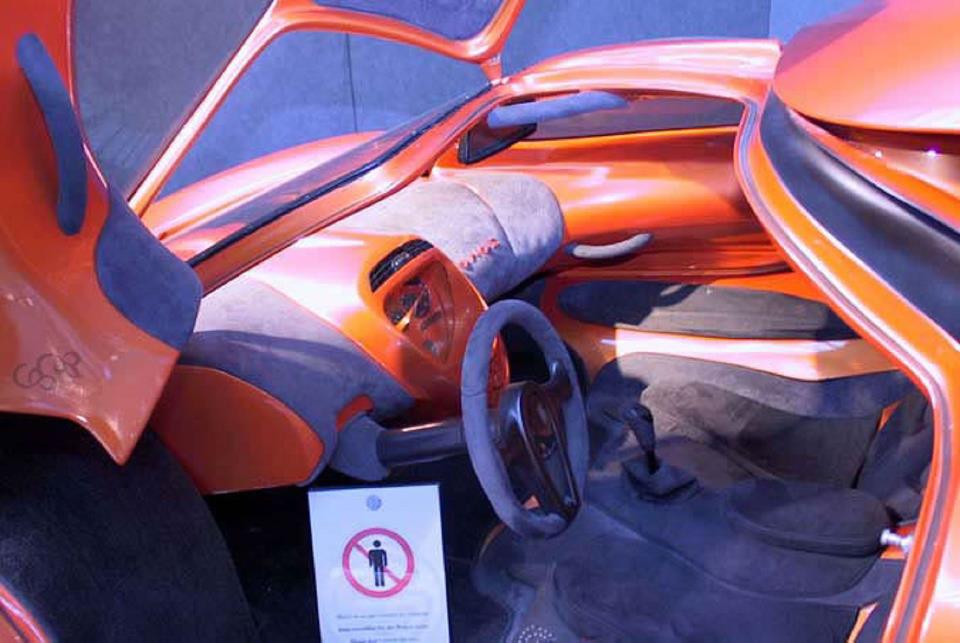 |
| Note that the steering wheel design is the same as the wheels |
"For the design, we didn't just take Lancia styling cues into consideration, but the whole design approach as well," says Ermanno Cressoni commenting on the look of the lonos. "It's a make which, deep down, has always had the tradition of spuming traditions,- you know, always offering something different and innovative. Anyone familiar with Lancia styling cues can find them reinterpreted in the lonos, anyone not familiar with them will in any case see a new, fundamentally coherent way of saying Lancia. "
Robinson continues: "On the Stratos, the wraparound windshield and the side windows create a kind of a crash-helmet visor shape. The theme is reinterpreted on the lonos, where a glass bubble gets enveloped and 'swallowed' by the rear-end bodywork." The straked cover that conceals the backlight without compromising rear visibility - is another reference to the Stratos, although in a different form. Raising the rear section, hinged towards the centre of the car the backlight is uncovered and access given to the engine bay.
The 'backbone' that runs the length of the lonos even seems to penetrate the passenger compartment at the base of the windscreen, reappearing later at the apex of the roof where the canopy 'bites' into the glass dome and leaves a gap to enable the airstream to reach the engine bay. Two engine-cooling air intakes have also been inserted low down, just behind the front wheels, with the flow of air being ducted along the inside of the side skirting to twin radiators (again from the Lancia k). All available space is exploited to the last centimetre.
"Meeting personalities like Franco Sbarro and the students at his school forms part of the creative interchange required to maintain a make's vitality, " says Cressoni at projects end. For Mike Robinson there was even a 'sentimental' element. "As a kid in America, I once saw a poster of the Stratos and decided to come to Italy and design cars. The circle is complete. Working with these young people on the 'Stratos II' really meant a lot to me.
 |
| Earlier clay buck; looks somewhat dumpy |
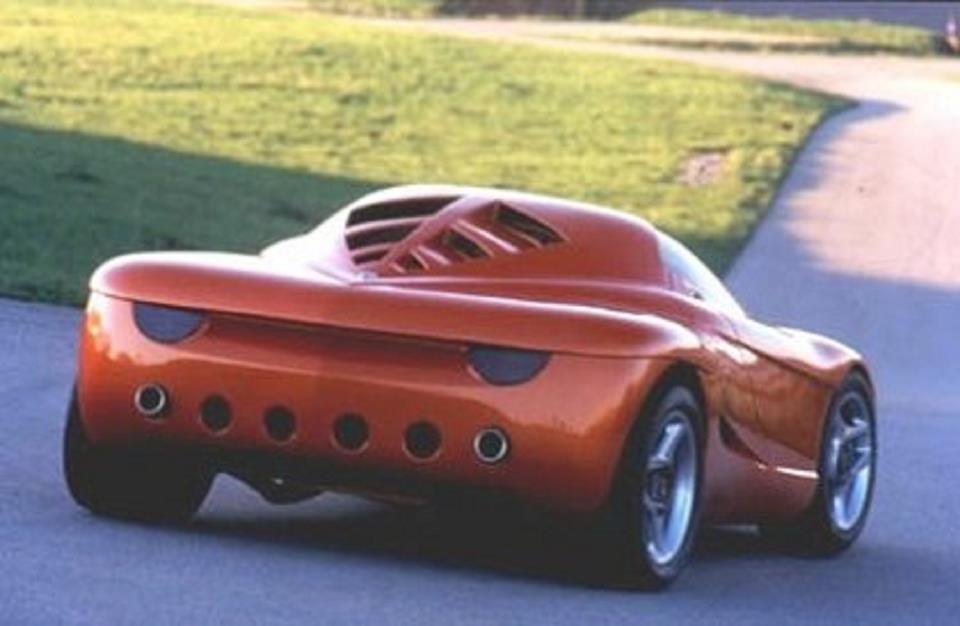 |
| Final design looks far more resolved |
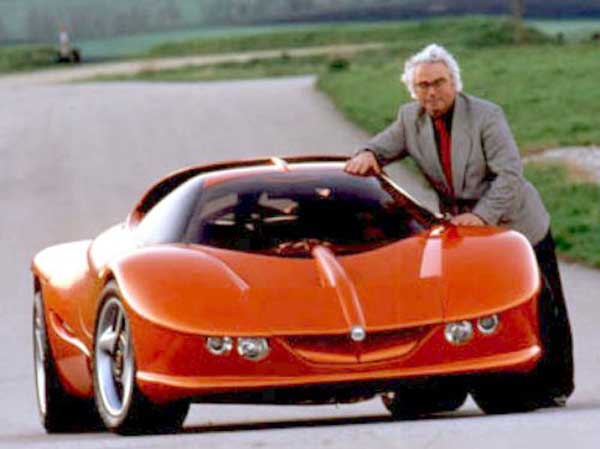 |
| Sbarro and Ionos - individuals both |


Subscribe to:
Posts (Atom)